The press releases on this website are provided for historical reference purposes only.
Please note that certain information may have changed since the date of release.
July 27, 2016
July 27, 2016
Revised at 18:00 pm July27, 2016
Tokyo, Japan - Sony Corporation today announced the commercialization of the industry's first*1 demodulator LSI and tuner modules that conform to the ISDB-S3 (Integrated Services Digital Broadcasting for Satellite, 3rd generation) next-generation standard for 4K and 8K satellite digital broadcasts. Sony will begin shipping samples of these products in September.
Test broadcasting in 4K and 8K with the ISDB-S3 standard is scheduled to commence in Japan in August, and full-scale broadcasting is slated to begin in December * 2018. Sony successfully commercialized tuner components compatible with this standard at an early stage, meeting the needs of the industry as it moves to establish the necessary broadcast infrastructure for the future. Going forward, Sony will aggressively promote its new tuner components to TV and set-top box manufacturers who will be interested in incorporating the components into their sets.
* (revised on July 27, 2016)
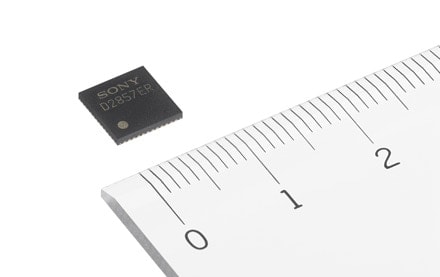
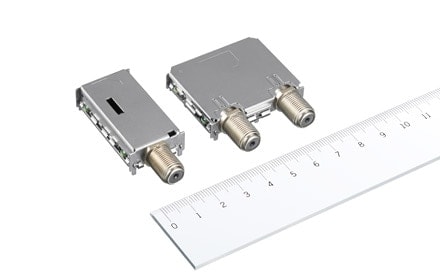
| Model name | Timing of sample shipment |
Sample price (tax included) |
|
|---|---|---|---|
| ISDB-S3 compatible demodulator LSI |
CXD2857ER | September 2016 | 10,000 yen |
| ISDB-S3 compatible SUT-PJ/CJ series tuner modules |
SUT-PJ251 (single tuner) | September 2016 | 5,000 yen |
| SUT-PJ551 (double tuner) | September 2016 | 7,000 yen | |
| SUT-PJ751 (triple tuner) | September 2016 | 10,000 yen | |
| SUT-CJ251 (single tuner, equipped with demodulator LSI) |
October 2016 | 15,000 yen | |
With the ISDB-S3 standard, more than twice the amount of data is transmitted as with the conventional ISDB-S standard, necessitating more advanced demodulation technology. Sony's new CXD2857ER demodulator LSI incorporates Sony's proprietary reception algorithms and error correction technology, thereby achieving both more sensitive and stable reception, even given the data-intensive nature of this next-generation standard. The LSI also features reduced power consumption, and because it is compatible with all digital TV broadcast standards currently in use in Japan*2, it enables TV and set-top box manufacturers to make their products more compact by freeing them from the need to incorporate different component parts for different standards.
The ISDB-S3 standard expands the upper limit for reception frequency to 3224 MHz, from 2070 MHz with the conventional standard. Ordinarily, the higher the frequency, the more difficult it becomes to keep the signal level uniform. But Sony's new SUT-PJ/CJ series tuner modules achieve stable reception with minimal noise even at these expanded high frequencies, thanks to their built-in noise reduction capabilities. This was accomplished by equipping the tuner modules with the CXD2868ER, a newly developed silicon tuner IC that features Sony's proprietary noise reduction circuitry. Furthermore, this silicon tuner IC, like its predecessor model*3, is capable of receiving the three Japanese TV broadcasting signals (terrestrial digital, BS/CS digital) all in one IC. It also retains the same size and power consumption levels as its predecessor, despite supporting BS/CS digital signals at higher frequencies up to 3224 MHz.
In order to meet the diverse needs of set engineers, Sony will offer its ISDB-S3 compatible products in several different varieties. Sony's new tuner modules will be available in single, double, and triple silicon tuner IC variations, in order to enable simultaneous recording of multiple channels. Additionally, the demodulator LSI will be sold separately, as well as mounted together with a silicon tuner IC on a tuner module in order to facilitate the design of more compact and thinner TVs and set-top boxes.
| Model name | CXD2857ER |
|---|---|
| Size | 7 mm x 7 mm |
| Package | 48-pin VQFN (0.5 mm pitch) |
| Power supply | 3.3 V (DVDD, AVDD) 1.0 V (CVDD) |
| Power consumption | ISDB-S3 0.35W ISDB-S 0.30W ISDB-T 0.20W |
| ISDB-S3 functions | Modulation:32APSK/16APSK/8PSK/QPSK/BPSK Code rate:1/3, 2/5, 1/2, 3/5, 2/3, 3/4, 7/9, 4/5, 5/6, 7/8, 9/10 Roll-off:0.03 Supports TS, TLV output |
| Compatible broadcast standards |
ISDB-T/C/S/S3, J.83A/B/C, J.382, DVB-T/T2/C/C2/S/S2, SBTVD-T |
| Model name | SUT-PJ251 | SUT-PJ551 | SUT-PJ751 | SUT-CJ251 |
|---|---|---|---|---|
| Type | Single tuner (Half-NIM) | Double tuner (Half-NIM) | Triple tuner (Half-NIM) | Single tuner (Full-NIM) |
| CXD2857ER demodulator LSI | - | - | - | ○ |
| Exterior size*4 | 40 mm wide x 34 mm deep x 8.75 mm thick | 23 mm wide x 42 mm deep x 8.1 mm thick |
||
| Compatible broadcast standards | ISDB-T/C/S/S3, J.83A/B/C, J.382, DVB-S/S2 | |||
| Receiving frequencies | Terrestrial signal: 90-770 MHz; Satellite signal: 950-3224 MHz | |||
| Terrestrial signals | 1 | 2 | 3 | 1 |
| Satellite signals (BS/CS digital) | 1 | 2 | 3 | 1 |
| Satellite signals (advanced BS) | 1 | 1 | 1 | 1 |
| Output | Terrestrial signal: Low IF; Satellite signal: Single IQ/differential IQ |
TS, TLV | ||
| Power supply | 5 V, 3.3 V, 1.8 V | 3.3 V, 1.8 V, 1.0 V | ||
| Power consumption*5 | 0.4W | 1.3W | 1.7W | 0.75W |
