Sony Group Corporation (hereafter, Sony) joined World Wide Fund for Nature Japan (hereafter, WWF Japan), a Public Interest Incorporated Foundation, as a member of the corporate membership in 1989. Since then, Sony has worked with WWF Japan for more than 30 years, commencing with its initial support in the form of monetary and product donations carried out in conjunction with employee initiatives. It also entered into a corporate partnership agreement with WWF Japan on April 1, 2021. Sony has worked with WWF Japan by supporting its efforts to mitigate climate change and conserve biodiversity through forest conservation. Both parties renewed their partnership in April 2024 to further their cooperation toward realizing a healthy natural environment on our planet.
The initiatives under this partnership are detailed as follows.
In Sony's Green Management 2025 Environmental Medium-Term Targets through FY2025 and the Climate Savers Programme*1 joint initiative by both parties, Sony has received support from WWF Japan in achieving its targets for reducing its emissions of direct and indirect greenhouse gases. Such support includes reviews of the company's and the provision of oversight, specialized advice, and essential information. Furthermore, both parties are undertaking the necessary joint efforts to formulate new medium-term environmental goals through FY2030.
WWF Japan has supported Sony by providing technical advice and essential information to help the company achieve its Green Management 2025 goals of biodiversity conservation and appropriate use of resources. Furthermore, Sony has worked with WWF Japan to conserve biodiversity by supporting forest conservation efforts in areas where forests are rapidly dwindling and remaining forests are at risk of further loss—specifically in regions where deforestation is driven by Japanese imports of forestry and livestock products, such as timber, paper, and palm oil. In addition, Sony Group has contributed its technology and knowledge, promoting WWF Japan's forest conservation efforts in Southeast Asia and other regions.
WWF Japan, WWF Indonesia, Sony, and SynecO, Inc. (hereafter, SynecO) have implemented a pilot project that tests the effectiveness of Synecoculture*2 in forest conservation in Sumatra, Indonesia, where manual reforestation is challenging. Synecoculture is an agricultural method that utilizes the self-organizing properties of ecosystems.
About Synecoculture
Synecoculture is an agricultural method that eliminates the need for the plowing, fertilizing, and use of agrochemicals that impact the environment, by taking maximum advantage of the self-organizing functions such as material circulation that occur naturally in ecosystems, aiming to create rich ecosystems with a diverse mix of plants that coexist and thrive.
This cultivation method, advocated by Masatoshi Funabashi, President and Representative Director of SynecO and a senior researcher at Sony Computer Science Laboratories Inc., achieves biodiversity and ecosystem functions that exceed natural conditions, through active intervention by human activities. It is characterized by a comprehensive approach that makes multi-faceted uses of ecosystem, that considers not only food production but also the impact on areas such as the environment and health.
SynecO has provided its Synecoculture management system, designed for global deployment. This system integrates Sony technologies, including compact, high-precision sensors for plantation management and big data analytics to support plant cultivation based on local climate and topological conditions.
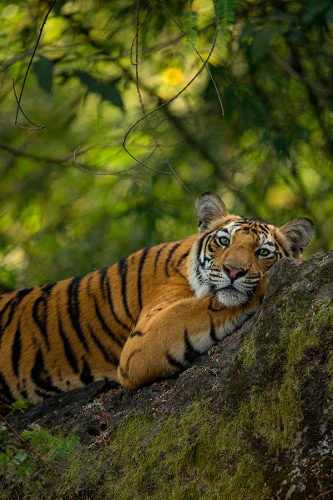
In total area, the Indonesian island of Sumatra is about 1.25 times as large as Japan and is the sixth-largest island in the world. The tropical forests that once covered the entire island have been subject to deforestation for the production of pulp, palm oil and other agricultural products. Between 1985 and 2012, more than half of the forests disappeared. This has led to a significant loss of biodiversity, and poaching has only exacerbated the situation. As a result, wildlife populations, including the Sumatran tiger, have dropped dramatically. The Sumatran tiger, now estimated to number fewer than 600 individuals, is not only an endangered species, but also a key indicator of a well-preserved and thriving forest ecosystem.
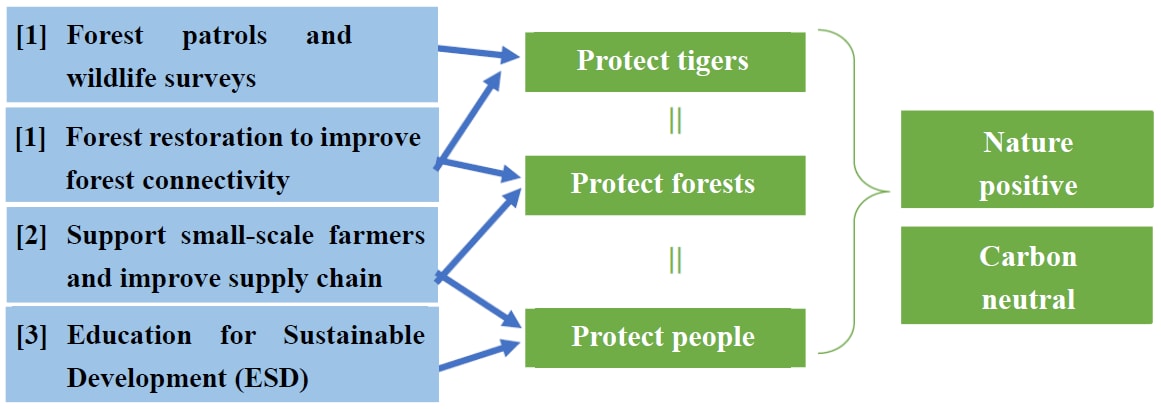
WWF Japan and WWF Indonesia have been working together on a comprehensive approach to the conservation and restoration of forests and wildlife. Their efforts include direct initiatives such as forest patrols and reforestation, as well as indirect initiatives aimed at exploring models to make agriculture more sustainable reducing its role as a major driver of deforestation. Additionally, they focus on educational programs to raise awareness of sustainability principles within local communities, ensuring long-term environmental awareness and responsible practices.
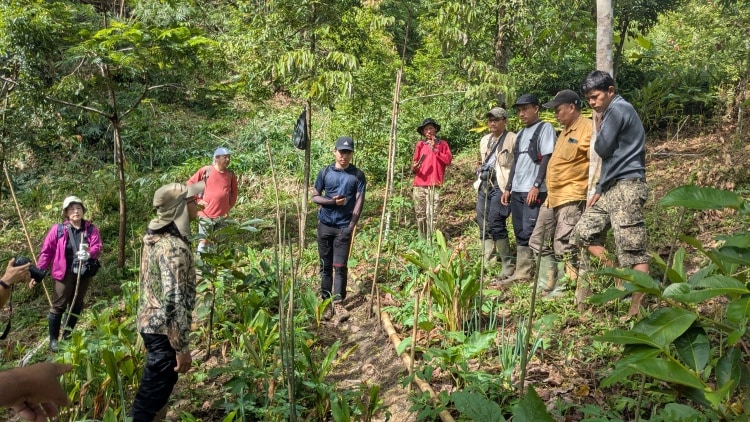
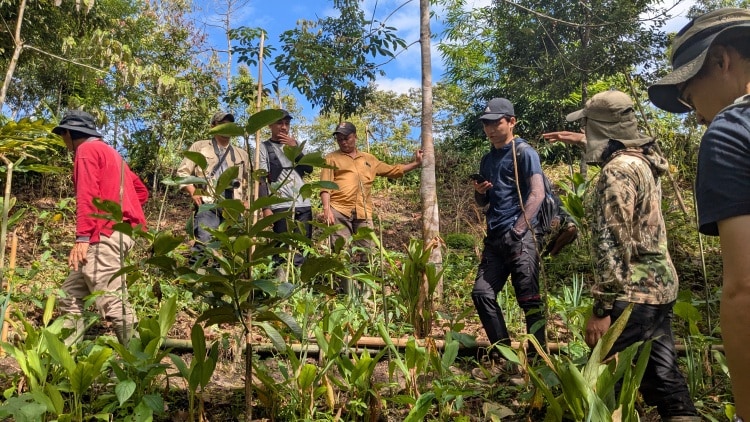
As part of these efforts, in Sungai Abu Village, Solok Regency, West Sumatra, WWF is working with the local community to regenerate degraded forests by planting fruit trees and other vegetation to expand wildlife habitats. To ensure healthy growth, these newly planted saplings require adequate sunlight and soil nutrients; thus, weed management around the saplings must be conducted regularly. In Indonesia's tropical climate, weeds grow vigorously, necessitating approximately four years of management after planting. However, the reforestation sites are located on steep slopes, making manual labor challenging. Additionally, since it takes time for the planted trees to bear fruit, maintaining the motivation of the local community presents another challenge.
By implementing Synecoculture around seedlings—intermixing and densely planting a diverse range of useful plants, including food crops and medicinal plants—it can suppress the growth of weeds, reducing the labor required for weed management. At the same time, various crops can be harvested even before the fruit trees fully mature. Furthermore, such dense cultivation is expected to reduce soil erosion and the risk of landslides. A pilot project was launched from December 2023 to January 2025 to assess the effectiveness of this approach, enhance local livelihoods, and accelerate forest restoration.
As a start to the project, SynecO provided lectures and workshops on Synecoculture to WWF Indonesia and local residents. Additionally, SynecO offered consulting services for establishing cultivation sites, conducted maintenance, and planned and analyzed measures of effectiveness. Following the initial step, SynecO held monthly online monitoring sessions, to provide advice to the team on the ground.

Although it took time for the local residents to accept Synecoculture, which differs from the traditional farming methods they were accustomed, the concepts and techniques gradually began to spread among the community members. As a result, the local community successfully implemented the mixed and dense planting of useful plants, a key feature of Synecoculture. In cultivated plots where Synecoculture had been introduced, crops such as chili peppers, ginger, turmeric, onions, and cardamom were harvested. Surplus chili peppers were sold at the local market, demonstrating early signs of success. Additionally, members of the local community involved in the project expressed a desire to implement Synecoculture practices in other degraded areas that are planned for restoration. One of the constraints was the limited availability of seeds and seedlings, but local community members voluntarily expressed their desire to plant wild useful plants and flowers for beekeeping to increase biodiversity, showing their increased understanding of the project.

WWF Japan leads a wide range of environmental conservation projects that help build a future in which humans live in harmony with nature. Sony also promotes environmental activities and has launched its long-term environmental plan "Road to Zero" *3 to achieve a "zero environmental footprint" by 2050, while supporting and working together with WWF Japan for more than three decades since 1989.
WWF Japan and Sony will continue to work together to build a sustainable future and a decarbonized society in which humans live in harmony with nature.
1989~ Joined the WWF Corporate Club, made donations associated with employee activities, provided support including product donations
1991 Donated the proceeds of a charity sale
2006~ Participated in the Climate Savers programme
2011~ Supported the Project for Forest Conservation in Sumatra
2013~ Joined the "Consortium for Sustainable Paper Use (CSPU)" *4 as a founding member
2015 In partnership with WWF, became the first Japanese company to receive approval from the Science Based Targets initiative (SBTi) *5
2017 Donated the proceeds of a charity auction of the autonomous entertainment robot "aibo"
2021 Signed a Corporate Partnership Agreement
2024 Renewal of Corporate Partnership Agreement
WWF is a global environmental conservation organization established in Switzerland in 1961. To build a future in which humans live in harmony with nature, WWF is currently promoting environment projects in more than 100 countries to protect rare wildlife species, preserve natural environments such as forests and oceans, promote sustainable use of natural resources, and prevent global warming, among many other things.
[WWF Japan Website]
[WWF-Indonesia official website]
SynecO is a startup that promotes businesses specializing in environmental technologies related to augmented ecosystems, such as Synecoculture. It was launched as the first project of Sony's Corporate Venture Capital (Sony Innovation Fund: Environment), established in September 2020 to foster new environmental technologies.
[SynecO Website]
