Feb 14, 2025
Celebrating the Inaugural Winners of the Sony Women in Technology with Nature
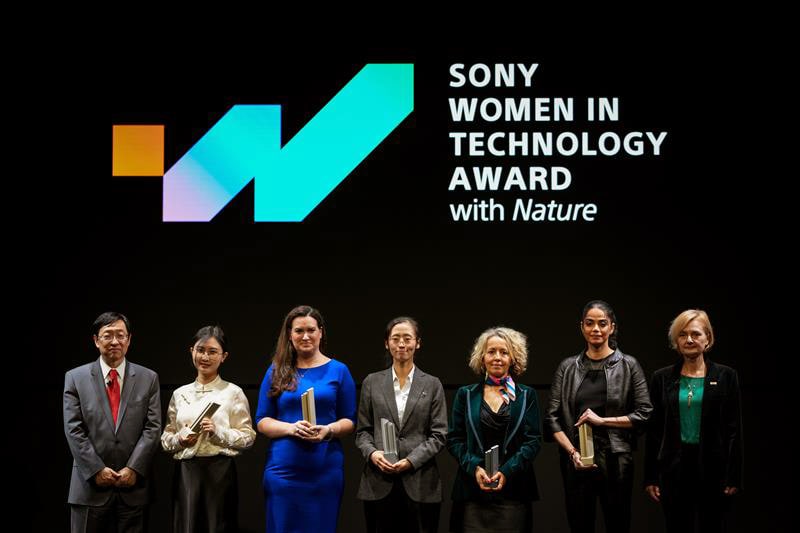
From left : Hiroaki Kitano (Executive Deputy President and CTO of Sony Group Corporation), Yating Wan (King Abdullah University of Science and Technology, Saudi Arabia), Amanda Randles(Duke University, USA), Jiawen Li (University of Adelaide, Australia)、Hatice Gunes (University of Cambridge, United Kingdom), Kiana Aran (University of California San Diego, USA), Magdalena Skipper (Nature, Editor-in-Chief)
On February 5, Sony announced the 2025 winners of the Sony Women in Technology Award with Nature, a new award launched by Sony in partnership with Nature to recognize outstanding female researchers who are bringing positive change to society through groundbreaking technology. The award grants three winners a prize of $250,000 each to support and accelerate their technological research.
The finalists joined Sony and Nature in Tokyo from research institutions all over the world. Ceremony attendees from across academia and industry gathered at Sony Headquarters to celebrate the honorees’ achievements in multidisciplinary fields, including bioengineering, precision medicine, silicon photonics, robotics, and AI.

Kenichiro Yoshida, CEO and Chairman of Sony Group Corporation, with his congratulations to the award finalists and stated that technology has countless applications and can also be a tool that creates a positive impact on society. He also shared Sony’s belief that to create new value through technology, the people driving that creativity should be diverse as well. He closed his speech by emphasizing that Sony aims to support women in the field of technology who share the same vision of shaping a better world and work together to grow the community and contribute to enriching people’s lives.
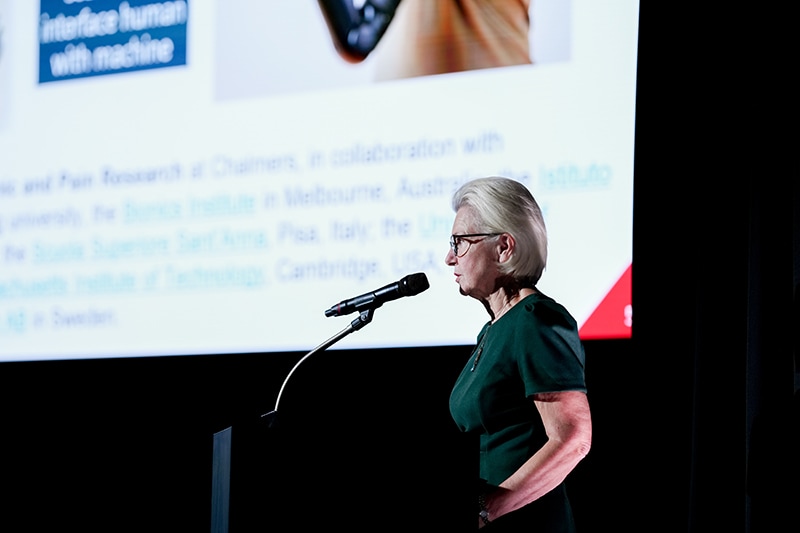
Dr. Karin Markides, President and CEO of Okinawa Institute of Science and Technology (OIST) delivered keynote remarks, emphasizing how diversity creates an essential cross-pollination of ideas, expertise, and perspectives when it comes to innovation. To design new systems for society that can enable long-term resilience of humanity, Dr. Markides noted, interdisciplinary collaboration and open science is critically important.
“With the explosion of knowledge in the past 20 years, we foresee exponential opportunities in open science and open innovation,” Dr. Markides shared, “as disciplines integrate, more complex challenges can be researched, and the mindset within our innovation landscape will change.”

The executive sponsors of the award, Drs. Hiroaki Kitano and Magdalena Skipper, took the stage to announce the winners and present the award trophies. Kitano-san shared his vision for the award and introduced Sony’s partner for this award, Nature
“At Sony, we believe that research initiatives must be led by diverse groups of people who bring unique life experiences to the lab, because ultimately, we want technology to enable everyone to thrive. To help us develop objective, high-caliber review standards for the award, we partnered with renowned academic publisher Nature, who helped to assemble an accomplished panel of judges to join us.”
Dr. Magdalena Skipper reflected on the judging process, working with a panel of nine judges to review impressive applications from researchers all over the world. She also shared remarks from co-chair, esteemed IT entrepreneur and philanthropist Dame Stephanie Shirley.
The Kitano and Skipper then proceeded to present the awards.
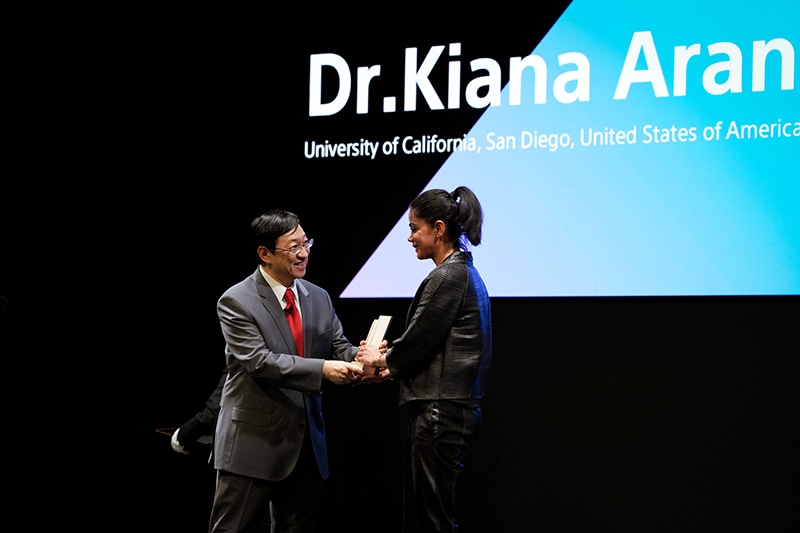
Dr. Kiana Aran was selected as a mid-career winner for her achievements in the field of bioengineering. Aran is investigating the use of fingertip sensors for viral detection, exploring how artificial intelligence can work with advanced sensor technology to analyze multiple biomarkers and enable early detection of cancer and age-associated neurological diseases.
Aran, a professor of bioengineering and medicine at UC San Diego, is best known for her pioneering work in the fusion of biology with electronics to enhance precision medicine. Among her achievements is the development of a CRISPR-powered electronic chip made from graphene, designed for the rapid detection of genetic diseases and respiratory infections such as COVID-19.
“I am truly honored to receive this award and to stand among such an inspiring group of innovators,” Aran said, “my journey in science has always been driven by the belief that the greatest breakthroughs happen at the intersection of disciplines. As a professor of Bioengineering and medicine at UC San Diego and an entrepreneur, my work focuses on merging biology with electronics to develop next-generation biosensors and medical devices. By integrating engineering, biology, and data science, we are creating technologies that were once thought impossible. I am grateful to the Sony and Nature for fostering a space that celebrates interdisciplinary collaboration and inclusivity in science.”
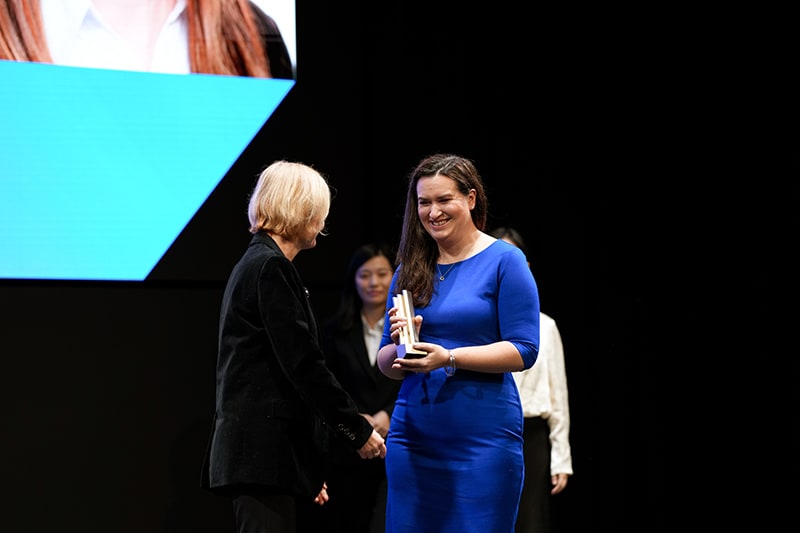
Dr. Amanda Randles received the award for her innovative research in “digital twin” technology, which integrates wearable-informed computational models to provide personalized insights into cardiovascular hemodynamics and optimize treatment strategies.
Randles, a computational scientist and biomedical engineer, leads the Randles Lab at Duke University and is known for her contributions to high performance computing, machine learning, and the personalized modeling for disease diagnostics and treatment.
After successfully exploring the use of digital twin technology to guide interventions for heart patients, Randles and team are investigating how this technique can be applied to early intervention for cancer. With this prize, the Randles Lab plans to explore innovative ways of modeling and identifying new therapeutic targets to advance cancer treatment.
“I am passionate about using cutting edge technology to address pressing medical problems,” Randles said, “I am incredibly fortunate to work with a fantastic team at Duke University in the States. Together we are building high-resolution digital twins to help doctors find track and treat human disease -- work that I hope will make a lasting impact on health care. This recognition is especially meaningful because historically women have been the coders, lab techs, problem solvers, the ones doing a lot of the hard work but often going unnamed. In a field that is still male dominated it is critical to have awards like this that shine a light on the contributions of women ensuring that our work is seen, valued, and celebrated.”

Dr. Yating Wan won this year’s early career prize for her work in Silicon Photonics. Her research focuses on integrating light sources onto silicon chips for more energy-efficient data communication and information processing.
Leading the Integrated Photonics Lab at King Abdullah University of Science and Technology (KAUST), Wan is recognized for her novel integration of ‘quantum dot’ lasers — nanocrystals made from semi-conductor materials — with silicon photonics, demonstrating important progress toward commercial use of photonic chips. With tech industry collaborators working on the same goals, her team is exploring how to deploy the chips in practical, real-world applications, such as optical datacom, sensing, and AI.
“I want to take a moment to express my heartfelt gratitude,” Wan said, “to my incredible team at the Integrated Photonics Lab in KAUST, and our funding agencies for supporting this vision. I’m deeply grateful to my family, my collaborators, and mentors for their support throughout this journey. And to Sony, Nature, and this amazing community, thank you for believing in me, for giving me this chance and for celebrating women in technology.”
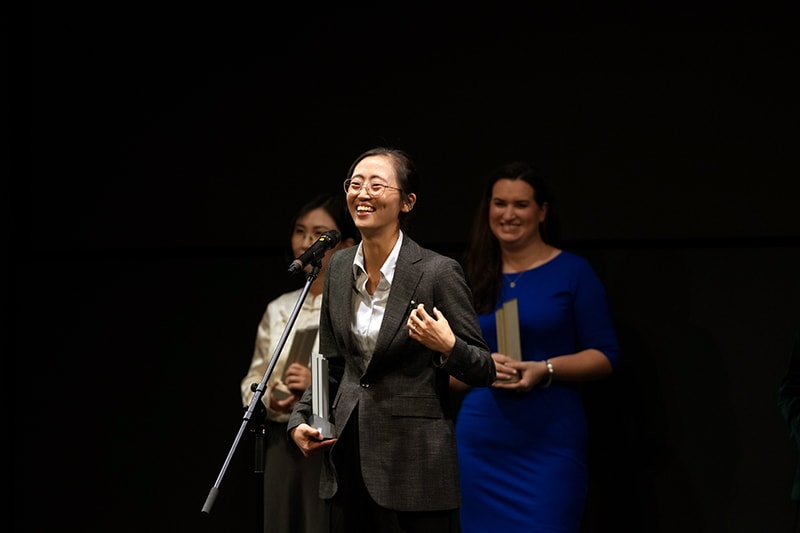
After receiving high-caliber applications from researchers worldwide, the judges’ panel decided to extend a special Judges’ Commendation to Dr. Jiawen Li, whose ambitious vision in the medical imaging field holds promise to improve healthcare globally. Li’s work combines nanoscale 3D printing with optical fiber technology to create a hair-thin endoscope that cardiologists can use to investigate blood vessels to determine a patient’s risk for a heart attack. This invention can also be used for prevention and personalized treatments.
Li, a biomedical engineer and Associate Professor at the University of Adelaide, Australia, is actively working on commercializing this invention, an important step in bringing this life-saving device to clinical practice. Together with her collaborators, Li is also expanding the multimodal technology’s features to measure data like site-specific temperature and chemical changes, as well as exploring applications in neurology and IVF.
“It is my great honour to accept this award, and to stand here as a woman in Biophotonics, a highly interdisciplinary field,” Li said. “In this field, we use cutting-edge engineering techniques, especially those in Photonics and Optics, to address biomedical challenges. In this field, collaboration is key - people from different backgrounds come together, bringing diverse expertise, sometimes, diverse priorities, timelines, and even speaking different languages.This diversity of thoughts is our strength.”
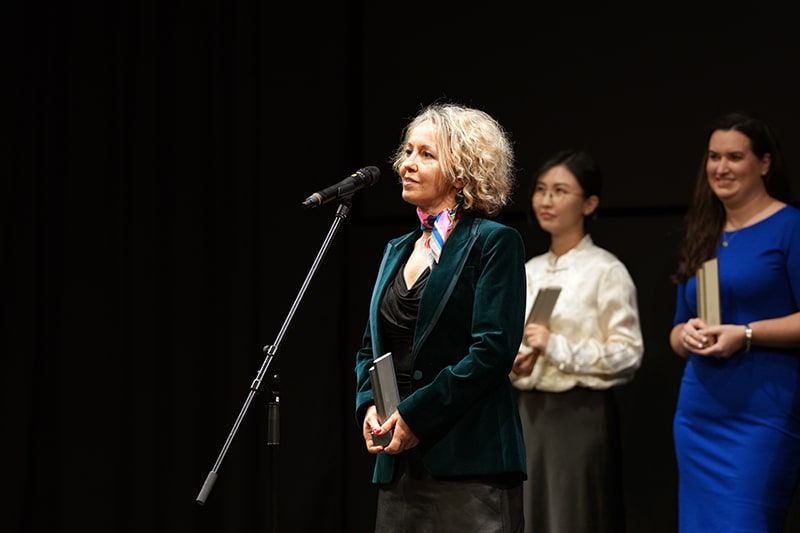
Shortlisted researcher Dr. Hatice Gunes, director of the AFAR lab at the University of Cambridge, was also recognized at the ceremony for her work in Affective Intelligence and Robotics. Her lab focuses on multimodal, social, and affective intelligence for AI systems, particularly embodied agents and robots, by cross-fertilizing research in the fields of Machine Learning, Affective Computing, and Human Nonverbal Behavior Understanding.
Gunes shared, “Computer Science and AI are transforming every scientific discipline. There has never been a better time for girls to step in, contribute, and shape an inclusive future in this field. I am truly honored if my work, recognized through this shortlist, can inspire them.”
Additional members of the shortlist, Dr. Xiaona Li from the Eastern Institute of Technology, Ningbo, China and Dr. Ying Wu from King Abdullah University of Science and Technology, Saudi Arabia where unable to attend the ceremony in person due to prior commitments. Despite this, the master of ceremonies read their acceptance remarks for ceremony attendees.
“I am thrilled to be included in the shortlist,” Li stated, “As a woman in science and technology, I hope that my work will inspire young girls to pursue their dreams. Together, we can create a brighter future. By developing a new generation of halide solid electrolytes and revealing the mechanisms of solid-state ion conduction, we aim to significantly improve the performance of all-solid-state power battery technology, expanding the technical scope of halide systems in this field.”
Regarding her achievement, Wu shared, “Being shortlisted for this prestigious award is an incredible honor, and I am thrilled to have my work recognized. More importantly, this recognition highlights the vital contributions of women in science. My research focuses on sound wave manipulation, one of the most fundamental aspects of our daily experience. I hope my work contributes to a quieter and more comfortable living environment by reducing noise pollution and optimizing sound reverberation.
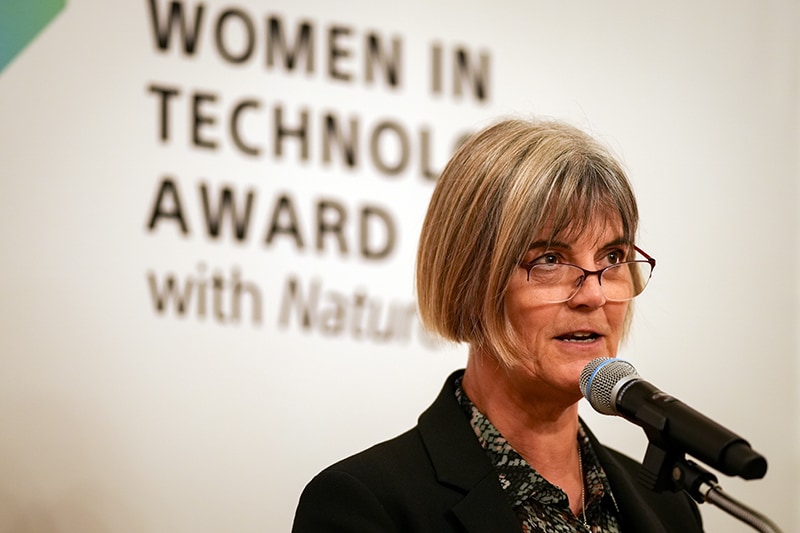
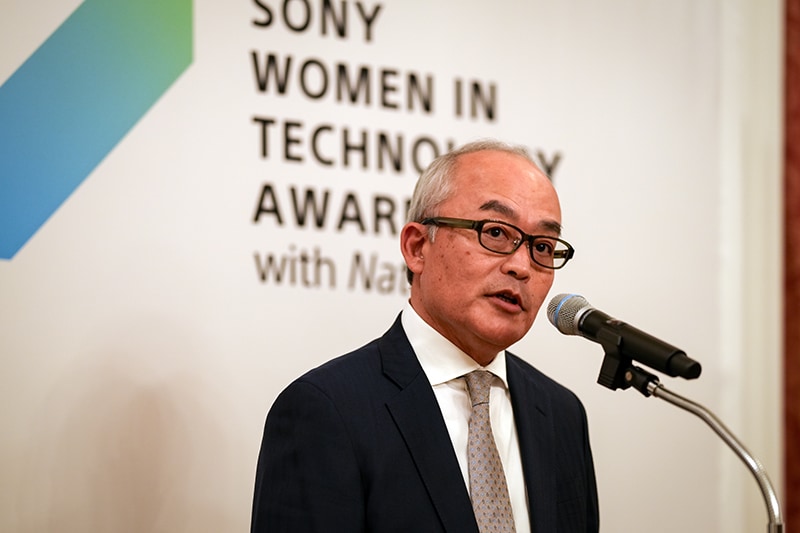
After hearing academic presentations from the honorees, ceremony attendees were welcomed for a reception at the British Embassy in Tokyo, courtesy of the United Kingdom, where Nature is based.
Leaders in DE&I and technology initiatives across government, industry, and academia gathered to discuss breakthrough research with winners and finalists. The reception featured speeches by the British Ambassador to Japan, Her Excellency Ms. Julia Longbottom CMG, and Sony Group Corporation COO, and CFO Hiroki Totoki.
The Sony Women in Technology Award with Nature honors outstanding early to mid-career women researchers who are spearheading breakthroughs for the betterment of society and the planet in the field of STEM (science, technology, engineering and mathematics). The award grants each winner a prize of $250,000 to support and accelerate their technological research.
The next application cycle opens on March 6, 2025. For more information on the Sony Women in Technology Award with Nature.