Arc & Beyond, a Non-Profit Founded by Sony Employees to Drive Social Impact Through Business -Creating Learning Opportunities for Youth Disconnection -

Arc & Beyond Association, Inc. is a general incorporated organization established by Sony employees with extensive experience in technology and business. Arc & Beyond is engaged in projects seeking to resolve social issues, such as educational disparities among children and youth that hinder the expression of creativity and limit opportunities to experience kando (emotionally moving and inspiring experiences). To address this issue, one of its projects starting in fiscal year 2025 ("FY2025") is the launch of a programming curriculum in juvenile training schools. Co-Founders Hiro Ishikawa and Takehiro Hagiwara have been working with youth from difficult backgrounds, to develop this programming course and curriculum for this project. In this article, we explore their commitment to youth empowerment, their initiatives to collaborate with stakeholders beyond the boundaries of Sony, and their on-going efforts to transform social challenges into sustainable business opportunities.
Contents
Addressing the pressing issue of ICT education
Ishikawa and Hagiwara of Arc & Beyond have been working to support the reintegration into society of disconnected youth, including juveniles in juvenile training schools, by providing programming education and through other means.
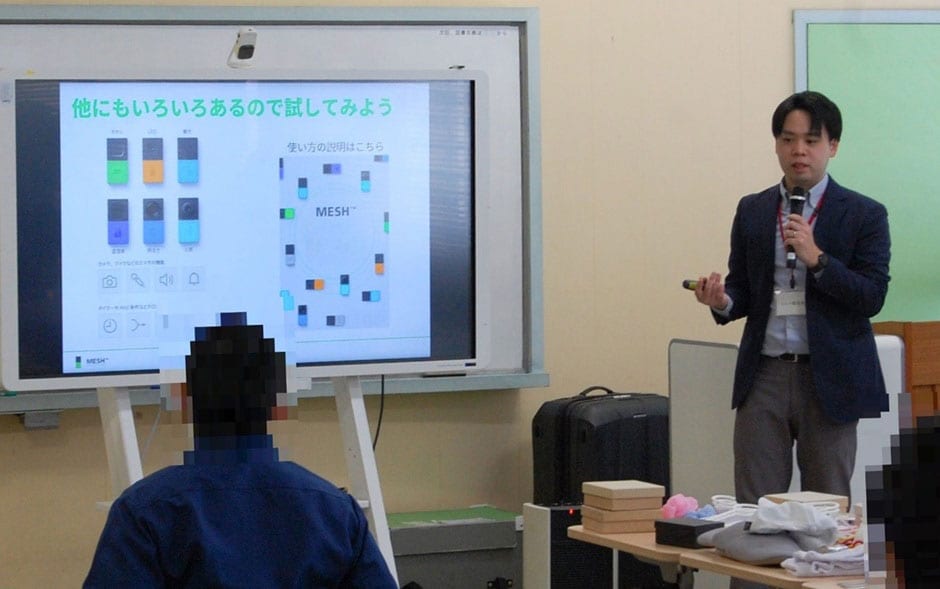
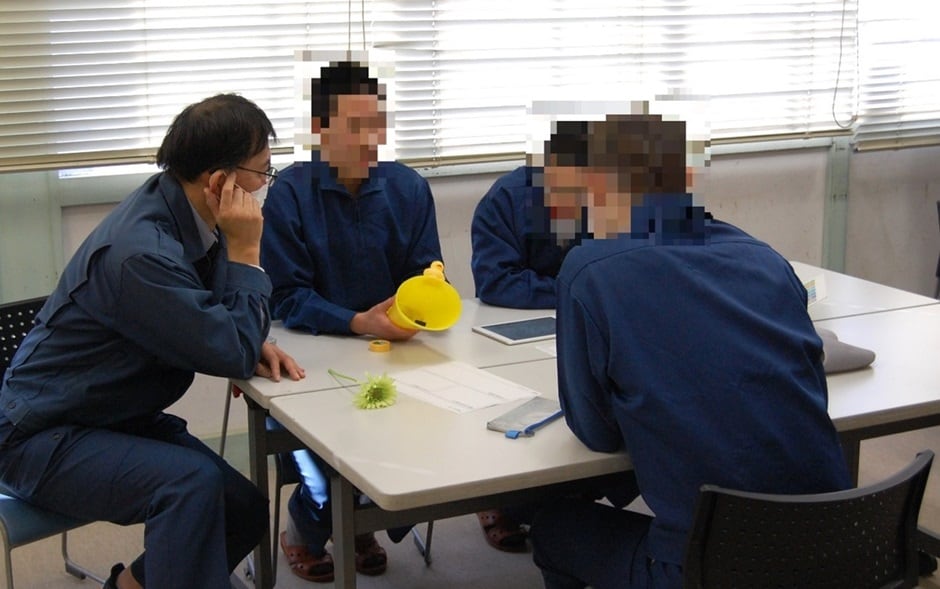
The programming courses will start from FY2025 at juvenile training schools in Japan, to achieve both programming and problem-solving skills using MESH™, an IoT block developed by Sony. Hagiwara took the lead in planning and developing the curriculum, while instructors of juvenile training schools experienced firsthand demonstrations of the course in preparation for its implementation. The course will provide opportunities for juveniles to learn how to solve everyday problems using sensors and programming, through which they can develop logical thinking skills and imagination to overcome issues. In addition, communication skills will also be developed through group work.
The importance of education in programming is gaining rapid recognition as society becomes increasingly digital, and it has become mandatory in Japan’s compulsory education. The Ministry of Justice of Japan has also been promoting the introduction of ICT education in juvenile training schools as part of their vocational guidance. Furthermore, the recent lowering of the age of adulthood in Japan to 18 increases the likelihood of individuals entering the workforce directly from juvenile training schools, putting their skills to use within society immediately. Programming is one of the most practical and effective ways to broaden their employment options straight after social reintegration.
The development of the teaching materials have greatly benefited from Ishikawa’s extensive knowledge and experience, which he gained while supporting projects for youth in the U.S. who have not been able to attend school or been deprived of employment opportunities due to various circumstances, as well as the valuable experience of Hagiwara, who developed MESH.
Creating an environment that helps youth stay in school
Ishikawa was in charge of selling MESH at Takeoff Point, a U.S. subsidiary of Sony Group. However, in the U.S., various materials for teaching programming had already entered the market, making it difficult to generate profit. Nevertheless, while visiting elementary and junior high schools as part of his sales activities, he realized that the bigger problem there was that children were dropping out of school due to difficult upbringings or criminal offenses.
"There is no point in pursuing sales when there are no young people there. The idea that came to me was that we adults should create an environment where children do not drop out of school, and provide opportunities that lead to learning."
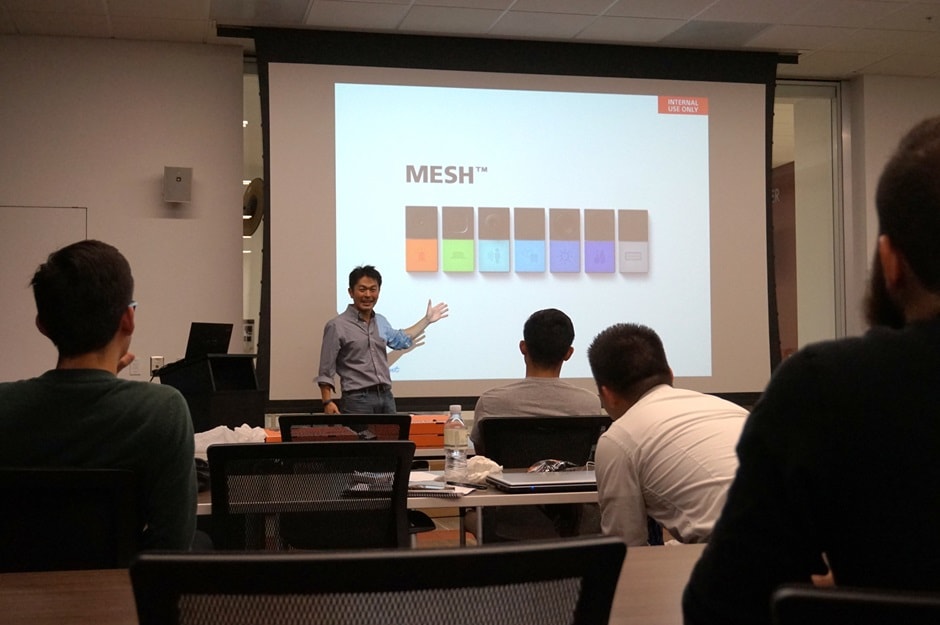
Ishikawa started volunteer activities at community centers where he started teaching young people, how to use MESH. He told them, "If you learn programming, one day, you can run your own business and earn money yourself." Some, who were initially dismissive, said things like, "Studying is meaningless" or "It may work for others, but not for me," began to express hope, saying, "Programming is so easy" or "It's fun to do it myself." These activities gained popularity and were featured in the media, leading to requests from various other centers. Ishikawa felt that these efforts were on the right track and sensed a significant opportunity among businesses seeking to address social issues.

Lowering the barriers of technology and fostering a spirit of taking on new challenges
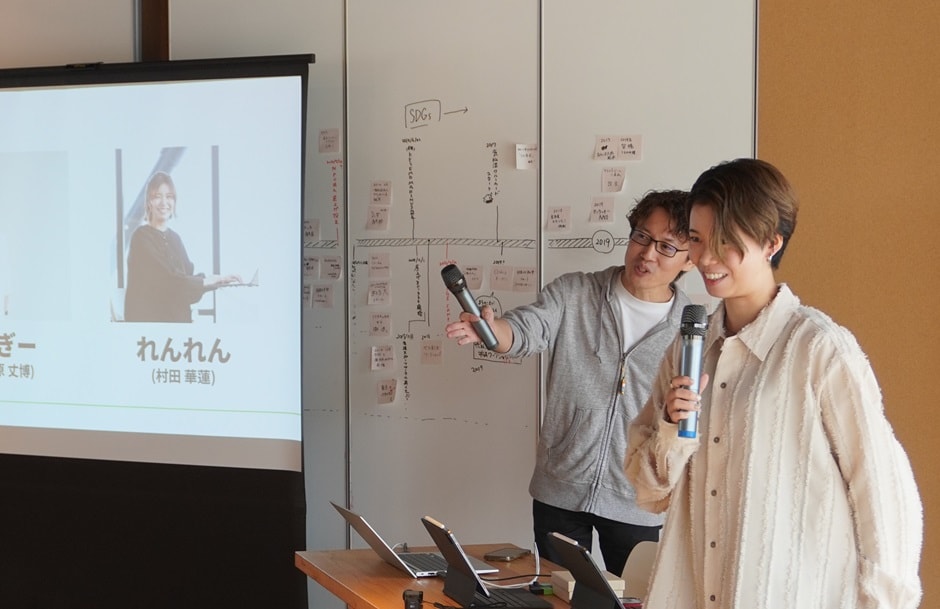
Based on this experience, Ishikawa took on a similar challenge in Japan in 2021. He visited the Ministry of Justice of Japan together with Hagiwara to explain the effectiveness of education in programming for social reintegration, following which they conducted demonstration classes at multiple juvenile training schools around Japan. Among the juveniles in training schools, some needed communication support while others required medical care, and through these classes, Hagiwara learned how to adjust the tools freely to meet each individual's needs.
Watching juveniles enjoy the classes, the instructors at juvenile training schools made comments such as, "Seeing the eyes of both the juveniles and the instructors light up, it was clear to me there was no reason not to move forward with this," and, "I thought it would be difficult for juveniles, but after very little time they were making strides in their learning without any help, and were very actively engaged." Hagiwara's analysis was, "Despite the initial impression that programming is difficult, by introducing MESH, which lowers the barriers to learn and use technology, it seems they realized through their own experience that they can use tools like this to change their circumstances."
As part of this program, a method of impact evaluation was also introduced. Hagiwara states, "It is important to visualize what kind of results the program produces." The purpose of evaluation is not just to quantify the results but also to promote the improvement and continuous development of the program. For example, we can assess improvement in the participants' social skills and changes in their motivation to learn, and then use the findings to optimize the curriculum based on this data. The purpose of the evaluation also includes fostering collaboration with non-profits and companies to provide continuous support after the participants' social reintegration.
Expanding opportunities for youth with disabilities and reaching rural areas
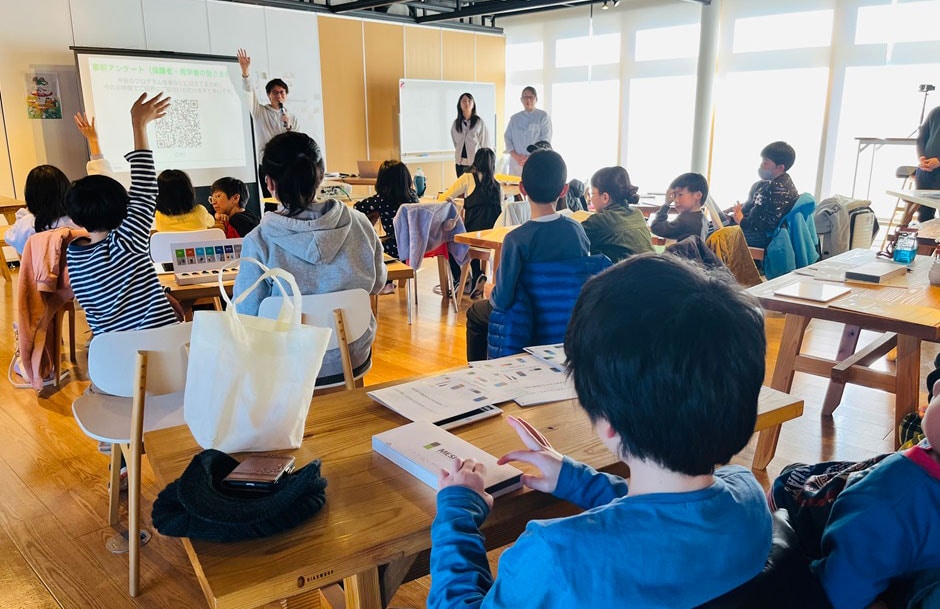
Arc & Beyond is also promoting co-creation with youth who have disabilities and expanding programs into rural areas where educational disparities compared to urban locations are becoming increasingly prominent. MESH is used in approximately 3,000 elementary schools, and is also being widely implemented in special needs education, in addition to regular classes. Collaboration has also begun on various inclusivity initiatives, including an event in 2024 organized by the University of Tsukuba Education Bureau of Laboratory Schools, where various children and students ranging from elementary to high school level, including some with disabilities, used MESH to create and then afterwards take on the challenge of presenting their creations.
Furthermore, as part of the "Learning Innovation" Project, a demonstration project led by METI (Ministry of Economy, Trade and Industry of Japan), which aims to create a foundation for new approaches to learning, Arc & Beyond team members conducted demonstrations of the schemes necessary to help local private businesses autonomously implement learning opportunities in Akita and Miyagi prefectures. Working with local coordinators in each region, team members met with approximately 55 local companies and administrative bodies, conducted discussions on local educational issues, and held workshops inviting approximately 115 young members of the local communities and their guardians. In this way, team members were able to explore program operations that can be implemented without advanced expertise on the teaching side, and mechanisms for autonomously continuing workshops. Going forward, Ishikawa and Hagiwara intend to accelerate the use of digital technologies other than MESH and advance their government and private sector partnerships.
"Arc" symbolizes a bridge, and "Beyond" signifies perseverance to overcome difficulties. The name expresses the aspiration to transcend social issues through co-creation.
Building a sustainable model for social impact
Arc & Beyond currently has about 20 members. The members possess vast and diverse experience in areas such as launching new businesses, automotive software engineering, research into sound-based augmented reality, sales and business development, accounting, public relations, and sustainability in the CSR field. Each member is not confined to a fixed role, and bringing together the diverse personalities and strengths of the team is driving new innovation. The reason for such a diverse group of people coming together in this way was not just a match of skill sets, but also because team members empathized with the desire of Ishikawa and other Co-Founders to address social issues and make an impact on society.
However, social issues are not easily resolved. There can be structural problems rooted in historical and institutional backgrounds, as well as challenges that require the resolution of technical and economic constraints, or a transformation in social values and behaviors. Temporary measures do not lead to sustainable solutions.
That is why Arc & Beyond chose a non-profit, general incorporated association approach. It was a decision taken to prioritize maximizing social impact over pursuing short-term profits. Furthermore, they have also lowered the hurdles for companies and organizations that would otherwise hesitate to tackle the enormity of these social issues, by allowing them to participate in management by providing technologies, services, or ideas, even without investment. "We have created a mechanism by which anyone can co-create if they decide to address an issue," said Ishikawa.
Arc & Beyond has introduced an operating scheme consisting of two frameworks: Fund Partners and Solution Partners. Fund Partners contribute to the Arc & Beyond Fund (a purely non-profit fund), and Solution Partners provide support by offering technologies and businesses. Many companies and organizations have shown interest in becoming partners since Arc & Beyond was established, leading to numerous inquiries. By allocating the returns from the fund towards business operations, the organization can move forward with its activities with a longer-term perspective.
Ishikawa, who is working hard to collaborate with various companies and organizations every day, says, "Solving social issues is not something that can be done by one company alone. Co-creation with various companies and organizations is essential. If we can go beyond existing frameworks and align our perspectives, we can make a difference in changing the world." Beginning this April, which marks the start of the second year since Arc & Beyond's establishment, Arc & Beyond will launch a new program to create opportunities for people from across society who have had difficulty fostering creativity and experiencing kando due to various social barriers. It aims to support their participation and advancement in society, thereby establishing a chain of value creation. To this end, the team is starting to build a platform for co-creating innovation with diverse partners.
Hiro Ishikawa
Representative Director and Co-Founder, Arc & Beyond Association, Inc.
General Manager, CSV Business Office, Business Incubation Platform, Sony Group Corporation
After graduating from university, Ishikawa joined a U.S. investment bank. In 2003, he joined Sony Corporation (now Sony Group Corporation), where he was engaged in overseas businesses. He received an MBA with distinction from the Stephen M. Ross School of Business at the University of Michigan in 2009. He returned to Sony's headquarters and executed multiple transformation projects as a staff member for Sony's top management team. In 2015, he founded Takeoff Point LLC in San Mateo, California, where he launched multiple businesses that address social issues through business. He established Arc & Beyond in 2024 and serves as its Representative Director and Co-Founder. Additionally, he works as an advisor and lecturer at several startup accelerator programs and schools both in the U.S. and Japan.
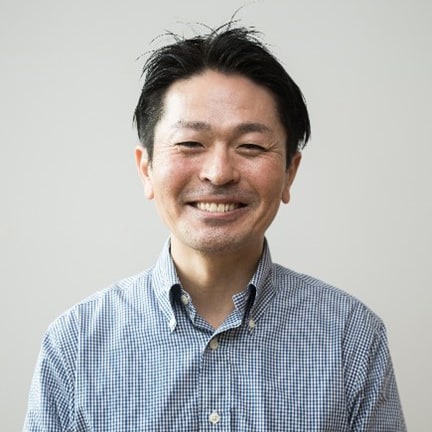
Takehiro Hagiwara
Executive Director and Co-Founder, Arc & Beyond
Senior Manager, MESH Business Office, B2B Business Department, B2B Products & Solutions Division, Sony Marketing Inc.
After joining Sony Corporation (now Sony Group Corporation) in 2003, Hagiwara engaged in planning and development of network services, and research and development of intelligent information processing such as machine learning. From 2011 to 2012, he conducted research in the field of human-computer interaction as a visiting researcher at Stanford University. He started a project that became the prototype of MESH™ in 2012 and commercialized it in 2015. MESH is currently used for elementary school programming education, university and adult training, and other purposes throughout Japan. He co-founded Arc & Beyond in 2024 and serves as its Executive Director and Co-Founder.