May 23, 2025
Engineering at Crunchyroll: creating the ultimate platform for anime fans
Samir Ahmed, Senior Vice President of Engineering at Crunchyroll, is building a platform that delivers one of the largest collections of anime to fans across 200+ countries and territories. As anime grows in popularity outside of Japan, Crunchyroll is the ultimate place to discover the wide range of vibrant content that this medium has to offer.
“Kaizen,” the Japanese word for “continuous improvement,” is embedded in Crunchyroll’s coding culture. Ahead of Crunchyroll’s 2025 Anime Awards, we sat down with Samir to talk about what it’s like to build and support a rapidly scaling content ecosystem, and how fans directly contribute to the award festivities.
-

Samir Ahmed
Senior Vice President of Engineering
Crunchyroll
Samir’s journey at Crunchyroll
──What motivated you to join Crunchyroll? What interested you most about
the role, both at a personal level, and a professional level?
I joined Crunchyroll to bring together my passion for anime with my experience working in entertainment building large scale platforms for streaming and video. It’s a bit of serendipity, really, piecing together both my personal and professional life at the same time.
On a personal level, that love of anime inspired by Japanese culture and manga was really exceptional. On the professional side, it was exciting to build something that was still at a very early stage. It was a seed ready to burst into life and flourish. That's what I came to Crunchyroll to work on: technical transformation. Building a platform that was very early and had been built for a small scale, and turning it into a platform that can scale as big as we are today serving 17 million subscribers and millions of users globally, which is just so fun.
──What was your first introduction to anime? How has your relationship to anime changed since joining the company?
My interest in anime and manga goes back to when I was a young kid and I saw Akira for the first time on TV. When it was airing, I was absolutely blown away with the animation, the storytelling, the music.
Akira had me hooked on anime. From there, it snowballed. Now, working at Crunchyroll, there's so much more that I'm exposed to. Crunchyroll is made up of so many people who are fans. There's a lot of recommendations that go around. There's a lot of discussion internally, which has led me to exploring different genres in anime, trying different shows that people recommend. I think I’ve become more eclectic in what I look for and watch.

──What were your personal favorite titles released on Crunchyroll?
Fire Force is probably my all-time favorite. It's colorful; it's fun. It features a journey where the main character doesn’t start out being a hero, then turns into one. It’s just a great show.
Blue Lock is also amazing. I love football, or soccer, as Americans call it. It’s really fun to watch. I’m also watching My Hero Academia with my daughter. That’s also a great title. Fun and easy to watch, with good morals for children as well.
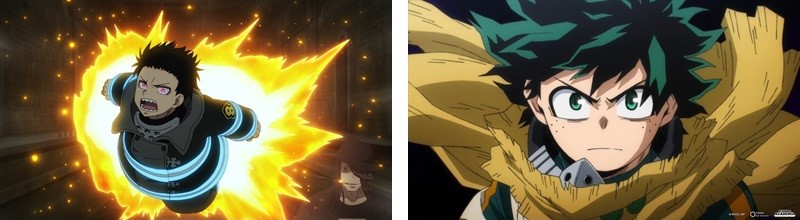
Left to right: Fire Force, My Hero Academia
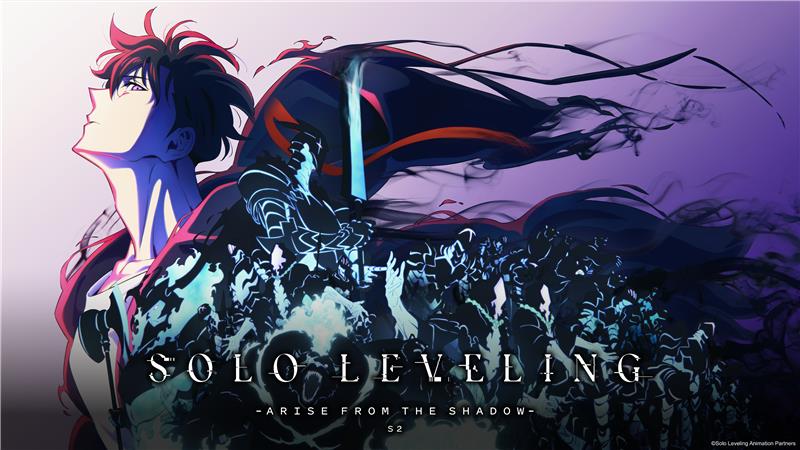
On a technical level, Solo Leveling was a huge title this year. It’s definitely one of the biggest hits we’ve had on Crunchyroll, so we had to make sure we were prepared. As engineers, we wanted to make sure that fans had access to it immediately at launch.
The Crunchyroll tech stack
──Currently the library is translated into 12 languages. Given Crunchyroll’s global reach, how does your team approach localization to ensure that the content is available for the widest number of fans?
It's probably one of the most interesting things we work on. There are multiple parts of the service that get localized and globalized. It starts with the on-screen information, translating the titles, the details, the descriptions on the Crunchyroll platform. Then we add subtitles and captions to the content itself. We built systems that allow us to add new languages pretty easily. Initially, when we started out, it would take us months to go through and add a new language or region, but now it's a matter of weeks.
We do a lot of the dubbing in-house at Crunchyroll. The Japanese scripts are translated into different languages, and then they are edited further to achieve the right tone for whatever culture it’s being translated for. Then we get into dubbing. We have dubbing studios both in Dallas and Los Angeles, where we have voice actors and talent come in and dub the content that goes back into post processing. It gets integrated into our videos, and then we're able to launch new dubs in different languages.
──What are the technical components for a service like Crunchyroll?
It starts off with our client applications. So, think about your mobile devices, tablets, streaming set top boxes, smart TVs, internet service providers. All of those clients run our code. We use a lot of modern web technologies like React. We also use programming languages like Kotlin on Android and really drive towards reusability of as much of that code as possible across our clients.
On the back-end side, we have to scale a lot. A lot of the platform is built for peak timing when we launch new episodes and millions of customers log onto our platform to watch their favorite shows. Lots of our users want to watch it immediately when it comes out, so we have to have a platform that scales and can meet this demand. So we work with cloud providers such as AWS and Google to build out an infrastructure that scales globally across many regions. Our back end is composed of micro service technology. We use a lot of node JS, Go, and Python. We use a lot of database technologies such as Dynamo and Mongo. It's quite a toolbox that we have ongoing.
──What makes the Crunchyroll service unique from a technical perspective?
We built a lot of the functionality specifically for anime. When we think about recommendations personalization, managing dubbing versus subtitling, or the ability for users to manage their watch list in the anime world, it's very different from traditional TV.
In anime, titles have arcs or stories, and they flow. Titles will flow between TV seasons and into movies, then back to a TV series. And so that requires us to develop a lot of different structures, services, and code to manage that flow. We’re always looking for new whimsical ways to weave in anime into that experience as well. It’s more than just a normal streaming platform. It’s an anime platform.
For example, with Kaiju No. 8, we added some cool graphical elements based on the show that we saw, like countdowns that mimic the style of the anime itself and big monsters fighting each other.
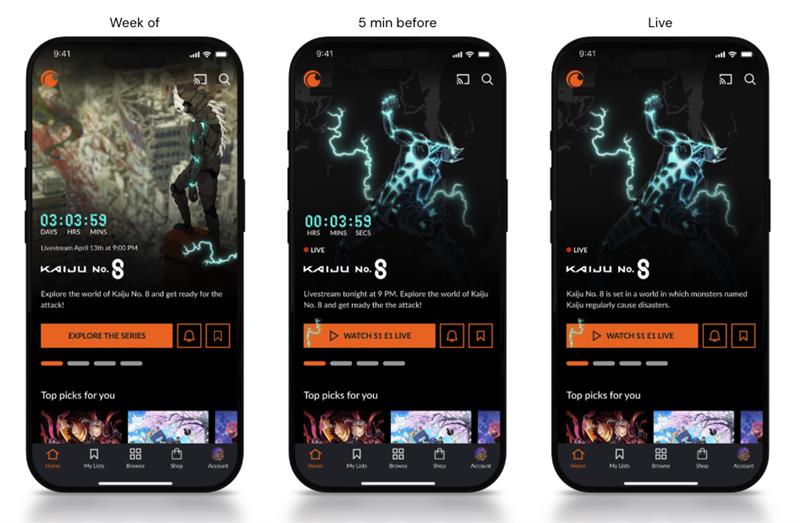
Kaiju No. 8 graphics on app
──One of Crunchyroll’s values is “kaizen,” the Japanese word for “continuous improvement.” How does this mindset shape Crunchyroll’s engineering culture?
It's at the heart of everything we do. We are always looking for improvements, whether it's through operational excellence, making sure our platform is even more reliable, focusing on improvements to the way that we handle incidents and the way that we scale the platform in our everyday use. We’re always evolving.
Using data is key to that. We are a data driven organization. We track a lot of data, we review it on a regular cadence, and we make those improvements. Week over week, month over month, just getting better and better and better.
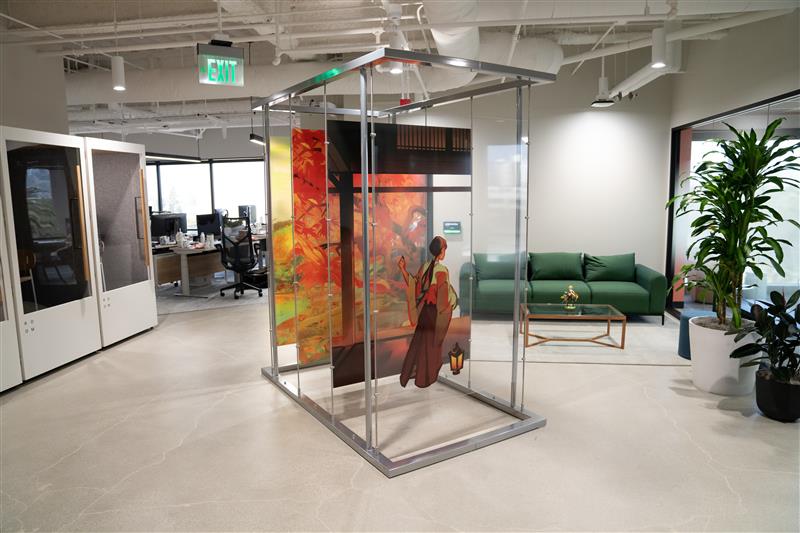
Crunchyroll's LA office
──When you are designing and building a platform for fans, what are the most important considerations for Crunchyroll engineers?
We’re always thinking about our platform from a “fan first” point of view. For every engineer here, it's not just about the design, it's not just about the requirements, it's about getting into the mindset of fandom, thinking of how we can subtly weave in the culture of anime into everything we do. We work closely with the design and product teams to find areas where we can make it extra special.
Another piece of this is providing Simulcasts, which are broadcasts of content that are shown as close to real time as possible with the Japanese broadcast. For many series, we literally have a one hour turnaround from the time it airs in Japan to getting it live to fans all over the world. We go through transfer and transcode the content into formats that we need, prepare for delivery, and then push it live.
──Are there any technologies within the Crunchyroll tech stack that are collaborations between Crunchyroll and other Sony or Sony-affiliated companies?
Yeah, we do a lot. One of the most recent is earlier this year, we launched a “Pay with PlayStation feature,” which is an accelerated way for users on PlayStation to sign up for Crunchyroll with just one click. So it bypasses the need to create an account and goes directly into, one click of a button, you’re in Crunchyroll and you can start watching anime. We also collaborate a lot on data to better understand our users and what they want to watch.
──At the end of 2024, your team debuted “Crunchyroll Arc,” a feature that gives premium subscribers a personalized “Year in Review” based on what they streamed, including a custom persona like “Multi-dimensional Hero with Something to Prove” and “Hardboiled Detective Who Makes Their Own Rules.” Can you tell us a bit about this feature? How did your team approach it from a technical POV?
We launched Crunchyroll Arc in 2024, and it was more of a last-minute push that we did just via email, where users got a summary of their year. It was super popular, and people liked sharing it on social media. And then we knew the year after that we had to double down and expand it.
So we went all out putting it into our mobile app where people can walk through their journey of that year's anime. We created personas and categorized users into different cohorts. From there we turned the data into a dynamic, animated journey through your year in anime. It was a really fun feature to build. I think it’s a really fun way for people to showcase their fandom through both their personas and what shows and stories they love the most.
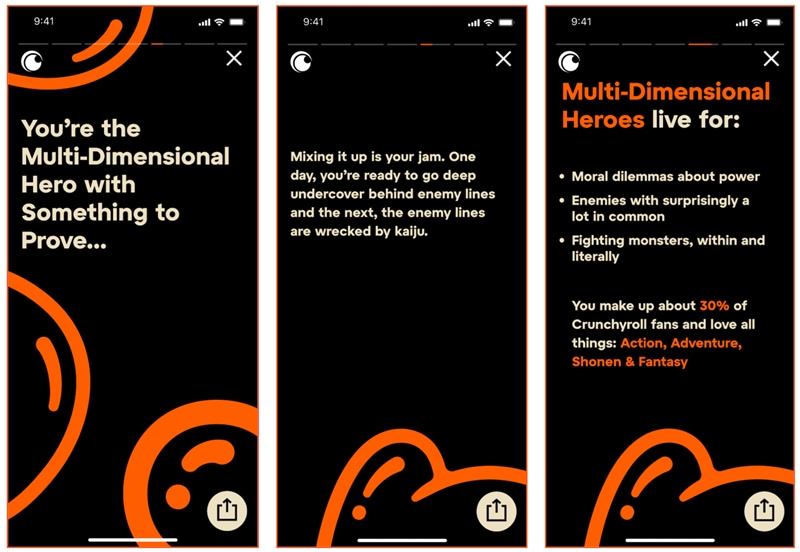
Crunchyroll Arc graphics
Building community with Crunchyroll fans at the Anime Awards and beyond

──I’m sure that many/most Crunchyroll team members are fans of anime themselves. Are team members able to impact the roadmap based on their experiences as fans?
Our employees are some of the biggest fans out there, and they often have ideas. We're open to those ideas, and some of them get built into the system or get enhanced in small ways. We also do yearly hackathons where the teams get together to explore innovative ideas and new approaches.
──What kind of technical talent are you looking for as Crunchyroll continues to grow?
I think what we look out most for are problem solvers. One of the biggest challenges we have is we're always meeting new thresholds, meeting new limits. And so being able to problem solve, roll up your sleeves and get in there is one of the most valuable skills. I think understanding Gen AI is obviously more and more critical; knowing how and when and if to use it in the right places is going to be essential for all engineers.
──The Anime Awards are happening this month in Tokyo. Can you tell us a bit about how Crunchyroll involves fans in the voting process?
Yeah, it's huge. At the end of one Anime Awards, we start preparing for the next one with even more ambitious goals and get the word out there about the amazing anime and the stories. So we did a lot of work at the very beginning. When we started, we had a single platform where people could vote. We've expanded that so you could vote on your phones, on the web, and we continue to expand the touch points of where users can go and vote for that for their favorite titles.
It requires us to scale. We have a lot of votes, especially the opening days and weeks. We're watching a lot about metrics and data throughout the voting period just to make sure the tools are working well for the fans. We can see the volume of votes that come in, but we can’t see the results, so it’s a surprise to us as well. We've been breaking our record year over year on number of voters. This year we had 51 million votes.
The Anime Awards will be livestreamed on Crunchyroll’s YouTube and Twitch channels, along with SONY PICTURES CORE and the Sony Corp. Group Global YouTube on May 25. Learn more about how to tune in here.