Jun 5, 2025
Enriching sound with spatial audio technology
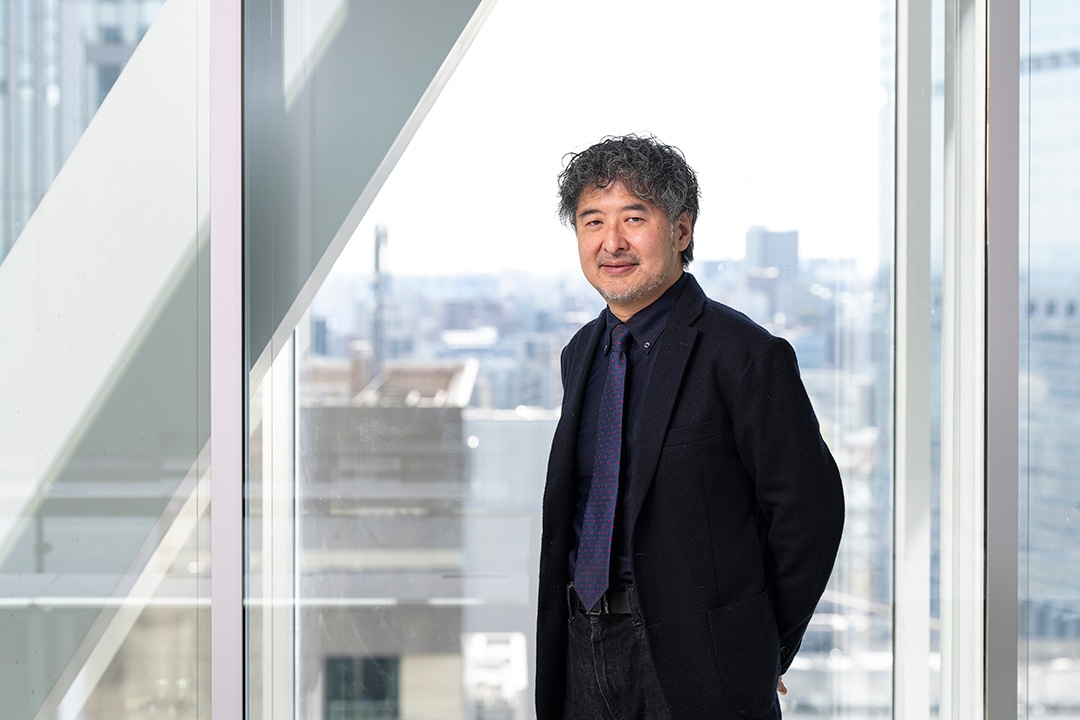
Distinguished Engineer Kohei Asada helped develop the world’s first noise-canceling headphones and continues expanding the field of sound with spatial audio today. We sat down with him to discuss his career and passion for technology.
-

Kohei Asada
Distinguished Engineer
Sony Corporation
Audio products are integrated systems of signal processing, electronics, and transducers
──When did you become interested in sound?
Two things kickstarted my interest in sound. One was playing in a band for my school festival in my third year of high school. I played bass, but I became fascinated by the effects unit that manipulated the sound rather than the instrument itself. The other was during my second year at university when I discovered a CD that used a 3D audio technology called Holophonics. I think it was what we call a binaural recording, but I was astounded by the sound. While researching it in academic journals, I learned that by using digital signal processing, it was possible to freely position audio with headphones, and I decided to get involved with this research.
However, the university I was attending did not have a lab related to sound engineering, so I forced my way into a measurement and biomedical engineering lab, saying, “Hearing is part of biomedical engineering, right?” and conducted research almost entirely on my own using PCs and DSPs (digital signal processors). My focus in graduate school was “research and development of signal processing methods to enable sound played through headphones to be heard from the desired front/back, top/bottom, and right/left positions.” The fact that my interests as a student have carried through to my current work makes me feel that I have a very blessed professional life.
──Tell us about what made you join Sony. Also, what products have you worked on since joining the company?
I chose Sony because it was a company that fulfilled my two interests of effects units and virtual sound localization*1. Sony’s company name comes from the Latin “sonus” (sound), and I thought this was just the company I was meant to join.
I joined in 1993, and since then, I have gone back and forth between the research and development and business sections, but I have consistently been involved with the development of audio technology. My focus is to develop technologies that enable people to enjoy sound using new functionalities, like noise-canceling (NC), sound collectors, open-ear headsets, and Sound AR (augmented reality).
I was initially placed in the research laboratories where I took on the challenge of developing the first generation of digital NC headphones. At the time, consumer digital NC headphones did not yet exist, and we aimed to commercialize such a product, but for a variety of reasons, the project was canceled. I was quite confident in digital signal processing, so I was disappointed, but my boss at the time told me this: “Understanding signal processing on its own isn’t enough. Learn everything there is to know about sound.” I internalized those words for the next phase of my career.
An audio product is a comprehensive system of software (signal processing/algorithms), hardware (electrical circuits/devices), and transducers (acoustic mechanisms). How can these be integrated? This motivated me to approach sound from a variety of perspectives and would later inform my future identity and passions.
Since then, I have challenged myself to develop a variety of technologies and products. For example, when working on sampling reverb, I accompanied tours of European performance halls and churches in order to record reverberation data, where I learned on-site about acoustic measurement and contributed to the product development of the DRE-S777 professional effects unit. It was well received, with many creators commenting that it “sounds just like you are there.”
During the development of the Auto Calibration (D.C.A.C.) function that utilized this acoustic measurement technology, we repeated field tests in extreme environments, including a public bathhouse where sound tends to echo and an 8.8-square-foot room where sound tends to be muffled, in order to verify whether it would be possible to recreate an optimally balanced sound field using equipment like AV amplifiers or home theaters regardless of the room environment or speaker placement. The first device to feature this function was the TA-DA9100ES AV amplifier, which was launched in 2005. Even now, 20 years later, part of the functions are still being added, with some most recently being utilized in PlayStation®5.

The DA-9100ES multi-channel integrated amplifier with automatic sound field correction functionality
I also took on the challenge of ultra-realistic space creation, which is linked to today’s 3D audio technology. I rented out a hotel’s performance hall to conduct PoC (proof of concept). By using 40 channels and placing 216 speakers, I attempted to recreate a Los Angeles jazz hall concert. This unfortunately never reached commercialization, but in any case, I feel that I have been able to work on a variety of projects in the way I wanted to.
*1 Sound localization: Perceiving the location, direction, and distance of a sound source
Establishing a new genre in the audio world with digital noise-cancelling (NC)
──You then went on to lead development for the world’s first digital NC headphones launched in 2008.
In 2006, I got another opportunity to challenge myself to digital NC development. I was regretful ever since the previous project was cancelled 10 years earlier, and I wanted to put the “everything there is to know about sound” lessons I had learned to the test.
As the development leader, I enlisted the help of experts in a variety of genres within Sony and mobilized our expertise and knowledge to demonstrate an overwhelming advantage over our competitors, and after two years, we ultimately managed to launch the world’s first digital NC headphones, the MDR-NC500D.
Our thorough focus on functionality and performance led to the horizontal expansion of digital NC to many of Sony’s products, as well as the establishment of a new product category throughout the entire audio world, including other companies. This product opened the door to the development of sound collectors and the launch of hearing aids, which applied NC technology. In 2023, I received an award from my alma mater, recognizing my contributions to the advancement of the audio industry through the development and commercialization of digital noise-canceling headphones.

MDR-NC500D
──Tell us about the principles behind NC technology. Additionally, what are the merits of switching from analog to digital?
The mechanism is simple for both analog and digital. It is made up of the NC system located between the microphone and headphone driver. Noise is picked up by the headphone's sound pickup microphone, and the NC system generates a sound that is antiphase to the noise near the eardrum, thereby cutting out the noise.

Diagram of noise cancelation
Sony launched its first analog NC headphones for use in airplane cabins in 1992 and released the world's first NC headphones for consumer use three years later. However, this analog NC had issues with things like noise cancelation performance and music playback sound quality.
On the other hand, a challenge in advancing digitization is the delay that occurs when generating the antiphase sound. The goal was to reduce system latency to 20 microseconds or less, which would ensure NC performance. We solved this issue by developing a new system that focused on ultra-low latency from an overall perspective, from the boundary between analog and digital to the algorithms within the DSP. We were the first to achieve digitization in 2008.
The merits of digitization are wide-ranging. High-precision calculation enables performance improvement of NC functions, but the introduction of LSI (large-scale integrated circuits) has made it possible to reduce size and power consumption, as well as improve the sound quality of the music being played. Furthermore, integration with AI and digital controls is now possible, and functional evolution has made leaps and bounds. From the user’s perspective, not only has the music experience improved, but the fact that this technology has been adopted in a variety of products also means there are more choices available.
Utilizing Sony’s accumulated knowledge for further pursuit
──What are you currently working on?
As a Distinguished Engineer, I am responsible for leading the strategy for cross-organizational development of sound-related technologies within Sony and supporting their growth. My work does not end with so-called audio technology but also includes research and development into the spatial propagation of sound as well as hearing and cognition.
With headphones, microphones, and speakers, sound passes through space before reaching the ears. How can we improve the quality of sound as it physically traverses space, the way it is heard by humans, and even the quality of how the space is perceived? My mission is to pursue this by utilizing Sony's accumulated knowledge and expertise in audio technology.
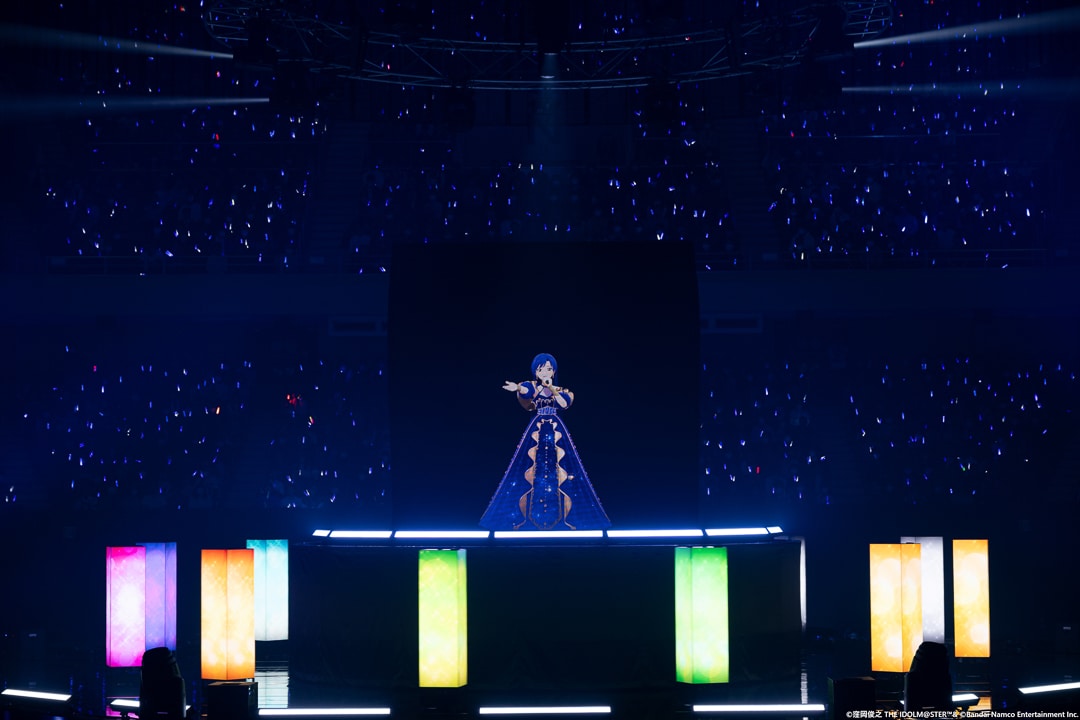
I am also involved in 3D audio (immersive audio), which is one field within spatial audio. For example, 360 Reality Audio, a sound experience that uses Sony's established 3D audio technology, assigns location information to each sound, allowing the user to experience the immersive, three-dimensional sound field intended by the creator, and 360 VME (360 Virtual Mixing Environment) accurately reproduces the sound field of a studio consisting of multiple speakers through headphones. In a recent initiative, we collaborated with a VTuber to hold a virtual music concert in a planetarium using 3D VR (virtual reality) images and 3D audio, providing participants with a new experience. When it comes to 3D audio, I think that important points in the future will be not only sound quality but also the position of the sound image and how a sense of space is created.
Furthermore, in the future, we would like to make contributions to differentiating “sound experiences” centered on space, such as with spatial NC, which reduces noise inside cars, and wave propagation control, which improves the listening environment by actively or passively controlling sound waves.

Creating impact with the “4×70” way of thinking
──Please tell us about the concepts that you value in research and development.
The keywords we have adopted in the workplace are “Go to the field” and “emergence.” Collaborating with a variety of people, and getting close to creators is important. I want our young members to jump into technology-related creative fields, without being afraid of failure. In fact, we send engineers to our group's video content sound production sites for long periods of time, where they build relationships of trust and support with creators.
The idea I have tried to adopt to create impact is the “4×70” idea. Rather than getting 100 points in one skill, I think it would be better to get 70 points in four related skills, for a total of 280 points. Moreover, 70 points is achievable with a reasonable amount of effort. Then, when I see a problem, I will solve it with the help of Sony’s many experts in electronics, mechanics, and entertainment, bringing those 280 points closer to 400 points. In that way, I think of myself as an architect of the sound system.
──I understand that you have applied for over 200 patents. When do your ideas come to you?
When I need an idea, I first just try to input information. I read a lot of books, not necessarily related to my specialty. By doing that, it’s as though my brain automatically defrags (reorganizes its knowledge) when I’m relaxing, such as when I’m sleeping or taking a bath, and flashes of inspiration suddenly come to me. I tell our young members, “Read a lot of books, sleep a lot, take a lot of baths.”

Toward an era when everyone at Sony has the spirit of a creator
──Moving forward, what are you enthusiastic about working on at Sony?
In terms of spatial audio technology, I feel that in addition to considering the physical behavior of sound, it may be a good idea to incorporate more of a cognitive science approach to the listener.
For example, when you're watching a movie, sometimes the background music starts playing at a volume you don't even notice, and then it suddenly gets louder, and before you know it, you’re suddenly filled with emotion. Or, at a live venue, a low-resolution image initially plays on the screen, but then it suddenly changes to a high-resolution image along with dazzling lighting, and the artist appears. In that instant, the audience is unconsciously aware that “the show is starting.” Rather than simply physically imitating the entire world, I think that by approaching the emotions that appeal to these human feelings and experiences, we can create more moving location-based entertainment.
It is a type of production effect, and I think that we engineers need to interact more with entertainment professionals, such as game, music, and video creators, to learn more about the concepts behind their production.
One of my aims in dispatching our younger members to the production field of entertainment business as I mentioned earlier is to give them this experience.
I think that if everyone can understand the spirit of a creator, more wonderful products and services will be born, and I would like to work with people like that.