Mar 23, 2026
Inside the Sony Women in Technology Award with Nature:
A Conversation with Recipient-Turned-Judge,
Dr. Amanda Randles

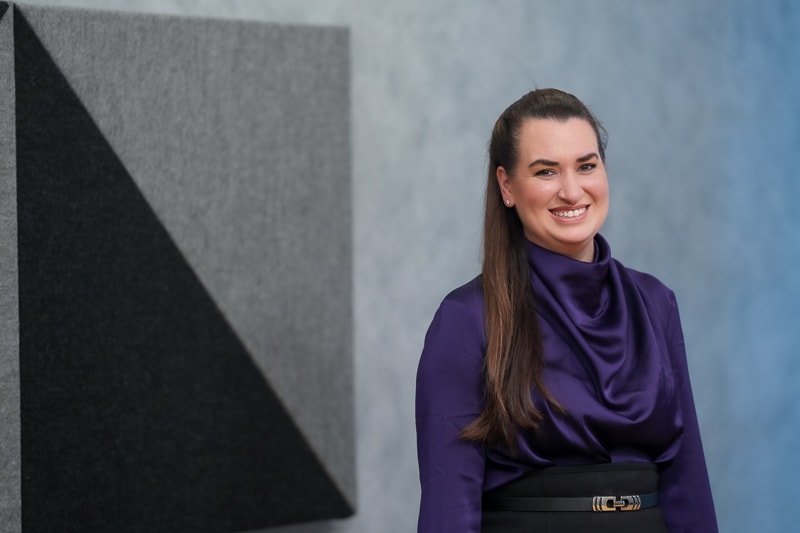
Meet Dr. Amanda Randles, one of the 2025 winners of the Sony Women in Technology Award with Nature (WIT) .
Her work focuses on personalized digital twins — computational models designed to monitor patients in their daily lives, diagnose diseases earlier, and guide treatment decisions with greater precision.
This blend of ambitious science and real-world relevance reflects the core purpose of the Sony Women in Technology Award with Nature — an annual global program created by Sony Group Corporation in partnership with Nature to champion early- and mid-career women researchers driving positive impact through technology.
To understand how being an award recipient and now judging panel member shaped her work, we asked Dr. Randles to reflect on her research, her experience with the award, and what it will take to move ideas from simulation into everyday clinical care.
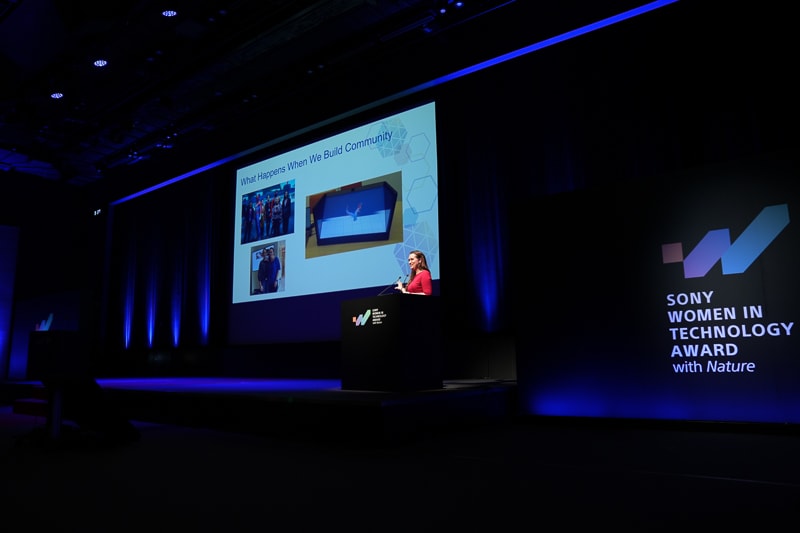
Dr. Randles delivered the keynote speech at the Sony Women in Technology Award with Nature Award Ceremony
How This Award Accelerated Dr. Randles' Work
──In practical terms, how did the award accelerate your research?
When I first received the award, we had just completed some proof-of-concept work on personalized cardiovascular digital twins — computational models that simulate blood flow across a patient’s vascular system. In the initial heart-failure study, we were asking a basic question: can those simulations reproduce the same measurements doctors normally obtain through invasive procedures for a small number of patients? This award allowed us to expand that study.
──Did the award enable new collaborations?
Definitely. The award is actually how I met Dr. Kiana Aran, a fellow inaugural winner, and we now work closely together. She runs experiments to validate some of our new methods. We actually have a grant together now on heart failure to expand this space and add the genetic side and understand red blood cells. I didn’t expect that coming out of this, and it’s been really helpful.
──You visited Tokyo to receive the award and meet teams across Sony. Were you introduced to any Sony technologies that could impact your research?
Yes. We’ve started a user study using the Sony Spatial Reality Display to help us visualize data. Clinicians don’t have time to set up complicated systems. Head-mounted displays aren’t practical in many clinical environments. The Spatial Reality Display gives high resolution without glasses, and that’s important.
The anecdotal response so far has been very positive. They’re excited about it. They’ve never seen it before. It’s easy to use.

Dr. Randles and Sony Corporation team members reviewing the Spatial Reality Display
Community & Industry Collaboration
──How did participating in the award create community among recipients?
The honorees have a WhatsApp group, and we were talking about how we can help each other’s careers in the future and what we can do to help support women going forward. We started talking about that within 10 minutes of meeting each other.
It’s not competitive. We’re always asking, ‘How do we lift up other people?’ Some of the women had already been putting each other up for awards.
No one is trying to game it. It's been very much,‘How do we help your situation?' That's been really impressive.
──You also served as a judge. How did that shape your perspective?
It was incredibly humbling. The candidates were fantastic. It was really hard to pick people.
Everyone is truly passionate about what they’re doing. They’re not just doing it because it’s the next big thing. They’re driven to make a difference.
It was exciting to see across the spectrum of areas how much progress is being made.
Advice & Representation
──What advice would you give to women considering applying?
I’ve definitely heard people say they’ll apply next year when they feel like things have come out a little more.
Especially for women, it’s harder. We’re not always comfortable promoting ourselves. Writing the application yourself and saying, ‘I really deserve that’ can be difficult.
Even just going through the application process is a good exercise. It’s set up to explain why you think you’re making an impact and why you’re excited about this. It’s worth doing anyway.
Taking the risk and trying — and asking for help — is important.
──Where do you see the biggest drop-off point for women entering STEM?
It’s definitely sometime in high school. It’s before college that we need to address.
Seeing the representation is helpful. Just showing that women can do it. Showing that you can have family and be a researcher.
I had really strong female role models in college. At one point my son said he didn’t know if he could be a scientist because he was a boy — every scientist he knew was a woman.
That’s representation.
You need to see that it’s possible.

The Future of Women in Technology
──Awards like this highlight industry–academia partnerships. What non-financial opportunities for collaboration could help bridge academic discovery and real-world impact?
There’s so much opportunity.
Technologies developed for entertainment — like large-scale fluid simulations for movies or instrumentation used in sports analytics — have real parallels in healthcare. The underlying methods can translate across domains in ways people don’t always expect.
Bringing people together in the same room is critical. When you put different disciplines together and ask, ‘How would you collaborate?’ interesting things happen.
Even informal sessions — short science presentations followed by collaborative brainstorming — can spark innovation. Sometimes it’s just about enabling conversations between groups that wouldn’t otherwise interact.
A lot of the impact comes from creating the space for those exchanges to happen in the first place.
──If you could evolve this award program in one meaningful way, where would you focus?
I think continuing to build the community is important.
If there are ways to bring recipients together periodically — even attached to larger conferences — that could strengthen connections.
Creating spaces where people can exchange ideas across disciplines and support each other’s careers would be valuable.
The organic collaboration happening already is powerful. Expanding that network and maintaining it over time would be meaningful.
──Over time, what would success look like for a program like this?
I think the goal is that the distinctions aren’t necessary — that everyone is being lifted up together. We’re not there yet.
One of the nice things about the group (award winners) is that in the last few days we’ve been discussing how to help each other and make sure women are being nominated for more general awards. If we have this community here, can we help each other?
It would be really nice if a certain percentage of this group ended up getting some of those next-level awards and really helped each other kind of get there. A lot of it is that women aren’t as comfortable putting themselves forward. We need to address that.
Closing
The Sony Women in Technology Award with Nature was established to recognize research that brings material impact to society. Hiroaki Kitano, Chief Technology Fellow at Sony Group Corporation and principal founder of this award program, explains the thinking behind it: "We started the Sony Women in Technology Award with Nature because we believe that the contribution of female researchers deserves more visibility and support. Diversity of expertise and experience are not just nice to have — it is essential for building groundbreaking technologies and implementing radical solutions for the most difficult problems."
Magdalena Skipper, Editor in Chief of Nature, and co-founder of the award echoes that urgency: "Gender imbalance in research, technology, and innovation continues to be a problem and it needs to be urgently addressed. Everyone should view it as their responsibility to support women researchers at all stages of their career. The early to mid-career researchers who are in the thick of building their foundational body of work — they are the present and the future."
To learn more about the award program, please visit: Sony Women in Technology Award with Nature (WIT)