Aiming to Achieve a Zero Environmental Footprint
Stories Behind Green Management
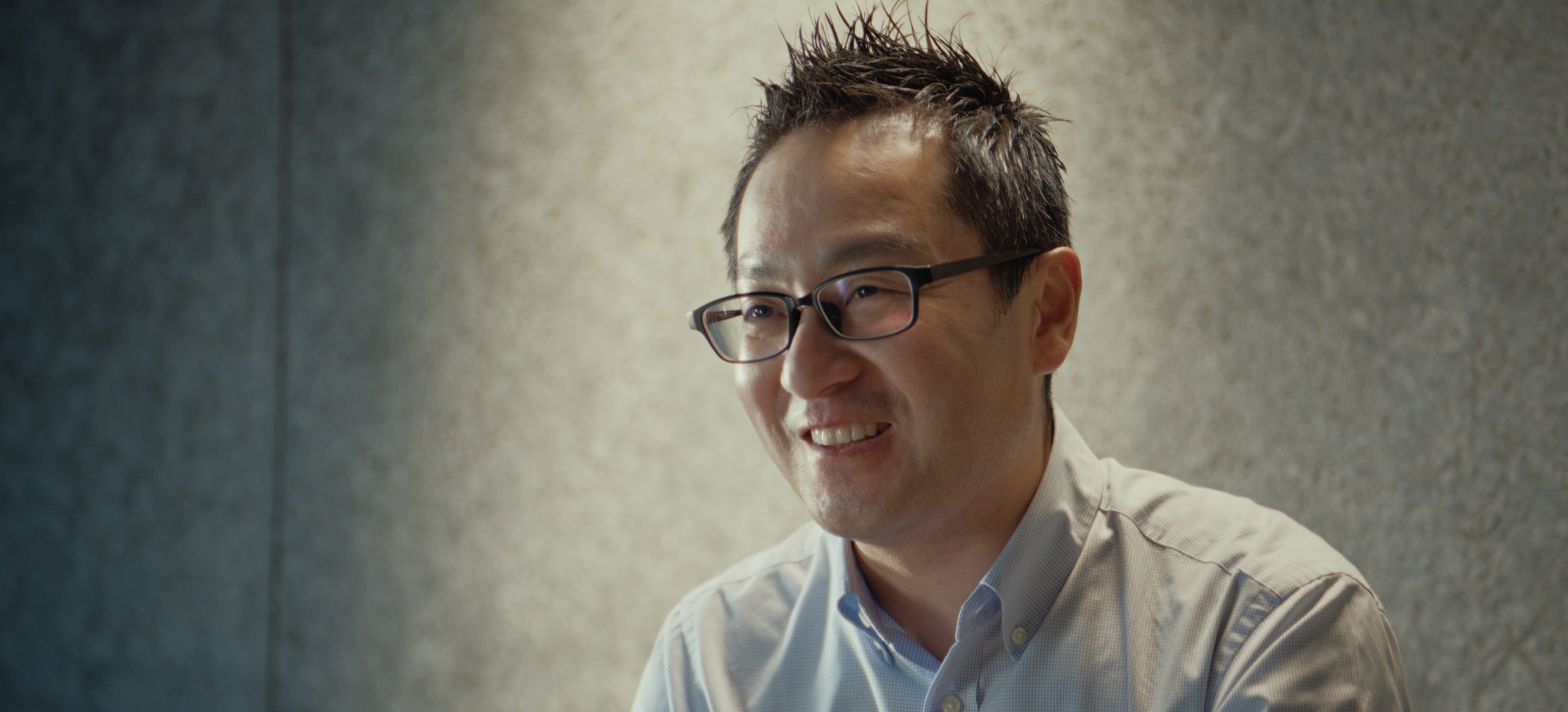
Making televisions brighter, bigger, and better for the planet so that sony customers can watch with peace of mind.
Focus Point 1 Significant reduction of our greenhouse gas emissions
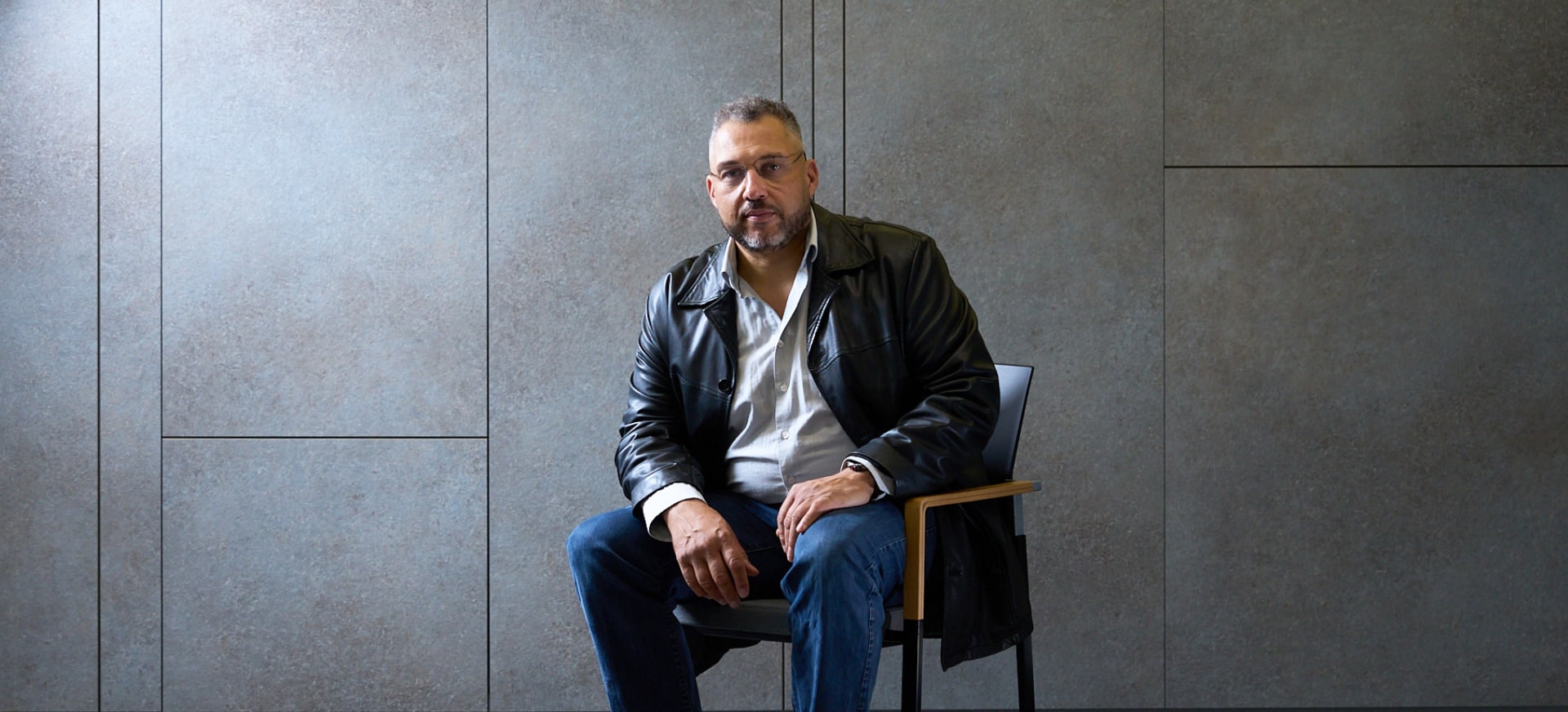
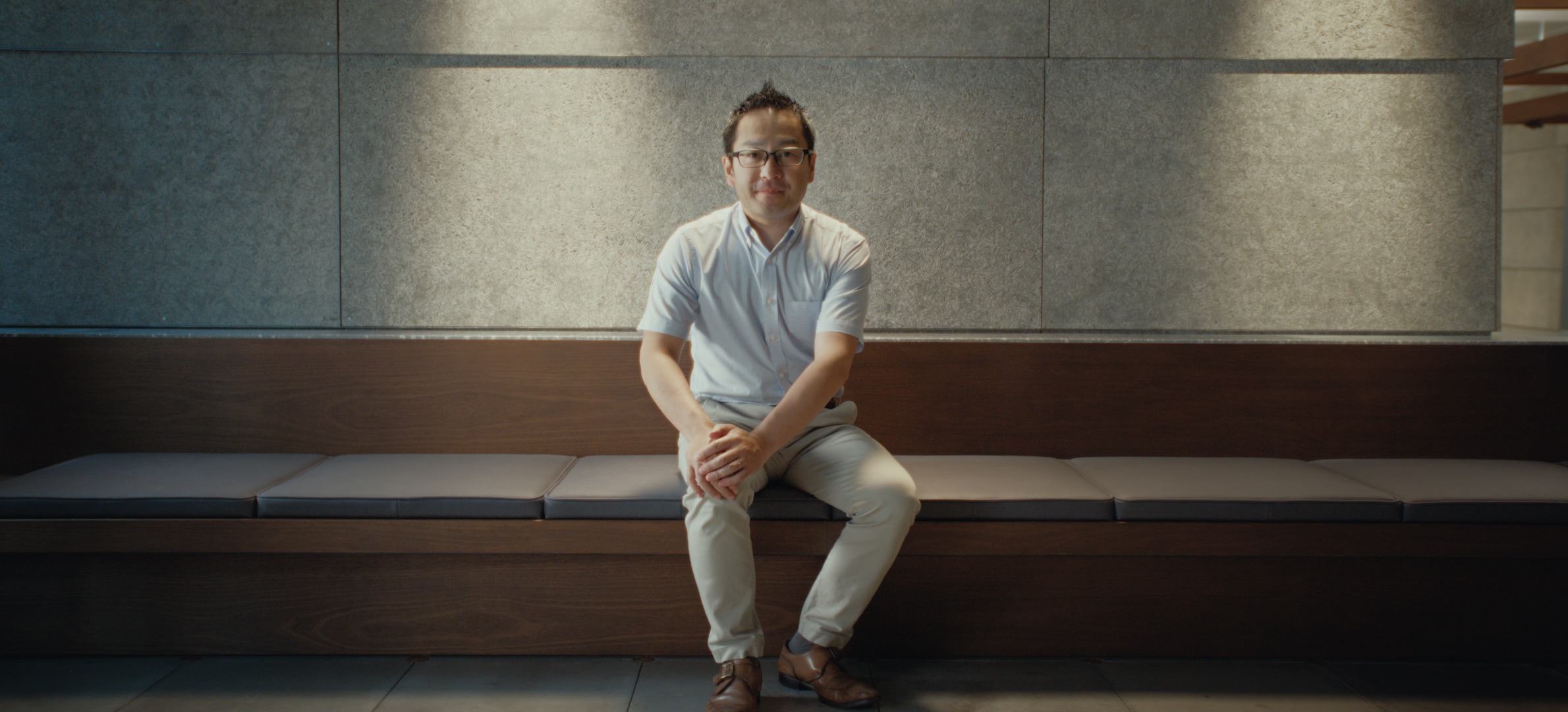
Product Design Division #1, Technology & Engineering Center, Sony Corporation
Yoshinao Takeda
INTRODUCTION
In order to minimize our greenhouse gas emissions, we must reduce the amount of electricity used not only at our production sites but also by our customers. In fact, electricity use accounts for more than half of CO₂ emissions per household in Japan(*1). As electronics products inevitably play a part in the electricity use, Sony is working to minimize the power consumption of its products.
A goal outlined in our medium-term environmental targets “Green Management 2030” (GM2030), is to reduce the Scope 3(*2) emissions of the Sony Group by 25%. The objective is mainly to minimize the power consumption of our products and significantly reduce the amount of electricity used by our customers over the long term.
Product design initiatives are implemented on the ground with reducing power consumption in mind. Of our electronics products, this article focuses on the energy-efficient design of our BRAVIA™ televisions. We heard from Yoshinao Takeda, a key figure in this area, about how BRAVIA™ televisions maintain excellent visuals while minimizing power consumption, the significance of this achievement, and his outlook for the future.
- According to “Final Results of the fiscal year (hereinafter “FY”)23 Household Sector CO₂ Emission Survey (Confirmed Figures)” published by the Ministry of the Environment
- Scope 3 refers to all indirect greenhouse gas emissions arising from upstream and downstream the value chain that are not classified as Scope 1 or Scope 2 greenhouse gas emissions resulting from Sony's business activities.

PROFILE
Yoshinao Takeda
Takeda joined Sony in the year 2000. He is responsible for the energy-efficient designs of Sony's television products, such as the BRAVIA™ line, as well as ensuring Sony complies with the electrical power regulations of each country and region and obtain appropriate certification. With experience in designing television circuit boards and audio parts, he works on reducing the power consumption of Sony's products from a design perspective.
Reducing the amount of electricity used by consumers day-to-day.
Initiatives to minimize our environmental footprint from everyday activities
Q: Firstly, can you tell us about your career so far and the main energy-efficient design initiatives?
I joined Sony as a new graduate and was initially responsible for designing television products. I designed electrical components such as circuit boards and audio parts. Since Sony has launched its long-term environmental plan “Road to Zero,” I have been working on energy-efficient designs. For each year’s product development, we decide on an upper limit on power consumption and set detailed consumption targets for each model, ensuring we make steady progress in becoming more energy efficient. We aim to reduce power consumption gradually and reduce Scope 3 emissions across the Sony Group by 25% by FY2030.
Previously, I focused on quality, but now I have a perspective that requires both quality and environmental considerations, and because my role is essential to product design, I find my work rewarding.
Q: What are you conscious of in your work?
My mindset as an engineer is to deliver high-quality products to our customers. I strive to put effort into the brightness and size of our screens, however this focus may lead to less emphasis on energy efficiency. Therefore, I adjust my goals and implement creative measures to reduce power consumption while respecting the aspects I prioritize as an engineer. I was also involved in development as a designer of television units, so I understand what kind of measures need to be taken to minimize power consumption. Setting clear targets also motivates the television unit design team, and I aim to collaborate to achieve both high quality and energy efficiency.
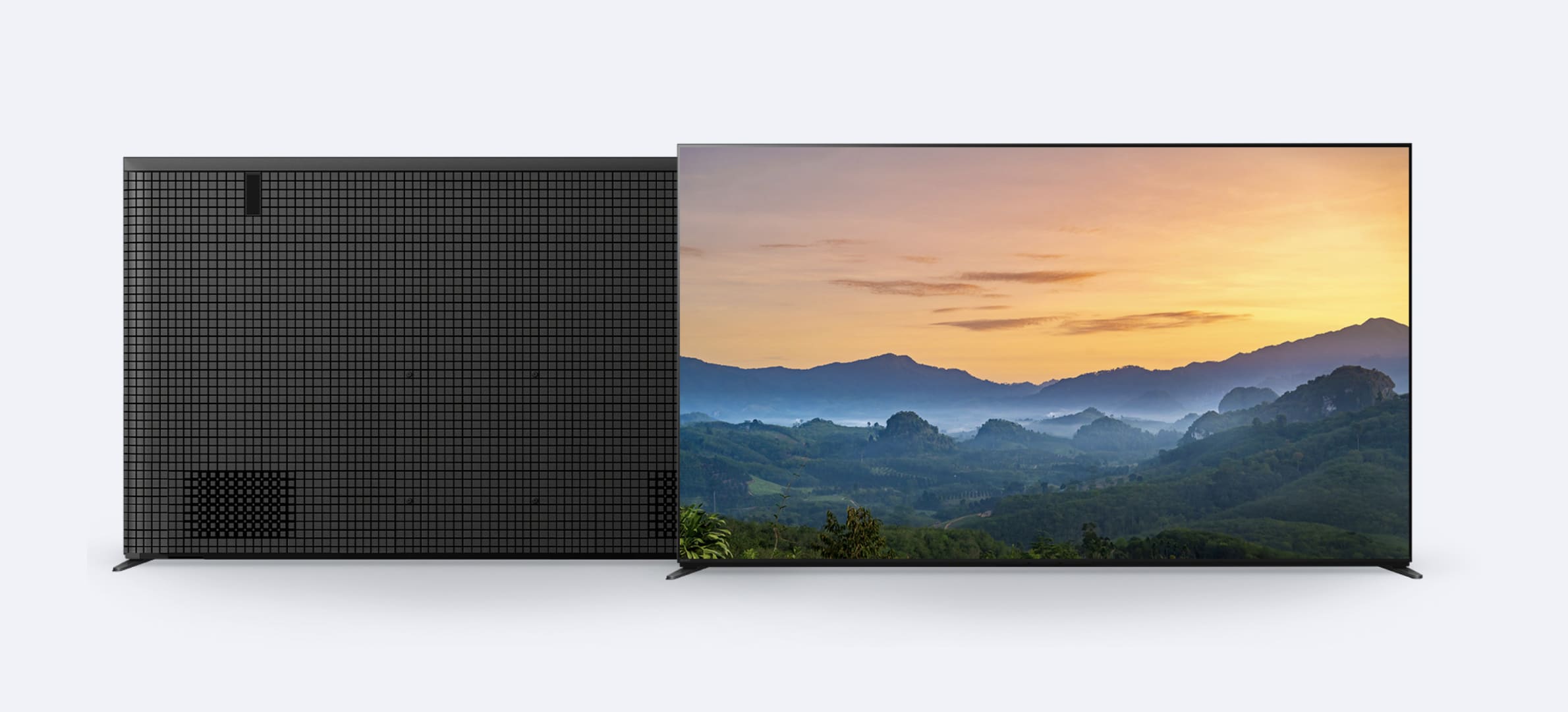
We can deliver televisions that not only look great but are also environmentally conscious.
I want to provide products packed with all kinds of technology to our customers.
Q: What actions are you taking to achieve your target?
To reduce the power consumption of televisions, it is essential to reduce the power used by the backlight, that is, the screen. However, since we do not wish to compromise on the screen brightness, televisions such as the BRAVIA™ are equipped with a feature that adjusts the brightness of the screen depending on the scene, thereby reducing power consumption while still providing sharp and realistic images.
Additionally, we have utilized mini LEDs for the backlight to maintain the brightness and minimize power consumption. We have also made efforts to meet the energy-saving needs of our customers by installing modes that reduce power consumption.
Q: What do you feel Sony's strengths are in terms of energy-efficient designs?
We have developed an understanding of what is key to operating products with low electric power, and we reflect this know-how into developing the latest products. I think Sony is uniquely positioned to deliver energy-efficient solutions, given its long history of designing televisions. For the technologies I mentioned earlier to maintain screen brightness and minimize power consumption, we also use technologies developed since the era of cathode ray tubes. When I consult with my design team to develop measures, they come back to me with a wide range of ideas. This lineup of technologies at our disposal is reassuring when it comes to producing an environmentally conscious product.
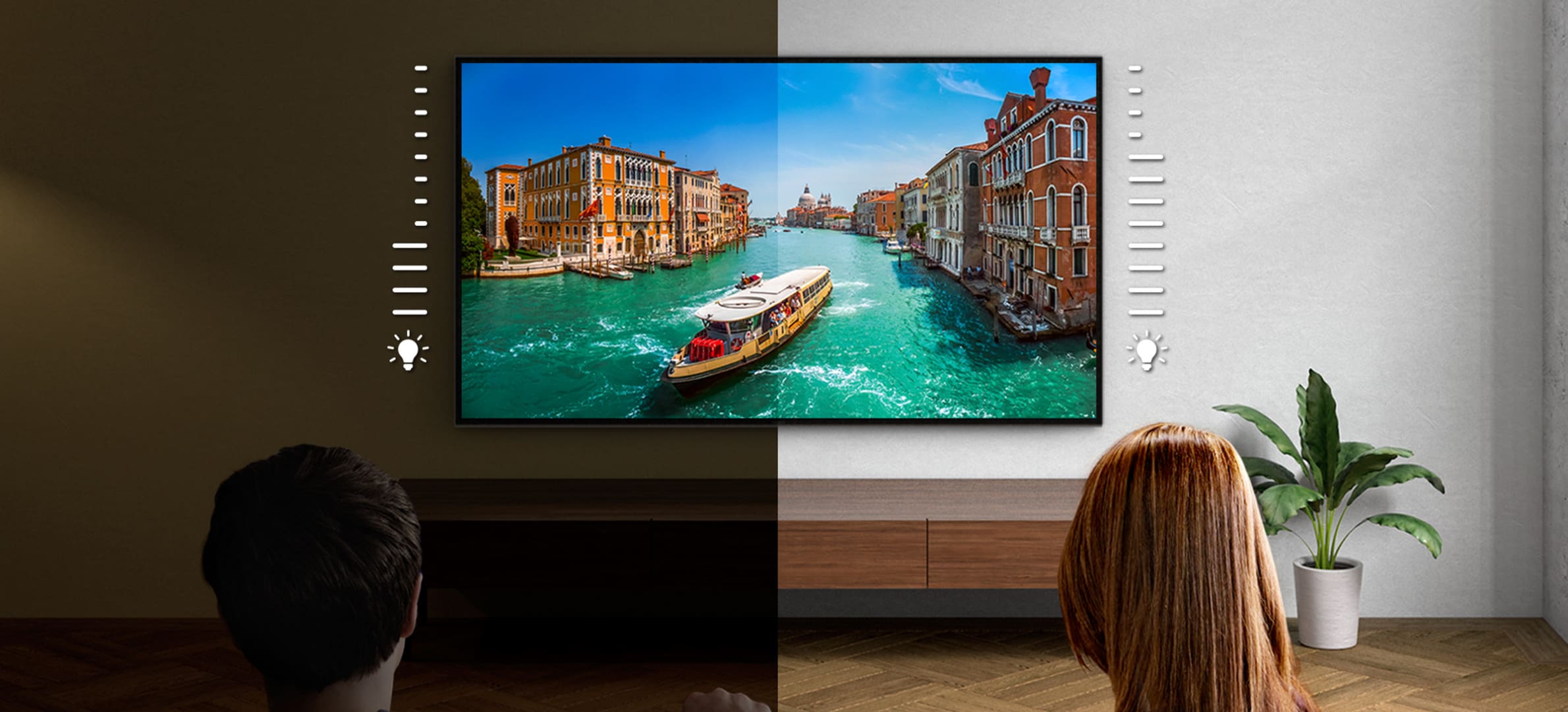
Reducing power consumption one step at a time to achieve our target.
There is value in repeatedly challenging ourselves, and this paves the way forward.
Q: What do you see as your challenge right now?
It is to install energy-saving features in a wider range of models. By overcoming challenges such as cost, we aim to expand the lineup of products equipped with these technologies, making it easier for our customers to select televisions with a lower environmental footprint. It is only when products are used by consumers that their energy efficiency is truly demonstrated. With awareness of environmental issues increasing in recent years, my aim is to further promote the fact that Sony's televisions consume less power and to establish them as the preferred choice for customers seeking energy efficiency.
Q: What is your motivation in terms of this challenge?
As an engineer, there is nothing that compares to the joy of seeing a product release into the market. Currently in Europe, products are ranked based on power consumption, and this attribute significantly influences how well the product is received. While I sometimes struggle to come up with measures to reduce power consumption, my efforts can improve how well the product is received, which motivates me to continue to work hard.
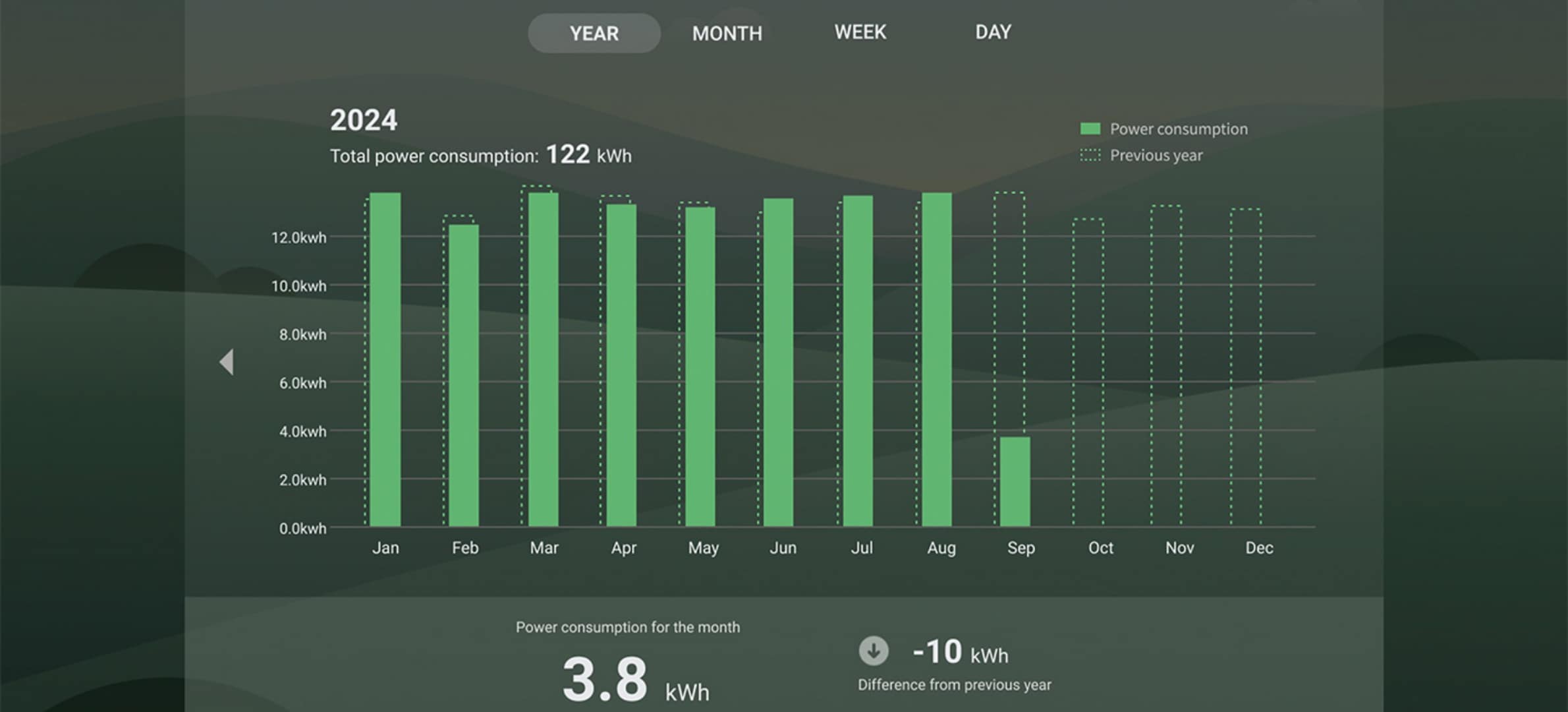
The technologies we have developed over the years will build the future.
I want to make society a place where Sony customers can watch their televisions with peace of mind.
Q: What kind of products do you want to develop in the future?
Undoubtedly, stunning visuals and spectacular sound are the hallmarks of a great television, and I hope to develop products that continue to enhance these aspects while being environmentally conscious. Through trial and error, we are progressing towards achieving the target of “5% reduction in power consumption per product” outlined in medium-term environmental targets “Green Management 2025” (GM2025).
GM2030 demands more significant reductions in power consumption, and while I anticipate that we will need to develop newer technologies moving forward, I believe we can produce measures to achieve the targets by making continuous improvements.
Q: What kind of society do you think these initiatives will create?
I think we will have a society where people can watch their televisions with peace of mind. In contrast to the past, we now live in an era where people can enjoy beautiful visuals and audio on a large screen. If we can add energy conservation to this, they will be able to truly enjoy their televisions while achieving a reduction in their environmental footprint at the same time. Rather than refraining from watching TV out of an overemphasis on environmental concern, I believe the ability of consumers to fully immerse themselves in the content is of great value. Therefore, I want more people to understand the appeal of energy-efficient televisions. I am committed to continuously improving our televisions to achieve both higher quality and environmental consciousness to be able to meet increasing expectations.
A future-oriented outlook for creating
a sustainable global environment for future generations
Focus point 1 Significant reduction of our greenhouse gas emissions
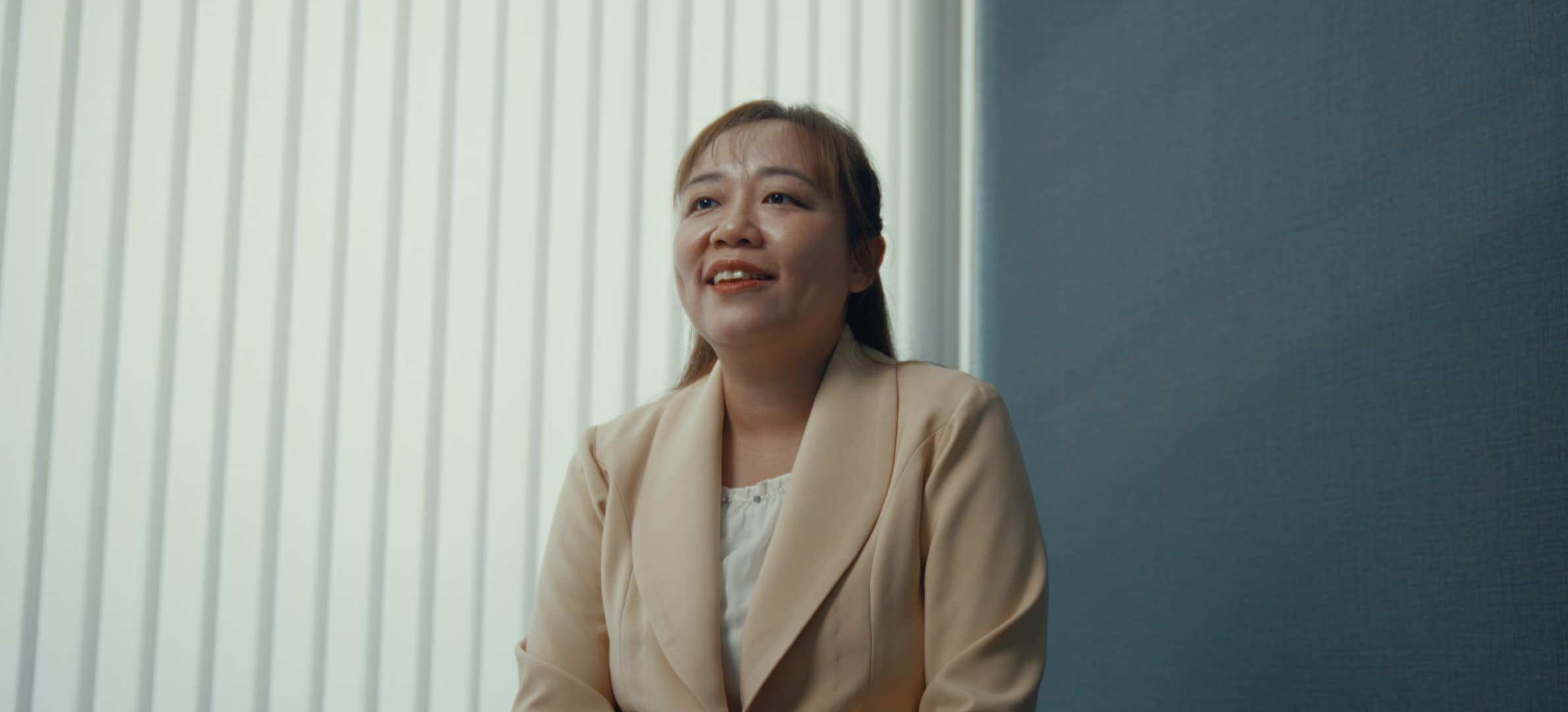
Environment and Safety Department, Sony Device Technology (Thailand)Co., Ltd
Atcharaporn Muangkrung
INTRODUCTION
What kind of planet do you wish to leave for future generations?
The global average temperature in 2024 has already risen by approximately 1.55°C compared to pre-industrial levels, resulting in abnormal weather patterns and rising sea levels. Global warming initiatives in response to this crisis are a matter of worldwide concern; the 2015 Paris Agreement involved 196 countries and regions. This framework, which aims to limit global warming to 1.5°C, serves as the foundation for global cooperation to achieve a sustainable future under a shared global policy.
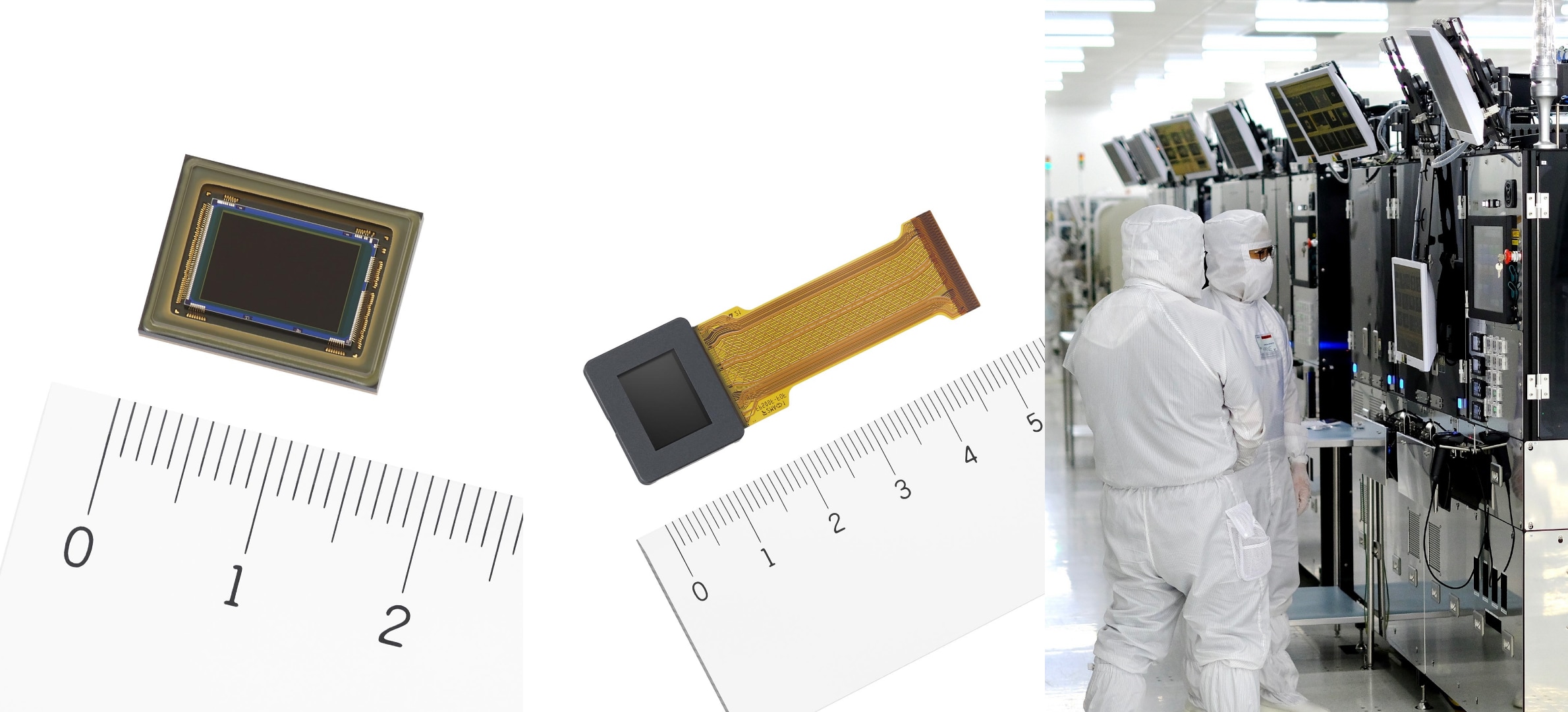
Sony Device Technology (Thailand) Co., Ltd. (SDT), which operates a semiconductor manufacturing site, also bears the responsibility of reducing its greenhouse gas emissions.
Atcharaporn Muangkrung, who leads SDT’s environmental initiatives, emphasizes the importance of building a shared vision of “ensuring a sustainable global environment” among all employees and translating this vision into continuous action. In this article, we hear the thoughts of Atcharaporn who continues to take steps toward a sustainable future while fostering collaboration between Sony employees in Bangkadi, Thailand, and the local community.
- *1From the World Meteorological Organization (WMO) "State of the Global Climate 2024"

PROFILE
Atcharaporn Muangkrung
Atcharaporn joined Sony in 2023. She is a manager in the Environment and Safety Department of Sony Device Technology (Thailand) Co., Ltd (SDT) in Bangkadi, located on the outskirts of Bangkok in Thailand. She oversees the environmental and safety management of SDT’s semiconductor production site. Given that semiconductor manufacturing places a significant burden on energy, reducing greenhouse gas emissions is a top priority, and efforts are being made to conserve energy and introduce renewable electricity. She has built a career in the fields of environment, safety and health for approximately 20 years and is currently working on sustainable production and CSR activities to achieve the medium-term environmental targets "Green Management 2025" (GM2025) and the subsequent medium-term environmental targets "Green Management 2030" (GM2030).
A Key Player in Environmental Conservation
to Protect the Planet for Future Generations
Q: Firstly, can you tell us about your efforts?
As a manager in the Environment and Safety Department, I oversee environmental and safety management throughout SDT in Bangkadi, located on the outskirts of Bangkok. Each day, I engage in activities aimed at achieving Sony’s medium-term environmental targets, Green Management, while also ensuring compliance with the relevant laws and regulations. My primary objective at present is to achieve GM2030 as a milestone to Sony’s goal of zero environmental footprint. Our site at SDT, which focuses on semiconductor production, consumes significant amounts of energy, and thus, we face the pressing challenge of reducing our greenhouse gas emissions. To that end, we are managing and establishing multiple measures across the company, such as energy-saving projects, the introduction of renewable electricity into production processes, and the reduction of fuel consumption by company vehicles. Additionally, we are also promoting waste reduction as a crucial initiative to reduce our environmental impact.
Q: How did you develop an interest in the environment?
I have worked in the fields of environment, health and safety for approximately 20 years. I studied these subjects at university and have been involved in this domain throughout my career. I had a desire to leverage my expertise to make a significant difference, which is why I joined Sony. Sony’s businesses are based on the existence of a healthy global environment. We bear the responsibility to continue delivering joy to our customers without negatively impacting the environment. This mindset resonated with me. Furthermore, upon learning about Sony’s Road to Zero, the long-term environmental plan aimed at achieving a zero environmental footprint, my awareness of environmental issues was further heightened. The remarkable aspect of this role is that I can implement small, positive changes to improve our current environment while also establishing a foundation for the future. I am proud to be able to contribute to building the foundations that will enable the next generation to thrive while enjoying natural resources and a rich environment, and that is what motivates me in my work.
The Path to a Zero Environmental Footprint
Begins with Everyone’s Understanding and Cooperation.
Q: What is the policy of your efforts to achieve GM2030?
We are undertaking initiatives aimed at achieving 100% renewable electricity, reusing water, reduction of chemicals and volatile substances that pose environmental concerns and minimizing waste. In addition to conserving energy, our plant has incorporated renewable electricity to minimize greenhouse gas emissions. We will enhance our water reuse rate and seek alternatives to chemicals to minimize their consumption. Furthermore, we thoroughly recycle waste generated from manufacturing and packaging, striving to minimize the amount of waste sent for final disposal. What is crucial is not merely establishing targets but embedding these efforts within our workplace. I believe that only when each employee addresses the same challenges and sustained collaboration between the workplace and management is maintained, can we achieve resource circulation and contribute to ensuring a sustainable global environment.
Q: So, you believe that it is important to commit and work towards the same goal?
The first step of environmental measures begins with everyone’s understanding and action. I believe that even if we introduce the latest energy conservation facilities and solar panels, if everyone does not share our environmental conservation mission and consistently take small actions, it will be difficult to continue delivering results.
The key to this is end-to-end communication from management through to our teams on the ground. In terms of reducing waste, we are building a framework in which the policy of environmental measures, such as operators being responsible for properly separating their own recyclables and waste, is understood by department managers and integrated into on-the-ground operations. Additionally, because a top-down approach has its limitations, it is vital to consistently take ownership of targets through regular six-month reviews and provide explanations to staff on the ground. That is why we share information throughout the company to deepen everyone’s understanding through educational content and discussions. We focus on continuously educating our employees from the moment when they join the company and on tackling the same challenges across the organization. I believe that this will form the foundation of resource circulation that can be sustained for many years to come.
The Key to Reducing Greenhouse Gas Emissions
Lies in the Process to Improve Energy Efficiency.
Q: What activity are you most focused on at the moment?
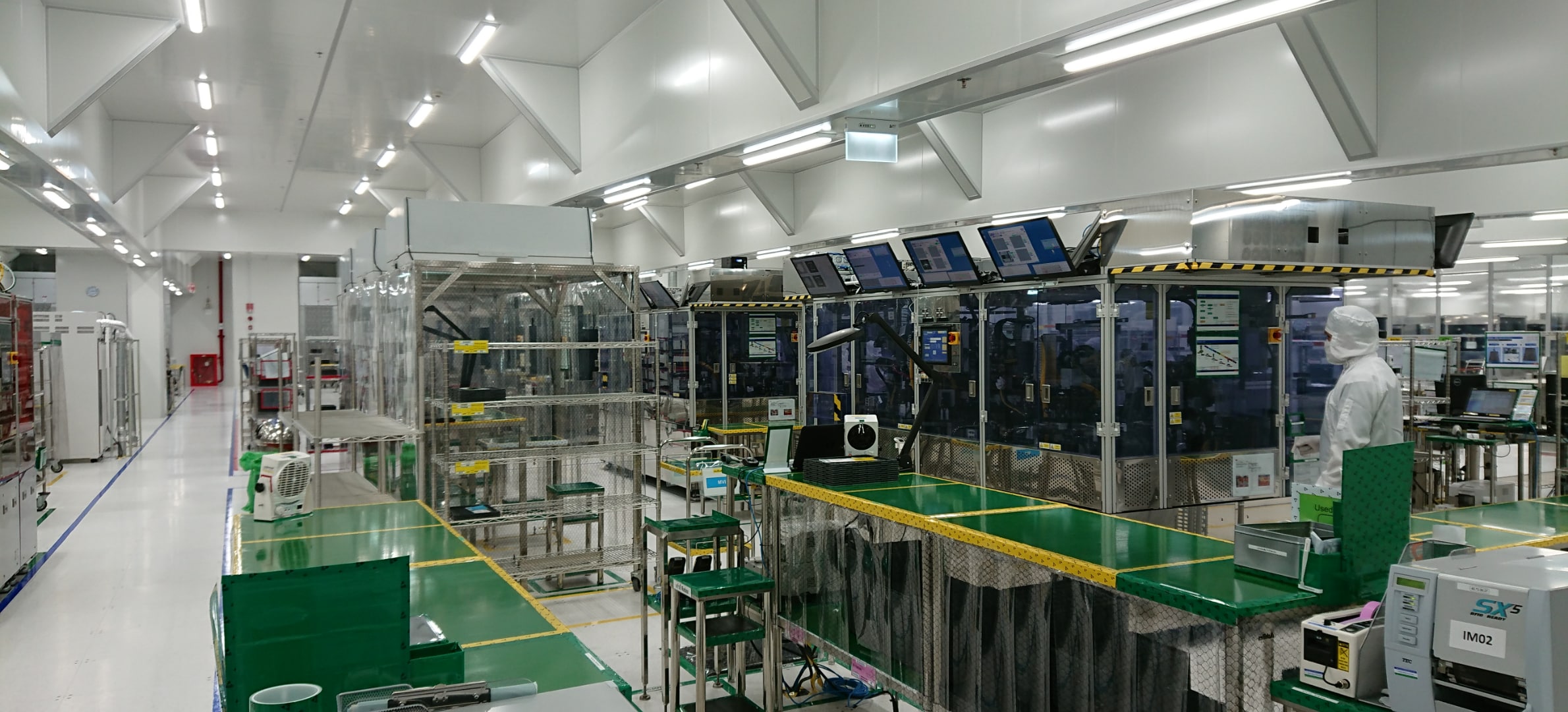
I am continuing to work on reducing our greenhouse gas emissions in pursuit of achieving GM2030. The impact of global warming becomes more severe each year, with abnormal weather patterns and climate change directly affecting our lives. I am making every effort, before it’s too late, to reduce our greenhouse gas emissions so that we leave behind an environment that provides future generations with access to natural resources, free from the challenges we face today. CO₂ emissions generated by energy use in businesses primarily engaged in semiconductor production, such as SDT, constitute a significant percentage of overall emissions. Therefore, we implement thorough energy circulation by promoting the use of waste heat from air conditioning systems in semiconductor clean rooms and introducing highly energy-efficient equipment. We are striving to build a foundation for the future by implementing global warming countermeasures that begins with our employees on the ground.
Q: Are there any unique challenges to greenhouse gases?
The biggest challenge is achieving both an increase in production volumes and a reduction in greenhouse gas emissions. Semiconductors are essential for devices such as smartphones and automobiles, and their increasing demand tends to result in higher energy consumption during the manufacturing process. That is why it is extremely important to improve the efficiency of the production process. When formulating energy efficiency measures, we incorporate the knowledge of other sites by sharing information with the SSS Group (*2), to which SDT belongs.
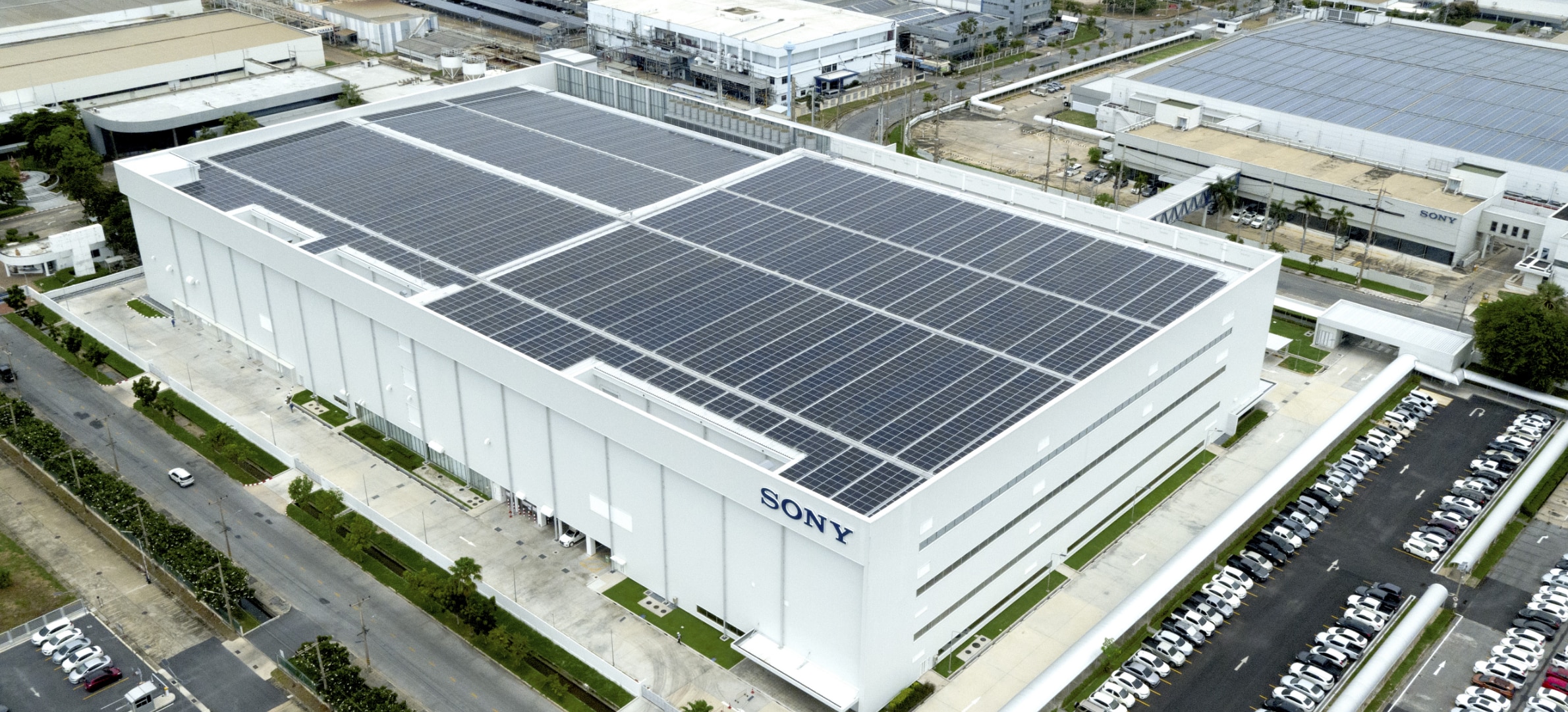
For example, in efforts to expand facilities at the Nagasaki Technology Center in Japan, in recent years, it has deployed AI in certain areas of facility management to make it the most energy-efficient plant in the semiconductor industry. As a result, it has improved energy efficiency by approximately 30% compared to the level achieved in fiscal 2015. Meanwhile, at SDT, we increased our number of solar panels in 2024, and since fiscal 2021, we have intensified our efforts to operate entirely on renewable electricity. The sharing of these global initiatives inspires each company and site within the Sony Group. Our aim is not only to deepen knowledge at the management level but to align awareness across the frontline, top management, and the entire Group, establishing environmental efforts not merely as obligations but as part of a culture that its employees can take pride in.
- *2The Sony Semiconductor Solutions Group engages in all kinds of semiconductor device business based on imaging and sensing technologies. SDT is a member of this Group.
Envisioning a Rich Future
That Goes Beyond the Company.
Q: Can you tell us about the growing scope of your efforts at SDT?
I am actively engaging in environmental activities in partnership with the local community. In Bangkadi, where our site is located, we educate local citizens and school children about energy reduction efforts and safety management as part of our CSR activities. Additionally, we contribute to the preservation of forest resources through tree planting initiatives in in upstream areas. Through the “One Blue Ocean Project”, we collect plastic waste from coastlines and mangrove forests to help sustain the marine ecosystem. These activities represent our commitment to passing on natural resources and environmental awareness to future generations while collaborating with the local community and sharing in the experience. By educating and implementing efforts in the community on a united front, we aim to create a sustainable future across the region, not just within the confines of our plant.
Q: What kind of society do you envision as a result of these activities?
Our vision is for a society that enables its people to enjoy a prosperous life within a healthy global environment. It is also a future where fulfilling our responsibility as a company to society and the planet is not viewed as something special but rather as a natural way of thinking. I believe that if our efforts scale, it will further increase the use of renewable electricity, reduce greenhouse gas emissions, and accelerate a movement in which businesses and communities join forces to preserve the planet for future generations. Creating a sustainable future requires not only technologies and systems but a sustained vision for the future in which society at large asks: ‘What kind of Earth do we want to pass on?’ I aim to make knowledge and expertise available to local communities by extending our efforts beyond Sony to help build a society where everyone has access to resources with peace of mind.
Resource circulation is about keeping our imagination alive.
Focus Point 2 Resource circulation
Mechanical Design Division, Technology & Engineering Center, Sony Corporation
Kunihiro Ishii
INTRODUCTION
Mineral resources and fossil resources are limited. The large amount of CO₂ emitted during production, which significantly contributes to global warming, is also considered problematic (*1).
Against this backdrop, Sony has established its medium-term environmental targets “Green Management 2030” (GM2030) to shift to circular materials, improve its recyclability, reuse products and components, and extend product lifespans across all stages from the start of product design to post-use by fiscal 2030.
Leading at the forefront of these efforts is Kunihiro Ishii of our Mechanical Design Division. Undertaking a comprehensive review of resource use, from choosing materials through to the manufacturing process, Ishii has introduced the use of SORPLAS™ (Sustainable Oriented Recycled Plastic), a flame-retardant recycled plastic developed by Sony Semiconductor Solutions Corporation, into BRAVIA™ products, and facilitated Sony Corporation’s environmental conservation efforts.
Behind the challenge lay a firm conviction that these efforts harness engineering creativity to link technology and data to resource circulation.
- According to the “White Paper: Annual Report on the Environment, the Sound Material-Cycle Society and Biodiversity in Japan” published by the Ministry of the Environment

PROFILE
Kunihiro Ishii
Ishii joined Sony in 2001. He was in charge of mechanical design of televisions for many years. In the last few years, his role has been to promote environmental initiativesacross Sony Corporation. He leads the use of recycled materials and the building of a resource circulation framework in multiple product categories such as televisions, audio, and cameras.
He develops environmentally conscious products while pursuing the optimal balance of environmental footprint reduction, quality, and cost.
The challenge of sustaining
our planet’s limited resources
Q: Firstly, can you tell us about what you do at Sony?
I am a member of the Mechanical Design Division and I manage the team that promotes environmental initiatives across Sony Corporation. My team is composed of experts from product categories such as televisions, audio, and cameras, and we discuss how to create products made from resources compatible with a circular economy. My role is to consolidate the views of my team members and establish a vision for our efforts. My team members also undertake development operations firsthand, so they share our policies and ideas with their respective departments and reflect them into actual product designs.
Q: Why are you currently taking on the challenge of resource circulation?
First of all, our planet has limited resources. To ensure a rich quality of life for future generations, we must rethink the essence of resource usage and shift to circular product development practices. Mankind is consuming the planet’s limited resources at an alarming speed. If this rate of consumption continues, we will gradually run out of resources such as some metals and fossil fuels in particular, and there is potential for us to suffer a supply shortage in the mid-21st century. With such issues in mind, Sony has tackled environmental problems since the 1970s, and in 2010, established “Road to Zero,” its long-term environmental plan to achieve a zero environmental footprint. Since then, Sony has set medium-term targets every five years and systematically delivered results through careful planning. In particular, as the resources consumed by the product itself are a major issue, I am continuing to work hard to achieve a circular society based on GM2030’s pillars of utilizing recycled materials, improving recyclability, and reusing products and parts, as well as extending their lifespan.

Environmental initiatives:
Shaping our future by respecting resources
Q: Can you tell us what your policy is for your efforts to achieve GM2030 targets?
In starting environmental initiative operations, I first set about developing a thorough understanding of the details and background of Road to Zero.
Our ultimate goal is to protect the global environment and realize a sustainable society. The numerical targets set out in GM2030, such as "recycling gold and tin for specific applications to 100%" and "reducing the use of non-recyclable plastics to 30% or less," are merely guideposts on the way to achieving this goal.
What is important is that we do not fixate on achieving individual targets but take a long-term view of the planet’s future as a whole. For example, increasing the use of recycled materials will help reduce the consumption of oil resources, but this does not guarantee a reduction in CO₂.
Rather than trying to achieve the targets in name only, I think it is important to continue learning about the reality that lies behind environmental problems and take action inspired by an active imagination.
Q: What perspectives are needed to envision the future?
At the same time as envisioning the future of the planet, it is vital that we broaden our imaginations in incorporating each activity into an action plan. The target of “ensuring that gold and tin are 100% recycled materials in specific applications” must go beyond technical considerations and also take into account supply stability and market trends. It is vital that we examine by communicating with the relevant stakeholders as to whether or not areas that are overly demanding in terms of cost or procurement, or whether we are deviating from market trends, and achieve the targets in a manner that is sustainable, not temporary. I think a good approach is to keep in mind the lifecycle of the product and continue to seek a balance between maintaining a suitable cost and helping reduce our environmental footprint.
Transforming waste into value
and pushing for plastic resource circulation
Q: What activity are you most focused on at the moment?
I am focused on considering the introduction of SORPLAS, a flame retardant recycled plastic material.
SORPLAS is a recycled plastic made from used water bottles and waste optical discs collected from factories and markets, and a proprietary flame retardant developed exclusively by Sony. Recycled plastic is relatively difficult to use, facing particular challenges in large exterior parts. When molding recycled plastic, along with precision machinability and sufficient strength, it must also meet standards for external quality in terms of gloss and color tuning. That is why meeting these criteria while maintaining a high percentage of recycled materials has been considered complex for an extended oeriod.
Q: Can you say that’s a challenge unique to recycled plastic?
If you simply use regular plastic, you can select raw materials according to the required product properties, such as heat resistance and transparency, and achieve the intended performance to some extent. However, when using recycled materials, you need to fulfill the product requirements while leveraging the properties of the recycled materials as much as possible. In particular, waste materials collected from markets tend to have varied quality, with issues such as unexpected components being mixed in. The question is: how can we secure quality while overcoming this uncertainty and keeping costs down? This requires significant creative measures. With SORPLAS, we have overcome challenges unique to recycled materials by collaborating closely with Sony Semiconductor Solutions, which developed SORPLAS, and fully utiliingmaterial property analysis and blending technologies.

Value-generating environmental initiatives
paints a picture of a bright future.
Q: What is your outlook for Sony's resource circulation efforts going forward?
The aim is to achieve our long-term environmental plan “Road to Zero” by 2050 and net-zero greenhouse gas emissions by 2040. To make this happen, I believe thar existing technologies and systems alone will be insufficient, and that we will need to create new ones. That is why it is important that we are always alert to changes in society, continue to update our knowledge, and keep imagining what lies ahead. The Sony Group has a diverse range of talent and technologies. By connecting our talent and technologies and making the most of them for environmental initiatives, I expect that we can achieve resource circulation efforts that are more sustainable.
Q: What do you value in addressing environmental challenges going forward?
Shifting from passive environmental initiatives to value-generating ones. I think this shift in awareness is important. While we must advance our environmental initiatives, there is potential for them to restrict our development operations, particularly at our offices and production sites. In order to keep everyone fully committed, when proposing environmental measures to those on the ground, I address the core question of ‘Why environment initiatives are necessary now?’ and highlight the need for it using figures and data instead of passion. I think that rather than inspiring those on the ground with your own thoughts alone, having each individual take the initiative will lead to producing results. Environmental issues cannot be resolved by Sony alone.
The infrastructure, systems, and the awareness of society as a whole need to be changed.
I believe it is important to continually envision milestones towards a sustainable global environment, utilizing our imaginations supported by data and technologies.
How can we leverage limited resources and make our environmental initiatives valuable? I hope that our efforts will serve as a small catalyst to encourage change.

Transforming the world,
starting with packaging.
Focus Point 3 Plastic packaging initiatives
Mechanical Design Division, Technology & Engineering Center, Sony Corporation
Chinami Sawada
INTRODUCTION
It is said that marine plastic pollution, which is not processed properly and ends up in our oceans, causing a negative impact on our environment, is mainly plastic used for packaging or containers(*1). As a measure against plastic pollution in the natural environment, including our oceans, Sony is continuing to reduce its plastic packaging materials across the Group.
One of Sony's targets in “Green Management 2030” (GM2030), is that the rate of plastic used within product packaging shall be no more than 10%. Aiming to eliminate all plastic packaging materials for small- and medium-sized products that weigh 5 kg or less and those used at retailers, we are also trying to reduce the plastic packaging we use for large products like televisions.
Packaging protects products from vibration and shocks and generates an emotional response when opening. We spoke to Chinami Sawada, who is in charge of packaging design that advances our efforts to achieve GM2030 targets and believes in the potential of packaging to play this key role, about her thoughts on her work and her vision for the future.
- According to the “White Paper: Annual Report on the Environment, the Sound Material-Cycle Society and Biodiversity in Japan” published by the Ministry of the Environment

PROFILE
Chinami Sawada
Sawada joined Sony in 2020 as an experienced hire. She has engaged in research on transportation packaging since she studied at university and has been involved in everything related to packaging design. Her current role at Sony is mainly being in charge of designing packaging for display products. Since April 2025, Sawada has led a team as a development leader.
The sum of small changes will eventually result in a significant change.
I know this because of my ongoing work with packaging.
Q: Firstly, can you tell us about your career so far and the background to your involvement in the plastic packaging initiatives?
My involvement in this field was sparked by joining a research lab specializing in transportation packaging. I learned that the efficiency of packaging contributes to society, which I found to be truly appealing. I then gained experience in packaging design work at the company I joined as a new graduate before later joining Sony on as an experienced hire.I currently belong to a department responsible for design and development of packaging and logistics for Sony products. My team is primarily responsible for designing packaging for display products. I am involved in design as a leader while advancing our efforts to reduce plastic packaging materials.
Q: What do you think of the formulated targets?
I joined Sony and began my involvement in these activities at the time when the targets in “Green Management 2025 “(GM2025) were set. With regard to the reduction targets of completely eliminating plastic packaging materials for newly designed compact products and reducing the amount of plastic packaging used for each product by 10%, my honest opinion at the time was that I was unsure we could achieve it within five years. However, by taking action where possible, we were able to achieve the target for display products ahead of schedule. I realized that even seemingly ambitious targets can be achieved through the accumulation of small efforts over time. That is why, when the GM2030 targets were announced, I decided that I would tackle them, and I was confident that we could achieve them.

Transforming display product packaging.
What we need to deliver flawless products worldwide
Q: What efforts are you responsible for in your actual work?
I am working on replacing plastic packaging materials with alternatives such as cardboard, reducing the use of Styrofoam as cushioning materials, and optimizing the shape of packaging accordingly. We are on track to achieve the GM2025 target of completely eliminating plastic packaging materials for newly designed compact products, and my focus has now shifted to GM2030 target aimed at replace the packaging of large display products for example televisions. I felt this is technically very complex and that we need to engage in trial and error more than ever.
Q: Why is replacing the packaging of large display products technologically demanding?
Large display products feature thin and heavy models. Furthermore, due to their intricate structure, the packaging must be highly protective and minimize any shocks during transportation. Also, considering worldwide shipping, we need a design that can accommodate various conditions, such as temperature and humidity. As Sony has strict testing criteria and only uses packaging materials that meet these standards, we must overcome significant hurdles to change our packaging materials.
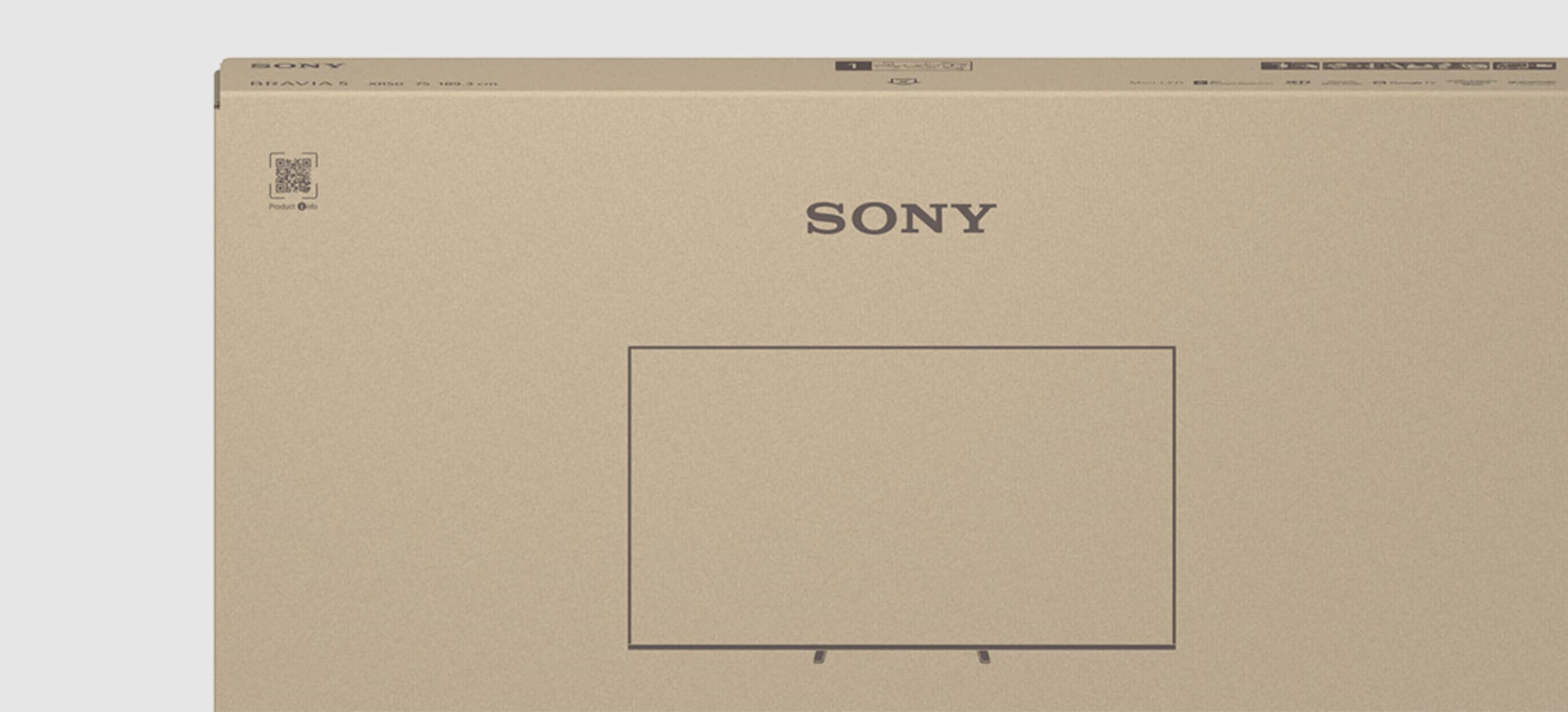
Reducing Sony's environmental footprint, maintaining quality, and minimizing costs
—uniting as one Sony to overcome these major obstacles.
Q: What difficulties have you faced in undertaking your efforts?
Designing packaging that incorporates the three elements of reducing environmental footprint, maintaining quality, and controlling costs is not an easy task.. Paper materials lose their shape more easily than Styrofoam and can sometimes degrade due to moisture.
However, prioritizing strength alone will result in increased packaging usage, higher costs, and a larger environmental footprint when transporting products. An optimal design is achieved only when we develop a design that not only reduces our environmental footprint but also maintains quality and minimizes costs.
Q: How do you approach this challenge?
I value collaboration with people around me, such as supervisors, my product design team members, and colleagues at our production sites. Although we face challenges that cannot be resolved through packaging design alone, I often find insights by receiving advice from different perspectives. When you express a desire to try something new, everyone listens with a positive mindset. In those moments, I truly feel the power of Sony's culture that encourages its employees to take on challenges.
Even when we cannot find a solution, I have never thought it was difficult. This is because I believe in the potential of packaging. Rather than merely wrapping products, packaging protects them from shocks during transportation and generates an emotional response upon unboxing. I believe that packaging, which has these functions, will continue to evolve if we can reduce its current environmental footprint.

The challenge continues to be at the forefront of expanding the circle of environmental consciousness
Q: What kind of future do you want to build as a result of your efforts?
I want to create a future where it is normal for Sony and our customers to tackle environmental challenges together. To this end, we need to provide information and increase the number of case studies we can share with the world. In fact, we receive a lot of interest each time we publish a media release about examples of our environmental activities. To build on the attention and further promote interest in environmental consciousness, I first want to succeed in my current projectto replace the packaging materials of large display products as soon as possible. To accelerate these efforts, I hope to make progress in areas such as my research into new raw materials other than paper, improvements in structural design, and optimizing the design process.
Q: Is there anything that you value in order to realize such a society?
It is important for me to keep my passion for designing packaging at the forefront of my mind and embrace challenges without the fear of failure. As I mentioned earlier, Sony has a culture that supports innovation. I believe that having plenty of opportunities to challenge myself accelerates the process in which ideas are turned into reality and brings me closer to achieving my goals. I want to show my gratitude for this culture and lead my team as a packaging design leader for display products.

Turning Climate Data into Discovery
Raising awareness and encouraging action
Vice President of Environment, Social, and Governance
Sony Interactive Entertainment
KIEREN MAYERS
INTRODUCTION
Climate change should not feel like a lecture: learning through play.
Climate science can feel complex and overwhelming, but when it becomes a discovery, it sparks curiosity and widespread engagement. Climate Station™ a new experience from Sony Interactive Entertainment, isn’t a game in the traditional sense—it’s an immersive experience that transforms scientific data into something users can see, feel, and explore. We spoke with Kieren Mayers, Vice President of Environment, Social, and Governance (ESG) at Sony Interactive Entertainment (SIE), the company behind PlayStation®. He leads global initiatives on sustainability with PlayStation’s products, services, and operations.
PROFILE
KIEREN MAYERS
Kieren joined Sony as a sustainability expert in 2000. He has over 30 years experience in addressing environmental and social impacts and holds an Engineering Doctorate in Environmental Technology. His focus within Sony Interactive Entertainment includes issues such as climate change, resource use, accessibility, compliance, and responsible supply chain. He also is an academic practitioner holding a number of university visiting positions.
Q: What is Climate Station, and what inspired you to create this project?
Climate Station is a free application for PlayStation®5 and PlayStation®VR2 that uses real climate data—IPCC (Intergovernmental Panel on Climate Change) models, NOAA (National Oceanic and Atmospheric Administration) records, NASA imagery—and transforms it into an interactive 3D experience. It’s been a key initiative, about six years in development, as part of the Playing for the Planet Alliance, an alliance which supports the video games industry in taking action on the environment.
Q: What challenges were you looking to solve with Climate Station?
Climate change is often presented as a set of abstract numbers. Our challenge was to make it personal, visual, and actionable. Gaming reaches people all over the world, and we wanted to use that reach to engage players with climate science and demonstrate the interconnected nature of our planet’s systems. Through this, we aimed to shift climate awareness from something distant and statistical to something relatable and inspiring.
Q: How did the idea originate?
The opportunity emerged in 2019, when Sony Interactive Entertainment became a founding member of the United Nations’ Playing for the Planet Alliance, which brings together leading gaming companies to not only reduce the industry’s environmental impact, but also use the power of gaming to inspire millions of players worldwide.
Sam Barratt, the chief of the Youth Development, Education, and Advocacy Unit in the UN Environment Programme’s Ecosystems Division, approached SIE and expressed his desire to help address the issue of climate change through a virtual reality application. That’s when the work on Climate Station began.
Q: For someone who hasn’t tried it, how does Climate Station work?
It’s a structured, roughly thirty-minute immersive narrative with three acts that explain climate change and its driving forces.
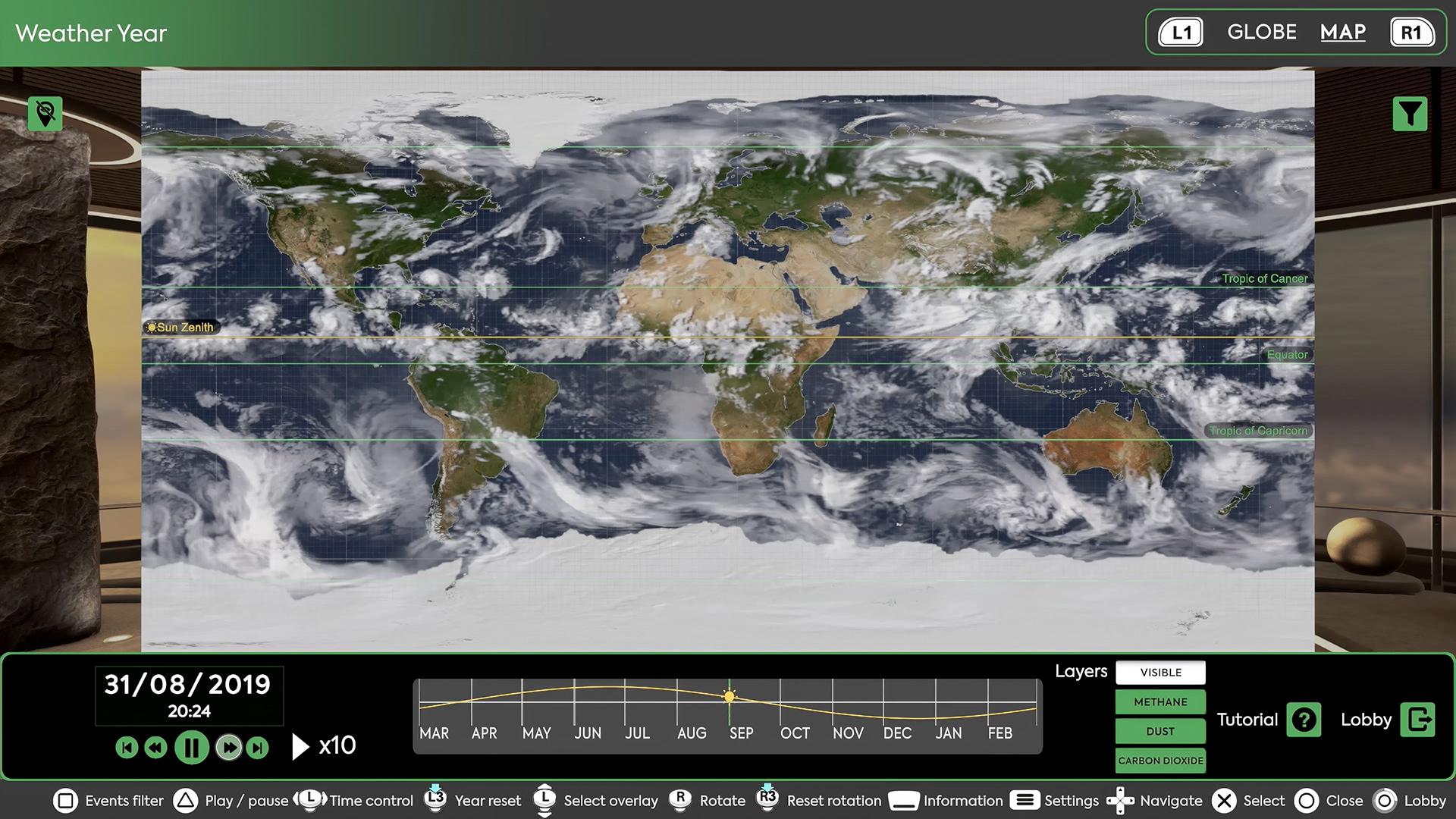
The first act is Weather Year, which visualizes a full year of global weather, allowing the user to see how cyclones, wildfires, and hurricanes interact as a unified system. It’s a beautiful way to understand climate.
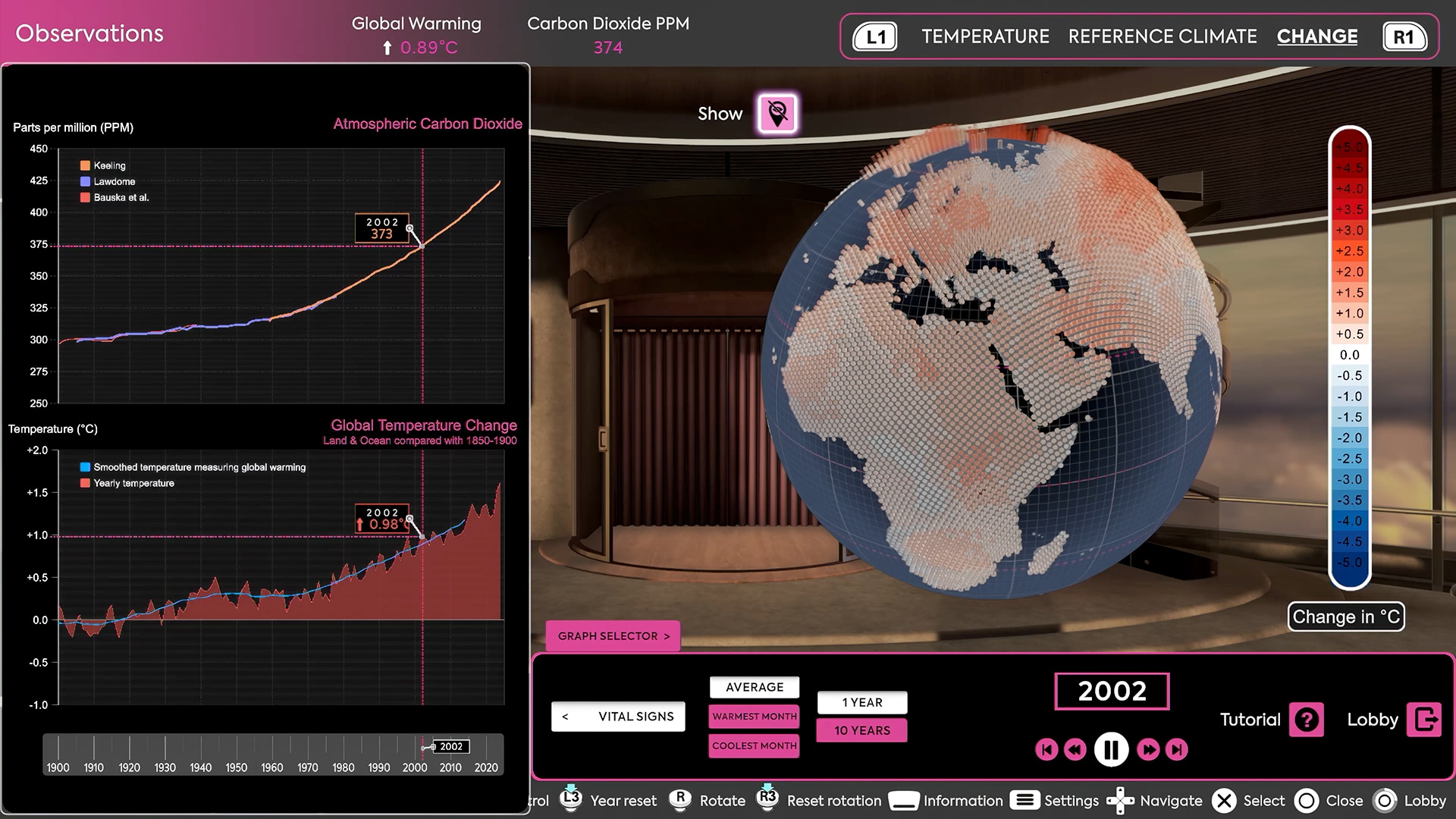
The second act is Observations, providing 120 years of temperature records mapped onto 20,000 points on the globe. Users can select their hometown and watch the changes from their grandparents’ era to projections for future generations.
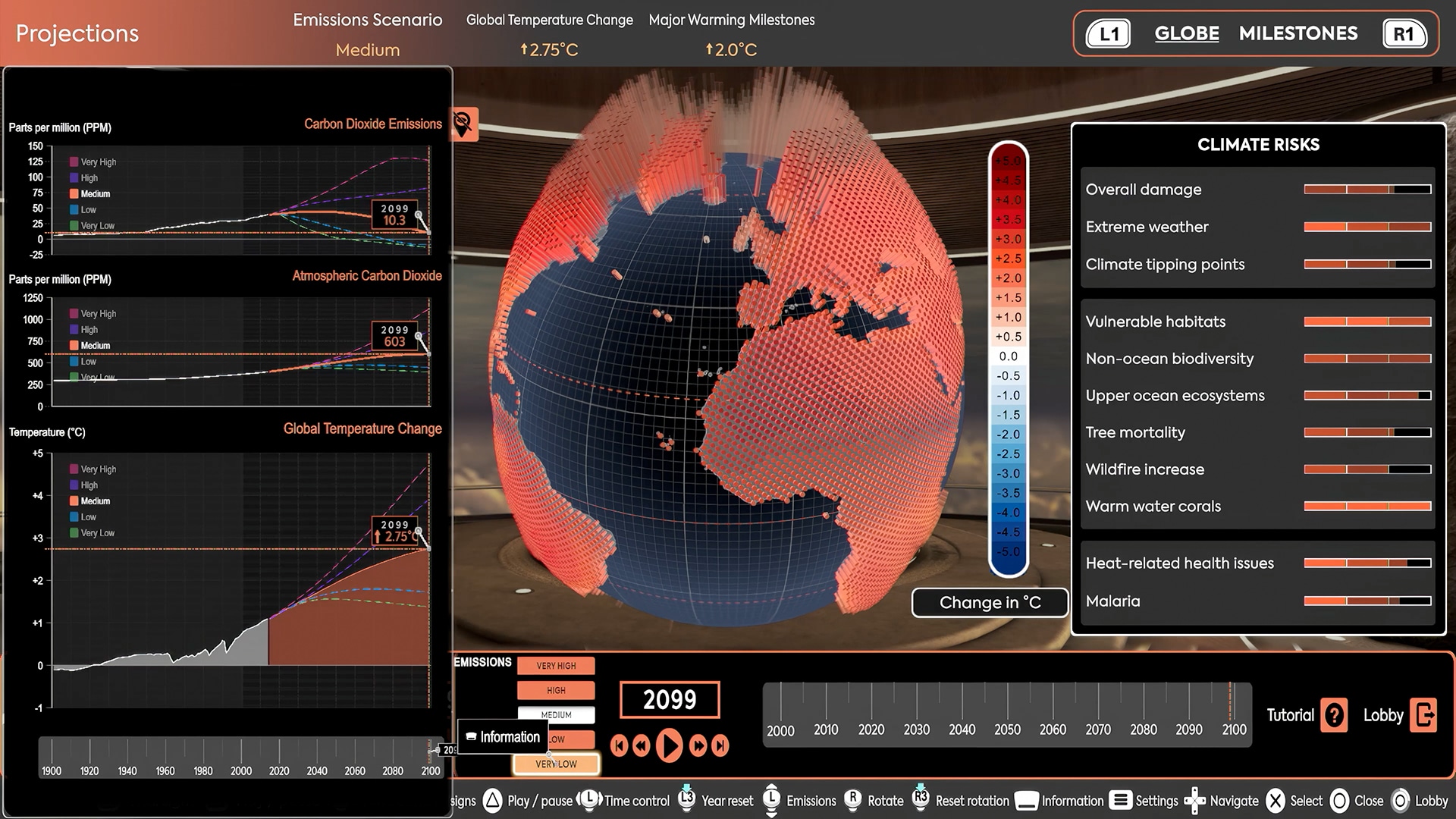
The third act is Projections,
showing five IPCC futures based on different emissions pathways, from best-case Paris Agreement compliance (limiting global warming to 1.5℃) to worst-case runaway warming.
It was important for us to conclude with a message of hope and show what happens if we act fast to reduce emissions.
Q: How do you balance the emotion with the science?
Data can be a lot to take in, and while we start with hard data, we don’t stop there. Through visualization and interactive design, we help players feel what the numbers mean.Players can see how rising temperatures, shifting weather patterns, and carbon emissions interact in real time. This makes the science both credible and emotionally resonant. Players Payers have even posted comments like, “I feel like Iron Man”.
Q: Why focus on giving people a sense of agency?
Hopelessness leads to inaction. When people see the data for their hometown—past and future—climate change stops being abstract and becomes personal. Climate Station bridges the global and local. People can explore where they live, understand what’s happening, and decide what it means for them. We’re not here to tell people what to think; we’re here to help them explore. That’s the difference between a lecture and a journey of discovery.
Q: How has it been received?
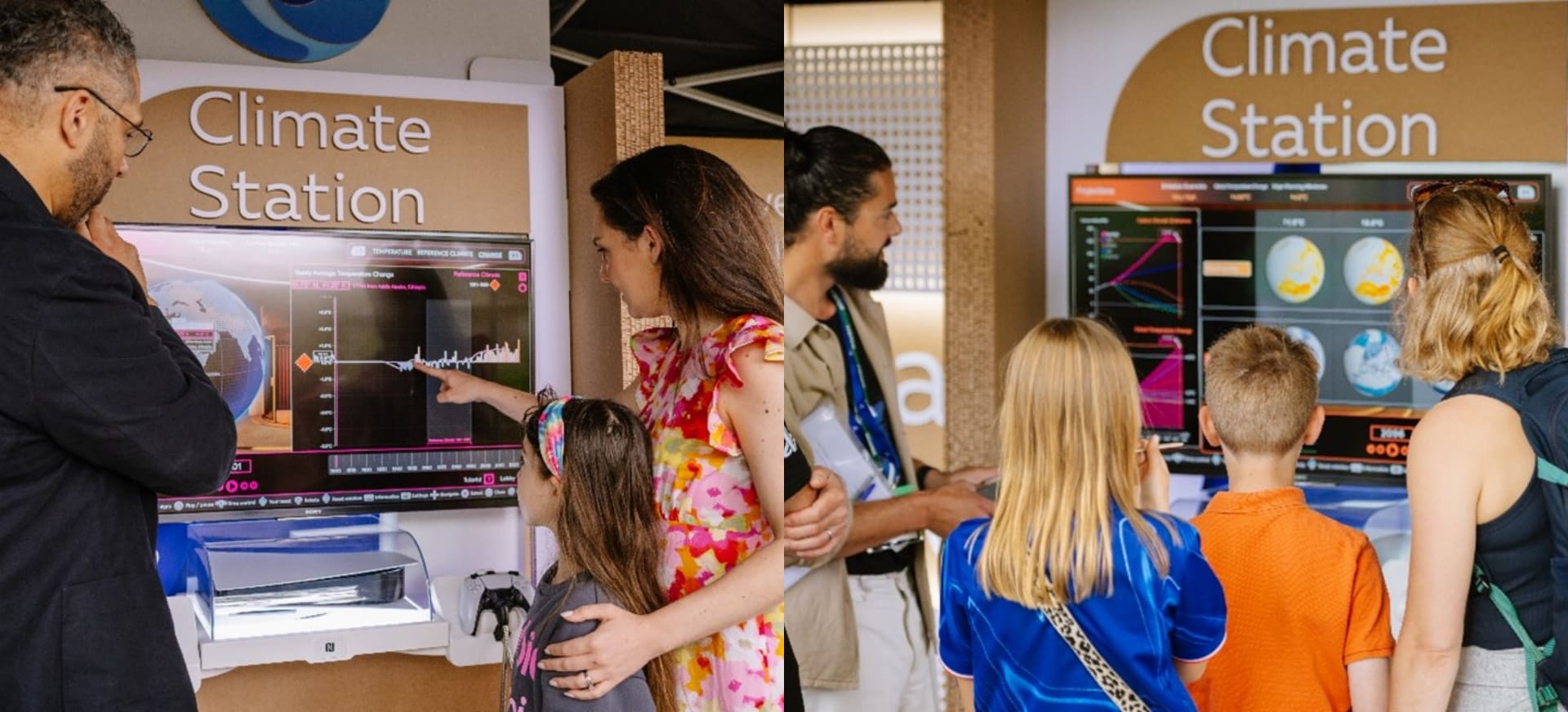
I think it’s PlayStation’s first application dedicated to climate change, so we had no idea what to expect. We’ve demoed it at COP28 in Dubai, the United Nations Environmental Assembly in Nairobi, and even the Zoological Society of London, where schoolchildren try it in a classroom-style setup. The reaction from policy makers, scientists, and kids alike has been overwhelmingly positive.
Q: How is Horizon Forbidden West part of SIE’s other environmental projects?
Yes, that game features Aloy, the main protagonist of the Horizon series, restoring life to Earth. We decided to mirror that in reality, restoring ecosystems and highlighting NGO work. Since 2022, PlayStation projects have planted around 740,000 trees and restored more than 1,800 acres across multiple ecosystems. It’s a reversal of typical cause marketing: instead of using causes to promote the brand, we use our brand to promote causes.

Q: What does SIE’s commitment to the UN’s Playing for the Planet Alliance involve?
We’ve made three broad commitments:
1. To reach net-zero emissions by 2040.
2. To use our technology and creative reach to educate and inspire.
3. To help other alliance members measure and reduce their carbon footprints.
The UN reviews our progress annually, always pushing us to go a little further. Climate Station is our flagship effort in that space—it proves that the entertainment industry can make climate engagement interactive and emotionally resonant.
Q: What’s next for Climate Station and SIE’s environmental work?
We’ll be rolling out more public installations—The Zoological Society of London is just the start—and exploring new ways gaming can support conservation. One of the UN’s messages to us was that conservation really works. If the industry funds and promotes restoration at scale, we can hit major environmental targets. Ultimately, we want to show that gaming—like film and TV—not only entertains but can educate and inspire. Climate Station is a step on that journey.
Q: If you could leave the player with one message about Climate Station, what would it be?
That they have the power to understand and act. The app doesn’t tell people what to think; it lets them explore. When people see that data for their own hometowns, past and future, they realize the story of climate change is also their story, and they too can help write the next chapter.
Climate Station started as a sustainability project but evolved into something more personal: a way for people to see the Earth as a living, dynamic system and to recognize humanity’s role in protecting it. When science meets storytelling, information becomes empathy, and empathy becomes action.
Climate Station™
Climate Station™ Official website
Climate Station is available free of charge on the PlayStation®Store for PlayStation 5 and PlayStation VR2. The experience combines real-world climate data from the IPCC, NASA, and NOAA into an interactive 3D visualization designed to educate and inspire.
For more information on Sony Interactive Entertainment’s environmental initiatives, visit
Environment | Sony Interactive Entertainment