Mar 18, 2025
Creating New Experiences with Technology: The Role of an Engineer

Sony’s focus is to serve creators, providing technology and solutions that help next-generation entertainment come to life. This strategic direction, known as the “Creation Shift,” is in line with Sony’s long-term “Creative Entertainment Vision” to harness technology that transcends boundaries and unleashes creativity. As this vision for the next decade takes shape, what kind of challenges will Sony undertake to support creators? We asked Yoshinori Matsumoto, Sony Corporation Executive Deputy President in charge of Technology and Incubation, for his thoughts on how emerging innovations will power the next generation of entertainment experiences.
-

Yoshinori Matsumoto
Executive Deputy President
Officer in charge of Technology and Incubation
Sony Corporation
Contributing to the Entertainment Business with the Power of Technology
──First of all, please tell us about technology development at Sony Corporation.
Our business scope at Sony Corporation has expanded to support Sony’s long-term Creative Entertainment Vision. In addition to products under the Sony brand, our work now extends to various technologies and services for creators. We aim to contribute to the entertainment business by developing solutions using technology. Our objective is to help creators produce compelling new entertainment experiences.
I believe that our technology is designed to create new entertainment experiences, and I think this has remained consistent both now and in the past.
For example, disc media was created to store larger video data than videotapes, delivering them to consumers and enabling users to enjoy content with higher quality visuals and sound, providing a new entertainment experience. Similarly, the Walkman® was designed to offer users a new experience, allowing them to enjoy music wherever they desired.
However, it’s not the case that we can simply continue with the same approach to technology development as we have in the past. The ways in which users enjoy experiences have become more diverse than before, and entertainment itself is also evolving. I believe that Sony Corporation’s role is to keep up with these changes and contribute to creating new experiences.
──What kind of new experiences in entertainment is Sony Corporation currently working on?
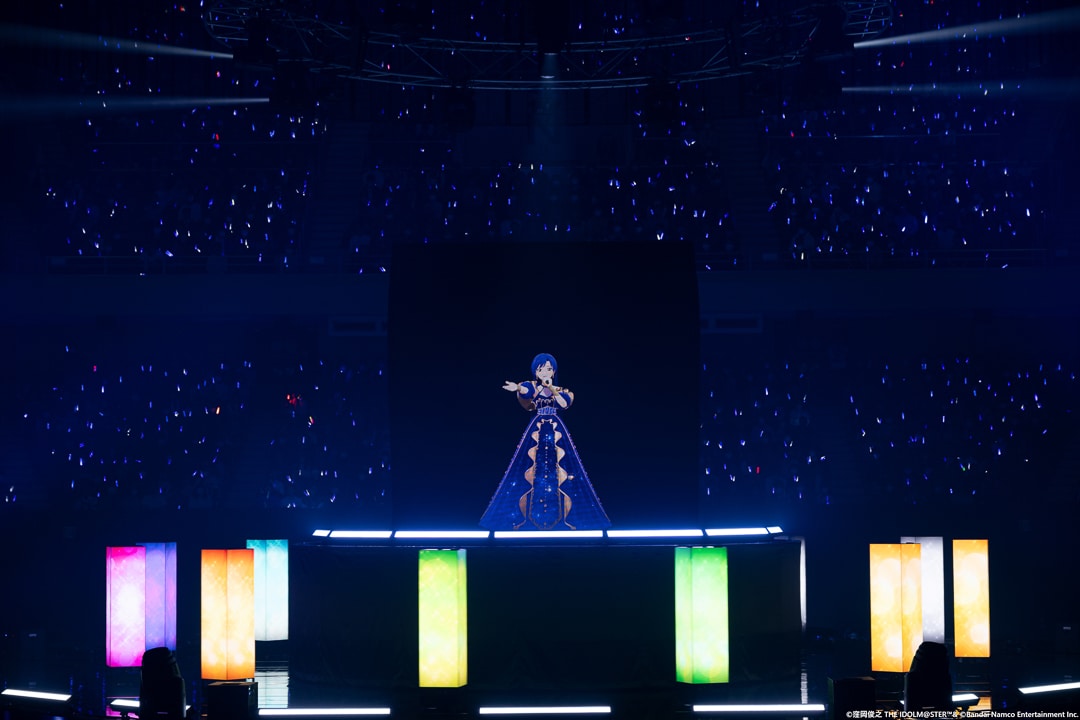
We are taking on the challenge of creating spatial content and commercializing it. The key phrase is “creating better spatial experiences.” We are developing tools and solutions for this purpose and expanding them as a business.
The places where spatial content can be utilized are expanding into various areas such as the metaverse, live events, and location-based entertainment (LBE). We are actively discussing how to capture these growing audiences and the diversification of entertainment experiences, and how to leverage our technology in this context.
Out of these applications, one of the areas we are focusing on is sports. Sony's Sports Businesses are made up of Hawk-Eye Innovations, Pulselive, Beyond Sports and KinaTrax. Through services such as officiating support, broadcasting, and digital solutions, we are driving initiatives to transform the future of sports.
For example, Sony has launched a technology partnership with the National Football League (NFL), the professional American football league in the United States. The company is working on the development of a coaches' sideline headset, which was announced at CES® 2025, as well as enhancing engagement with the next generation of NFL fans. This includes providing viewing experiences in 3D animations using the real-time visualization technology of game data from Beyond Sports B.V., aiming to transform the way fans interact with the sport.
One of our initiatives in the metaverse is “XYN™,” a software and hardware solution that supports the creation of spatial content, which was also announced at CES® 2025.
Since the metaverse has started to be seen as a future trend in business and technology, I have had discussions with various people both inside and outside the company. In doing so, what I realized was that in order to grow the metaverse business, we first need to quickly change the content creation process.
Currently, the creation of spatial content requires a great deal of effort, making it difficult to produce a large amount of high-quality content. In this situation, I believe it will be challenging for the metaverse to become widespread. Therefore, we shouldn’t just sell the hardware but also provide solutions with hardware and software suitable for content creation. My motivation for starting the development of XYN came from this belief and how it would allow us to showcase a new form of creation unique to the Sony Group.
Evolving creation process and creating and nurturing new IP. I believe that the metaverse will not grow unless the creation process changes.
Working Together with Creators to Realize New Experiences
──Including XYN, what is important to create and grow great spatial experiences and new entertainment experiences?
It is important to visit the production site, communicate closely with the people involved, and deeply understand the creation workflow. I believe that it’s not enough to focus solely on technology, as we must also understand how to leverage technology within the workflow. Without doing this, it will be difficult to transform the creation process.
Additionally, alongside transforming the creation process, it is necessary to think about how to deliver the IP to users and how to commercialize.
Entertainment experiences are diverse. There are various ways to enjoy them, such as having fun at home, going to theme parks, experiencing immersive digital content, or supporting artists and characters through fan activities like purchasing their merchandise. I believe that incorporating new technologies into these various experiences and improving them is also a major theme for the Sony Group.
Sony has both the technologies that support creation process, such as acoustics and imaging technology, and the creative environments where incredible IP is generated, including in games, music, pictures and anime. We believe that one of Sony’s greatest strengths is the capacity to provide the IP we create to customers in a variety of ways.
For example, there is a film adaptation of the popular PlayStation franchise Gran Turismo and an upcoming anime series based on the award-winning game, Ghost of Tsushima, and its cooperative multiplayer experience, Legends, which was recently announced at CES.
I believe that because of these strengths, Sony will be able to create new entertainment experiences for the future.
──What do you value as you pursue such direction?
The creation workflow is never completed within a company itself, and there are limitations to what can be done alone in order to improve increasingly diverse experiences. It is important to collaborate openly both inside and outside the Sony Group, and we are pursuing various collaborations.
For example, we established a lab in Culver City where Sony Pictures Entertainment has a lot, creating a development environment that is close to the production sites where we can receive direct feedback from creators. Additionally, together with Sony Music Entertainment Japan, we are working on a project to improve live experiences and workflows, using the Zepp live music venues as a platform to explore potential solutions.
In these ways, being able to develop and test our own technology alongside creators in the entertainment business within the same group is one of Sony’s strengths.
Our other initiative in spatial content creation is our collaboration with Siemens. We aim to make high-quality 3D Computer Graphics (CG) creation easier for large-scale industrial designs, such as automobiles and aircraft.
Collaboration in technology is also essential. First, there is device coordination. The technology for capturing spaces for 3D CG creation is made possible by the collaboration between our imaging technology and the sensors of Sony Semiconductor Solutions Group.
Furthermore, for future new experiences, I believe solutions that combine not only visual and auditory technologies but also technologies that reproduce other senses will be necessary. At Sony Corporation’s R&D, we are working on the development of haptics and olfactive technologies. Since it is resource-intensive to fully replicate human senses, it is important to discern which aspects do not need to be reproduced, and which ones are crucial to realize the desired experience. I hope to transform these technologies into solutions and provide them in the creative field, working with creators to realize new experiences, while nurturing this knowledge as expertise.

Engineers Should “Go Out into the World”
──Could you share what you value most as an engineer, and what you expect from those who aspire to become engineers in the future?
I value developing technology with the understanding of how the technology, products, and solutions I am involved in will change people’s lives and how they will impact the world.
I was part of the newspaper club in high school and aspired to become a journalist. However, when I discovered the Walkman II (WM-2) that was released at the time, the experience of being able to listen to music anytime and anywhere made me fall in love with music, and my interests changed significantly. This led me to become very interested in how technology changes people’s lives.
I joined Sony in 1990 and worked in the R&D department focused on optical technology, where I became involved in a project that would later become the DVD. At that time, VHS was the mainstream format, and renting movies was the primary way people watched films at home.
The members of the development team discussed that once the device we were developing was commercialized, it might be sold in convenience stores and as a supplement to magazines thanks to its smaller size compared to the VHS. We believed that this would allow everyone to enjoy videos more easily, and it turned out to be exactly what we envisioned.
To all of you aspiring to be engineers, I hope you broaden your horizons, have many encounters with different people, and cultivate a wide range of knowledge.
As technology becomes more complex, the tasks of engineers become increasingly specialized, which can lead to the risk of one thinking, “this is the only area I’m responsible for.” On the other hand, to apply technology to business, as I mentioned earlier, it is important to understand the business workflow, visit the site, and grasp how the technology is being utilized. This requires knowledge that extends beyond your specific area of responsibility.
In short, it’s about going out into the world.
I encourage you to build a network inside and outside of your organization openly and proactively. This approach allows you to identify and collaborate with experts in a diverse range of fields.