
Maintaining and Promoting Health
Respect for Human Rights
Basic Approach
Sony believes that the number one driving force behind inspiring excitement is the health of our employees. A variety of information must be provided to ensure people and organizations develop a level of health literacy high enough to ensure employees can work actively in their own ways, so we must promote a corporate culture that values employee physical and mental well-being. We promote health and productivity management from a variety of angles, always focusing on the fact that improving employee well-being is essential for sustainable growth of the group.
As work styles diversify, Sony is using data from health checkups and stress checks to address issues involving employees’ mental health, balancing medical treatment and work, and lifestyle diseases and is taking various steps to resolve these issues, from provision of carefully considered support to each of our employees and education and training for management, to disseminating information and other initiatives to raise awareness.
Metrics and Targets
Sony has identified work engagement, presenteeism, and absenteeism as indicators for the promotion of greater employee wellbeing and aims to improve these indicators as a means of contributing to health management at Sony.
Organizational Structure
In order to provide specialized, effective support for occupational health on a consistent basis, the occupational health departments of many Sony Group companies have been consolidated into the SPPS(Sony People Solutions Inc.)Health and Wellness Department, which carries out these functions on a shared basis. The SPPS Health Management Department includes specialists, such as occupational physicians, public health nurses, and clinical psychologists, and the department plans and implements measures in support of health, including training and the provision of support and advice for employees and organizations. It also works to link occupational health and safety with human resource management through initiatives such as management of hours worked and appropriate allocation of positions.
Furthermore, in collaboration with health insurance societies, Sony carries out collaborative health activities, including seminars for personnel responsible for health management at Sony Group companies, leading to shared understanding of health issues and bolstering the foundation for an organization-wide health culture.
Main Initiatives in Fiscal Year 2025
- Using data from health checkups and stress checks to promote health and productivity management amidst diversifying work styles
- Focusing on employee health issues, the organization implemented a variety of initiatives, including the provision of attentive and individualized support, management training, dissemination of information, and awareness-raising activities
Health and Productivity Management Initiatives
Promoting Mental Health
Sony implements comprehensive mental health support measures focused particularly on preventing health problems and motivating employees and organizations.
Stress Check
A stress check and health management survey conducted with approximately 40,000 employees across 44 group companies in Japan* revealed the importance of work-life balance and the ability to work utilizing one’s strengths as ways to increase work engagement. It was also found that a workplace environment with a culture of caring for each other where people felt psychologically safe contributes to work engagement. As shown by these results, Sony believes that support for individual employees and organizational support are both key to a vibrant organization.
Based on this approach, a stress check (93% response rate in 2025*) is used to provide individual self-care support in addition to conducting group analysis aimed at improving the work environment. Results are used to provide feedback to management of each working group, and review meetings are held with teams of medical professionals including occupational physicians, public health nurses, and clinical psychologists. Through this and other efforts, Sony is working to build vibrant workplaces that feel rewarding to work at.
Furthermore, Sony goes beyond aggregating data by workplace to also perform analysis based on attributes such as job title, age group and the work styles at each workplace, including the number of days spent at the office. Information is provided to personnel in charge and workplace managers as appropriate as a basis for discussing issues and countermeasures with medical teams.
Upon provision of feedback to workplaces, we also speak with management to collect best practice examples of particularly innovative or effective workplace initiatives. Such examples are compiled into a guidebook for improving the workplace environment, which the medical team shares with management. Sony also worked with HR and other relevant departments to analyze causes of mental health issues. Having identified risk factors based on the results of this analysis, Sony is providing focused support and assistance for high-risk workplaces.
Individual Employee Support
Believing that increasing every person’s mental health literacy is vital to providing individual support, Sony provides e-learning for employees at 31 Sony Group companies in Japan.* Sony also broadly disseminates information via means such as new recruit training, health and safety committees, and company intranet sites. Through these activities, Sony provides useful information on how to work in a healthy manner, including self-care methods, maintaining work-life balance and when to seek professional advice.
In cooperation with HR and other relevant departments, we also hold mindfulness workshops and trial sessions for employees, including providing opportunities for employees’ families to take part too.

Organizational and Managerial Support
We believe managerial support is a vital part of overall organizational support, so we provide training to help management improve their skill in handling mental health issues among their employees, as well as managerial workshops that incorporate content tailored to the needs and challenges of individual companies. Workshops are planned and implemented by a team of occupational physicians, public health nurses and clinical psychologists who provide information based on circumstances unique to the individual company or organization, ensuring it is easy for employees to seek professional advice. We also hold forums to encourage communication between management and help them establish lateral connections.

Building a Consultation System
Sony is committed to creating an organizational structure that facilitates consultation. Sony offers access to counseling from occupational physicians, public health nurses and clinical psychologists via in-person or online sessions. In addition to holding consultations in response to applications and requests from employees, medical professionals proactively approach and provide information to employees so that support can be offered from an early stage. Sony also works with outside professional organizations to implement a program under which employees returning to work after taking mental health leave receive help readjusting to the workplace via Sony’s employee assistance program (EAP). Sony has a mental health support program in place to provide employees with psychological care in the event of natural disasters and other incidents.
Health Management for Employees Who Work Long Hours
Recognizing that working long hours has the potential to impact employees’ mental and physical health as well as their work engagement, which in turn can lead to health risks for the organization as a whole, Sony works to prevent adverse effects on health and create comfortable working environments.
In Japan, the Industrial Safety and Health Act and related laws and regulations require employers to monitor working conditions, provide interviews with and guidance from physicians, and take appropriate measures to ensure employee health. Sony takes these legal considerations into account in its efforts to make improvements in terms of long working hours and to ensure the health of employees.
Managers receive training covering aspects such as legal responsibilities and practical application with the aim of deepening their understanding regarding managing the working hours of the people they manage and ensuring consideration of employee health. In addition, employees who have worked over a certain number of hours receive consultations with occupational physicians and public health nurses, and the opinions of occupational physicians are incorporated into work-related measures such as adjustments to employees’ duties. As a result of continuing these initiatives amidst more flexible working following the outbreak of COVID-19, the number of employees requiring consultations due to working long hours has decreased for five consecutive years.
Helping Employees Receive Treatment while Working
Sony actively seeks to provide support that enables employees to strike a proper balance between cancer treatment and work, and to feel fulfilled and motivated in their work. Sony is working to raise awareness of cancer treatment/work balance consultation services and provides e-learning to promote greater understanding of the support available. Employees who continue to work while undergoing treatment can receive professional support to enable them to choose from a variety of flexible work styles, including consultations with public health nurses who are qualified as work-life support coordinators, in addition to support from occupational physicians.
Sony also holds seminars for employees at 37 group companies in Japan* to raise awareness of cancer prevention and early detection and treatment as part of its efforts to enhance health literacy. Other Sony initiatives include encouraging those requiring further examination during checkups to follow through, and promoting cervical cancer screening for young people.
Women’s Health
It is important to address issues specific to women and ensure coworkers understand diversity in terms of health and health issues in order to create an environment where women can thrive.
In fiscal year 2025, Sony held training for management employees covering core knowledge regarding women’s health and good communication in the workplace. For new female recruits, we conduct fact-finding surveys and health consultations that focus on health issues specific to women and balancing work and family life. Sony holds events to mark occasions such as International Women’s Day in March in order to provide opportunities for people of all genders to learn about women’s health.
Sony’s support hotline for women’s health issues is always open, providing individualized support for health issues specific to women, from occupational physicians, public health nurses and midwives.


Preventing Lifestyle Diseases
For corporate employees, everyday habits such as diet, sleep, and exercise are closely linked to the risk of the onset and worsening of lifestyle diseases. For this reason, Sony regards preventing lifestyle diseases as an important health issue, and is engaged in ongoing initiatives in this area.
In addition to encouraging employees to undergo comprehensive medical checkups and examinations, occupational physicians and public health nurses provide support for improving lifestyle habits and receiving follow-up examinations based on checkup results, which can help to prevent health conditions worsening. Sony also focuses on counseling and advice dealing specifically with managing metabolic syndrome.
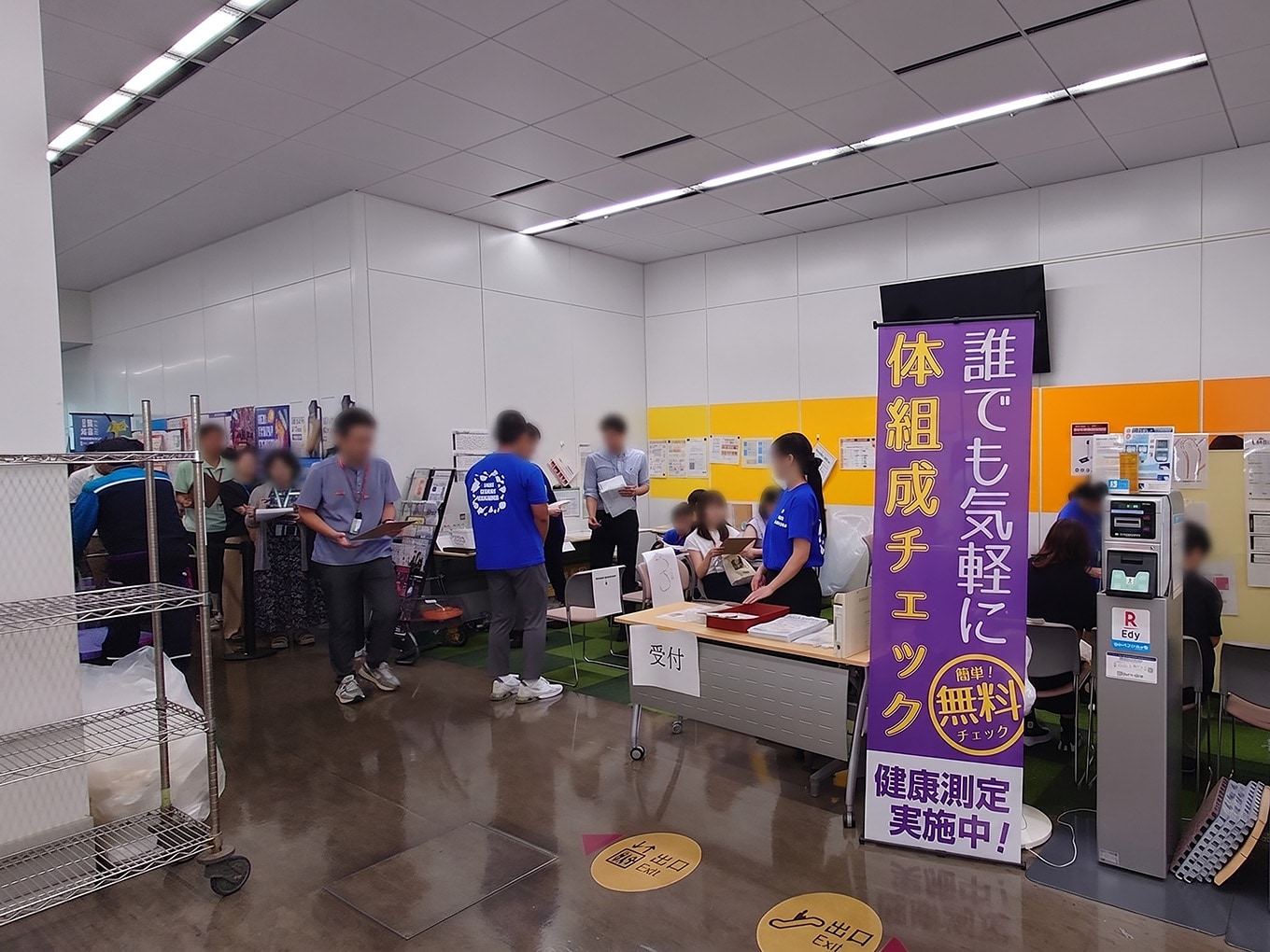
Sony implements various initiatives to set employees up for better lifestyle habits and increase health literacy, taking into account aggregation and analysis of data from medical checkups. In fiscal year 2025, diet was positioned as a key theme. Through events such as body composition measurement events, the serving of low-GI dishes at employee cafeterias, and information sharing at health seminars and similar events, Sony took steps to encourage employees to rethink their everyday diets. Sony also emphasizes a lifestyle-based approach incorporating exercise and sleep in addition to diet.
Preventing Passive Smoking and Helping Employees Quit Smoking
Sony is engaged in ongoing activities encouraging employees to quit smoking and seeking to prevent secondhand smoke from affecting non-smokers with the aim of protecting employees’ health and creating better workplaces. In order to eliminate unwanted secondhand smoke, Sony is moving forward with steps to reduce situations where smoking may lead to secondhand smoke in workplaces, including a general ban on smoking inside its buildings in Japan.
In line with this, occupational physicians and public health nurses provide individual consultation and support to enable smokers to more fully understand the impact of smoking on their own health and how secondhand smoke affects those around them in order to empower them to decide to quit smoking. These ongoing initiatives have led to a clear decline in the percentage of smokers in the Sony workforce.
However, new emerging challenges include smoking at home and the growing use of new tobacco products, such as heated tobacco products. With this in mind, Sony has continued to actively support the dissemination of accurate information in recent years through initiatives such as e-learning aiming to raise awareness of secondhand smoke prevention, the benefits of quitting smoking, and the health impacts of heated tobacco and similar products.
Health Management for Employees Transferred Overseas
At present, employees of the Sony Group and their family members from Japan are stationed in 30 countries worldwide. Sony has established a health management system that ensures that staff stationed overseas and their families can live and work in safety and good health, with comprehensive support covering the period before, during, and after employees’ time overseas. Before departing for an overseas post, in addition to receiving healthcare information, medical checkups, and information regarding vaccinations, employees who have received treatment in the past or are currently undergoing treatment receive a medical assessment by an occupational physician to determine precautions to be observed while the employee is posted overseas. Where necessary, post-placement follow-up systems are also put in place in coordination with human resources departments. During overseas placements, health guidance and consultations are provided online, with consultations available for family members in addition to the employee themselves. Sony also provides information on health checkups during overseas placements and encourages regular medical examinations as part of its efforts to detect disease early and prevent conditions becoming more severe. In terms of mental health, Sony carries out stress checks and uses the results, together with regular consultations, to monitor the status of employees posted overseas and coordinates with human resources departments to provide support to fit each individual’s circumstances. In particular, Sony has systems in place to enable consultation and action from an early stage in considering elements of the change in environment that are particular to working overseas. In addition, Sony works to prevent disease and mitigate health risk, with occupational physicians and public health nurses visiting sites and continuously collecting and verifying information from overseas sites and medical facilities overseas to provide the support that employees working overseas and their families need to access medical care with peace of mind.
Infectious Disease Measures
In response to the risk of infectious diseases around the world, Sony considers infectious disease measures as part of its Business Continuity Plan (BCP) and implements ongoing measures in order to protect employees’ health and ensure business continuity. For employees posted overseas and their families, in addition to providing information regarding infectious diseases before their departure, Sony provides financial support towards the cost of vaccines. This includes employees traveling overseas on business trips. Sony also considers the infectious disease landscape in each country and implements safety measures such as restrictions on business travel where necessary.
In Japan, based on experience from responses to novel influenza and COVID-19, Sony responds to occurrences such as new infectious diseases, tuberculosis, rubella, and measles by collaborating with government bodies and taking flexible action in line with its BCP. It also takes infectious disease prevention measures to protect employees performing certain duties, including providing infectious disease prevention training and recommending vaccinations to employees who enter medical facilities as part of their work.
*Note Regarding Figures in this Section (Maintaining and Promoting Health)
Effective October 1, 2025, Sony carried out a partial spin-off of the Financial Services business. Accordingly, in principle, targets, results, and individual initiatives included in this report have been arranged and revised based on ongoing businesses, excluding the Financial Services business. However, all results in this section (Maintaining and Promoting Health) include results relating to the Financial Services business covering the period up to September 30, 2025.