

| country information | |
|---|---|
| Capital | Buenos Aires |
| Population | 4,076 milion |
| Area | 2,780,400km2 |
| Official Languages | Spanish |
| Major industry | agriculture, animal husbandry, indutry(food process, automobile) |
| Under-five mortality | 14/1,000 |
| Population with access to improved water sources | 98% |
| Average life expectancy | 76 years old |
| Gross National Income (GNI) per capita | USD 9,740 |
| Population living on less than USD 1.25 per day | 1% |
| Literacy rate | 98% |
| Child labor | unknown |

Source: United Nations Children's Fund (UNICEF) / THE STATE OF THE WORLD’S CHILDREN 2013
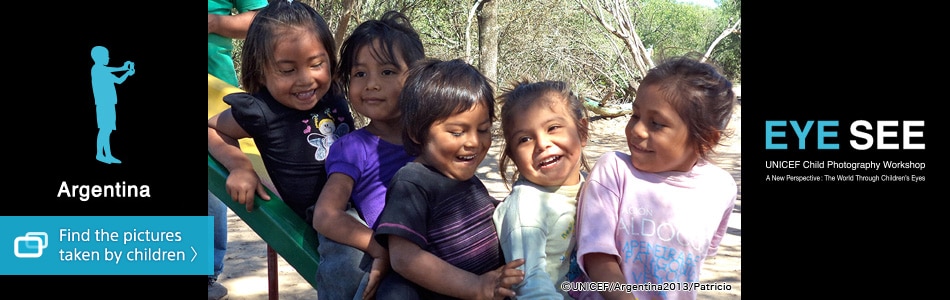
EYE SEE Argentina was held in the town of Comandancia Frias in March 2013. It was the first EYE SEE workshop focusing on the children of an indigenous community living in the region.
There are 30 different groups of indigenous peoples in Argentina※1, and the communities of these people face various serious problems including hunger, malnutrition, lack of drinking water, a low school enrollment rate, health issues, poor housing conditions, lack of drinkable water, health problems, poor housing conditions, unstable employment, social and cultural conflicts, degradation of the native forest, and biodiversity loss.
Under such conditions, 17 Wichí children participated in the EYE SEE photo workshop held in the lush greenery of Comandancia Frias, located in the northern part of Argentina. The project aimed to encourage the children to get actively involved in society by making scenes from their everyday life into photographs and having their opinions heard in the world.

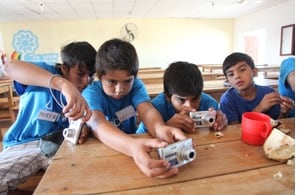
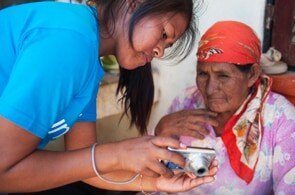
It was a first for all 17 children to use a digital camera and take photographs. Although some of them were rather shy to express their feelings at the early stage of the five-day workshop, they gradually became more and more excited by taking photos. On the third day, the children chose themes according to what they want to tell people about their everyday life, and took photos like scenes from going to school every day on a tractor, breakfast before class, classmates working in the garden, residents of the nearby villages, and trees crying and pleading not to be cut down.


Photographer Giacomo Pirozzi who instructed the workshop remembers the children’s abundant knowledge about nature, saying, "They want to show all the trees and the wild animals that surround them deep in the forest."

(Implementation of the workshop : 2013)



1/1


