


| Serbia | Roma Settlement | |
|---|---|---|
| Capital | Belgrade | |
| Population | 7.26 million | |
| Area | 77,474km2 | |
| Language | Serbian | |
| Major industry | Hospitality industry, Industrial, Agriculture | |
| Under-five mortality rate | 7% | 15% |
| Population with access to improve water sources | 99.5% | 97.7% |
| Literacy rate | Males:99.5% Females:99.3% |
Males:77.8% Females:76.5% |
| Support for learning | 95.2% | 67.2% |
| Attendance to early childhood education | 43.8% | 8.2% |
| Net primary completion rate | 92.0% | 35.0% |
| Comprehensive knowledge about HIV prevention among young people | Males:47.6% Females:54.1% |
Males:11.1% Females:12.2% |
| Adolescent birth rate | 23.9 (per thousand) |
158.5 (per thousand) |
| Use of computer among young | Males:92.6% Females:91.4% |
Males:63.1% Females:39.1% |

Source: United Nations Children's Fund (UNICEF) / Multiple Indicator Cluster Survey 2010
The first EYE SEE workshop in Europe was held in May 2013 in the town of Pirot in the south east part of the republic of Serbia, with the participation of 19 children who are Roma and non-Roma from different cultural backgrounds.
Tradition and culture of Roma are rarely respected, and perceptions about Roma are based on stereotypes and prejudices. Nearly half of the Roma in the Europe are suffering from poverty and facing discrimination.
The results so far are favorable a higher level of inclusion of Roma children has been achieved, which the EYE SEE Serbia work shop has also well demonstrated through the participation of both Roma and non-Roma children.

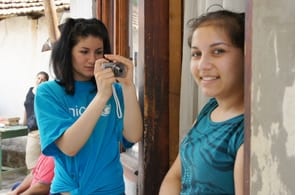
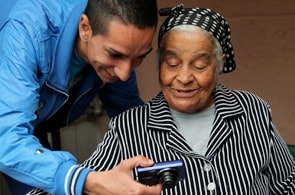

An exhibition of photographs taken by the 19 children was held in Japan in October 2013. People posted messages to the children to communicate directly through photography.


1/1


