
| country information | |
|---|---|
| Capital | Brasilia |
| Population | 196,655,000 |
| Population | 8,514,877km2 |
| Official Language | Portuguese |
| Major Industry | Manufacturing, Industrials(iron ore), Agriculture(Sugar, Orange, Coffee, Soya bean) |
| Under - five mortality rate | 15% |
| Population with access to improved water sources | 98% |
| Average life expctancy | 74 years old |
| Gross National Income (GNI) per capital | USD 10,720 |
| Population living on less than USD 1,25 per day | 6% |
| Youth of literacy rate | 97% |
| Child labor | 3.0% |

Source: THE STATE OF THE WORLD’S CHILDREN 2013(UNICEF)/UN Date201
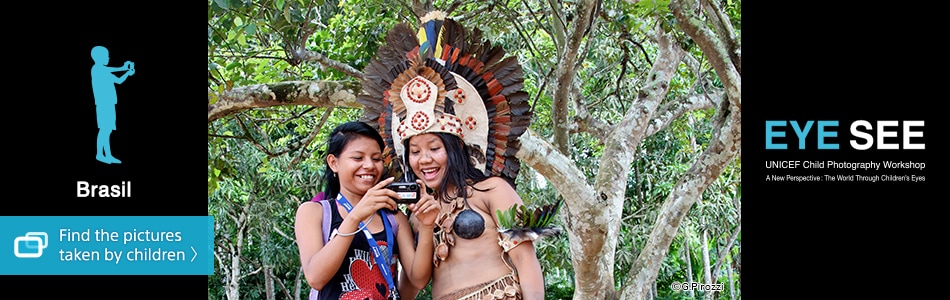
The 16th EYE SEE workshop was held in Tabatinga, State of Amazonas, Brazil. It was the fourth workshop held under the theme of the “rights of indigenous children.”
There are more than 250 indigenous communities in Brazil. This workshop was participated by 18 children from Ticuna and Kokama, which are two of the largest indigenous communities.
The indigenous community consists of a rich social culture developed based on various traditions and languages of diverse ethnic groups and races. On the other hand, they are also communities facing many difficulties including environmental problems, alcohol and drug dependencies, and a lack of public services such as healthcare and education. A high suicide rate among children, violence and the loss of traditional lifestyles are also becoming problems in these communities.
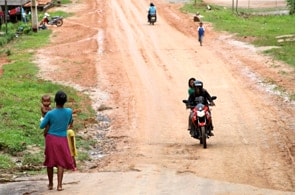
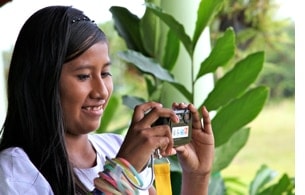

In the five-day workshop, children were divided into four groups, aiming at constructing a network among different ethnic groups living within the region. They acquired communication skills through activities such as discussion on the theme of photography, shooting, interviews and information collection of the subjects in their photos, and transmission of messages through photograph captions.
In addition, taking photographs of their own traditional cultures allowed them to convey the importance of social and cultural legacies, and provided an opportunity to stimulate their thoughts for looking anew at their identity, stand up against the various issues they are facing, and create something new.

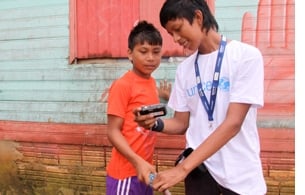

The photos taken by the children are not only shown in exhibitions held in various places throughout Brazil, but are also utilized when the children transmit their own messages through social media towards society.
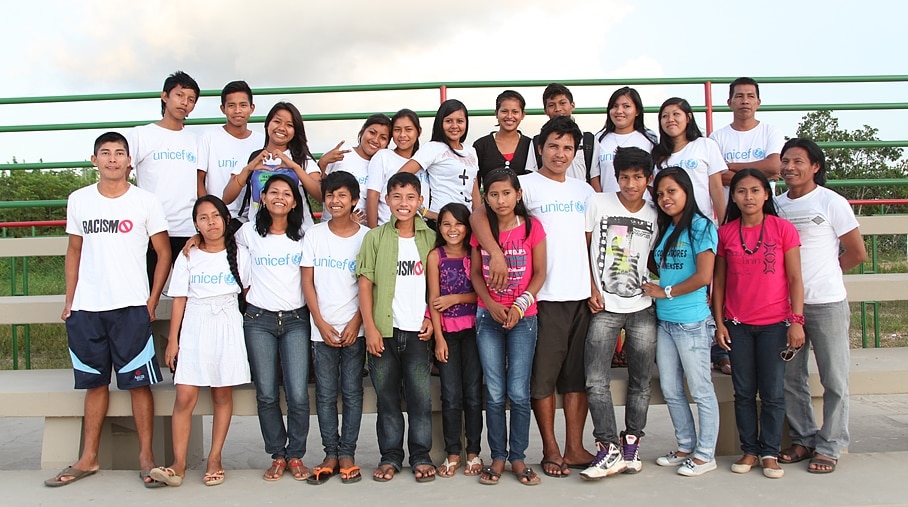
All images ©UNICEF/G.Pirozzi



1/1


