

| country information | |
|---|---|
| Capital | Mexico City |
| Population | 123.7 million |
| Area | 1,964,375km2 |
| Official Language | Espanol |
| Major Industry | Food, Beverage, Tabaco, Steel, Petroleum, Mining industry |
| Under - five mortality rate | 15/1,000 |
| Population with access to improved water sources | Urban: 96% Rural: 91% |
| Average life expectancy | 78 years old |
| Gross National Income (GNI) per capital | USD 9,940 |
| Population living on less than USD 1,25 per day | 1% |
| Youth of literacy rate | Male: 99% Female: 99% |
| Child labor | Male: 7% Female: 5% |

Source: THE STATE OF THE WORLD'S CHILDREN 2015/UN DATE
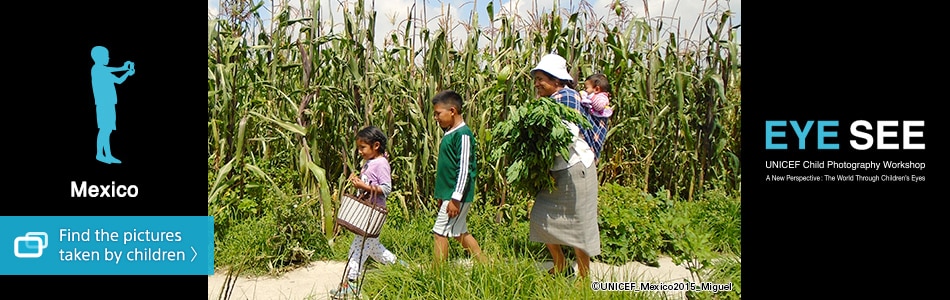
The EYE SEE Workshop in August 2015 was organized by indigenous people's communities in Toluca, one of Mexico's provincial capitals, and was attended by 22 children from ages 8 to 16.
In Central and South America, Mexico has the highest economic growth rate after Brazil. In Mexico, there are nearly 25,000 indigenous peoples, whose story is told through photographs taken by the children.
"We indigenous people have a lot of tradition and values." "I think if people knew more about us, there would be no more inequality, and we would have more opportunities", says Gabriela Francisco Florentino, 12-year-old girl, participated in the workshop.
Although they live in an environment close to modern facilities and basic social services, in the countryside and cities, there is a lot of discrimination. Most indigenous peoples live in the countryside without access to electricity, clean water and social services like education.

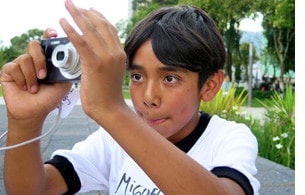

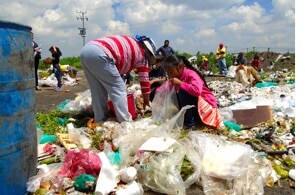
Against this background, the purpose of this Workshop was to try to give these children various rights to participate in society. In the Workshop, children got to talk to each other, and as themes they wanted to express through photos, they chose poverty, disability, teenage pregnancy, child labor, traditional culture and sports. One of the topics they chose most often was "poverty".
"It is very sad to know that some people have nothing to eat. Sometimes my family also have to search for food among the trash", said 10-year-old workshop participant Antonio Gonzalez.
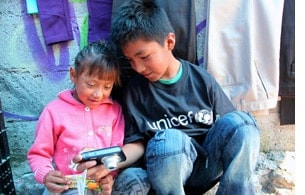
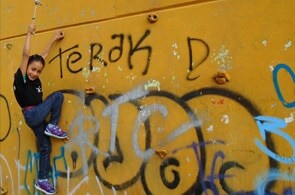
Some children showed strong interest in taking photographs of sports, and while they were taking photos during the Workshop, they also enjoyed playing sports. The children believed that sports is an essential part of their growing-up. There are photos showing children having fun while getting wet in fountains, and others showing participants climbing walls in sports facilities.
"The main players in this Workshop are children who, while from diverse backgrounds, have the weakest social position in Mexico. The themes they tackled and the pictures they took speak of freedom and sensitivity, and show the richness of their diversity", says photographer and Workshop teacher Giacomo Pirozzi. "Through these pictures, the children tell us what they are feeling, and about their daily lives".
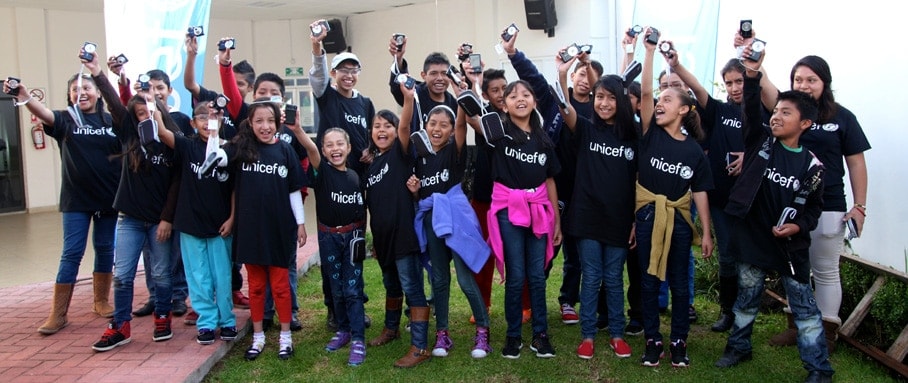
(Implementation of the workshop : 2015)



1/1


